Argentina Sends Fruit Exporters to Italy in Search of New Business and European Market Access
A new Argentine trade delegation at Macfrut 2026 is targeting buyers, distributors, and technology partners in Italy as the country looks to deepen its foothold in Europe’s fresh produce market.

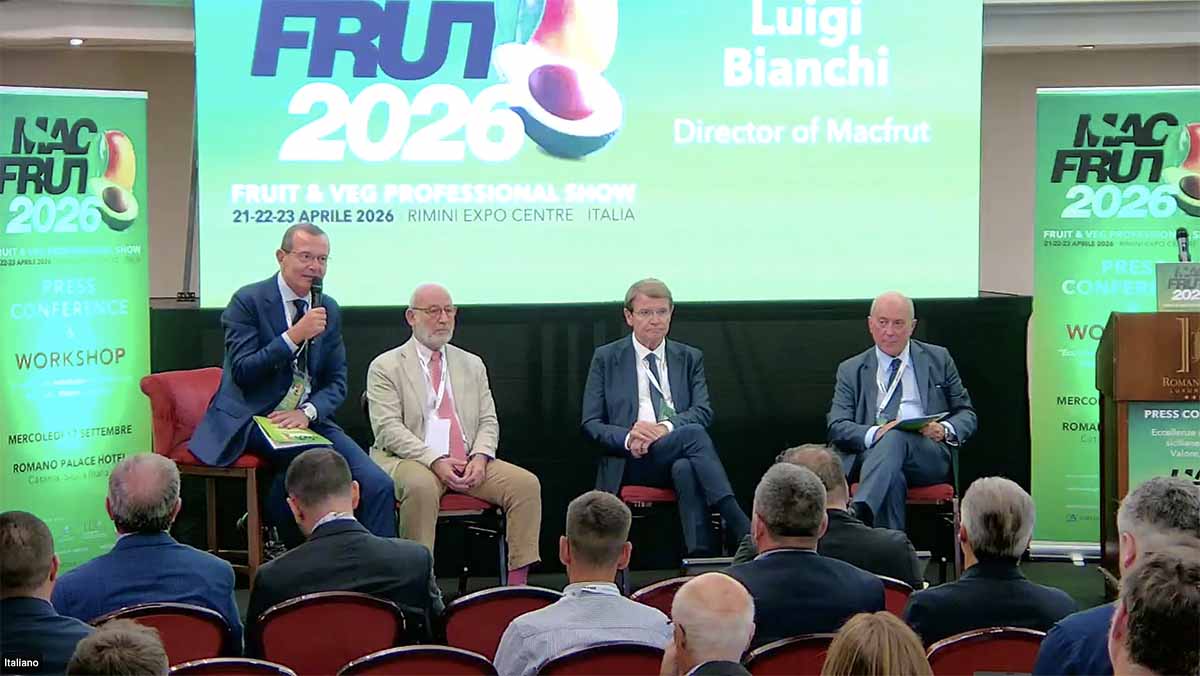
Argentina is using Macfrut 2026 as a platform to strengthen commercial ties with Europe, sending a business delegation to Italy made up of fruit exporters, food-processing equipment suppliers, and institutional partners focused on boosting bilateral trade. The mission is organized by the Italian Chamber of Commerce in Argentina, which has participated in the fair for more than a decade and describes the initiative as part of a broader strategy to expand Argentina’s commercial presence in Europe.
The delegation includes five companies and five institutions. Four of the companies are fruit exporters, while another specializes in machinery for processing dried and dehydrated fruit. The participating firms include Expofresh, Argesa Argentina Exportadora, Salix Fruits, Albion, and Frutas Stelzer, reflecting a mix of fresh-fruit exporters, global traders, and agrifood technology suppliers.
For EUBizNews, the key story is not only the fair itself, but what Argentine companies are seeking in Europe: new buyers, distributors, strategic partners, and access to technology that can improve production and post-harvest efficiency. According to the chamber’s statement, the objective is both to promote Argentine fruit exports and to facilitate the acquisition of machinery and technology from European suppliers.
That makes the mission a two-way business play. Europe is a destination market for Argentine produce, but also a source of industrial know-how, processing systems, and logistics solutions that can help exporters upgrade quality and competitiveness. The visit therefore sits at the intersection of trade, technology transfer, and agribusiness investment. This characterization is an inference based on the delegation’s stated search for European partners, buyers, and machinery.
Institutional backing is also central to the effort. The delegation is accompanied by Prom Argentina, Banco de la Nación Argentina, the Italo-Argentine business foundation FEIA, the economic development ministry of Río Negro province, and the M.I.T.A. food technology training system, which links Argentine and Italian academic institutions. Together, these organizations are providing export promotion, financing tools, regional support, and technical know-how.
Argentina is arriving in Europe with a fruit sector that remains highly export-oriented. The source notes that in the first eleven months of 2025, Argentine fruit exports reached 866,150 tons, up 5% in volume and 10% in value, for a total of $714 million. The country is positioning itself around premium quality, counter-seasonal supply, and a diversified product base including lemons, apples, pears, cherries, blueberries, and kiwi.
Citrus is one of the strongest stories. After several difficult years, Argentine fresh lemon exports rose 43% in 2025 to $142 million, while fresh orange exports increased 64% to $29 million and orange juice climbed 97% to $32 million. Tucumán remains the center of lemon exports, with around 40,000 hectares under cultivation and 1.5 million tons harvested.
The mission also highlights Patagonia’s role in apples and pears, where producers are trying to preserve competitiveness despite frost and hail damage and a narrower export window as European production expands. At the same time, Argentine cherries, blueberries, and kiwi are being marketed toward premium and niche segments, including Europe, with an emphasis on sustainability, origin, and counter-seasonality.
The expected EU–Mercosur trade agreement is part of the backdrop. The source says Argentine industry participants see it as an opportunity to reduce tariffs and improve access to European markets, particularly for high-volume products such as citrus and pears, as well as counter-season cherries and blueberries.
Taken together, the delegation signals that Argentina’s agribusiness push into Europe is no longer only about selling fruit. It is increasingly about building longer-term commercial relationships, upgrading technology, and securing a more strategic position inside European supply chains. That final point is an inference drawn from the delegation’s stated goals and the institutional support around export promotion and technology acquisition.