EU–Mercosur Deal Begins: What Changes Now and Who Stands to Gain
The provisional application of the EU–Mercosur agreement opens a market of more than 700 million people, cutting tariffs and reshaping trade between Europe and South America amid global fragmentation.

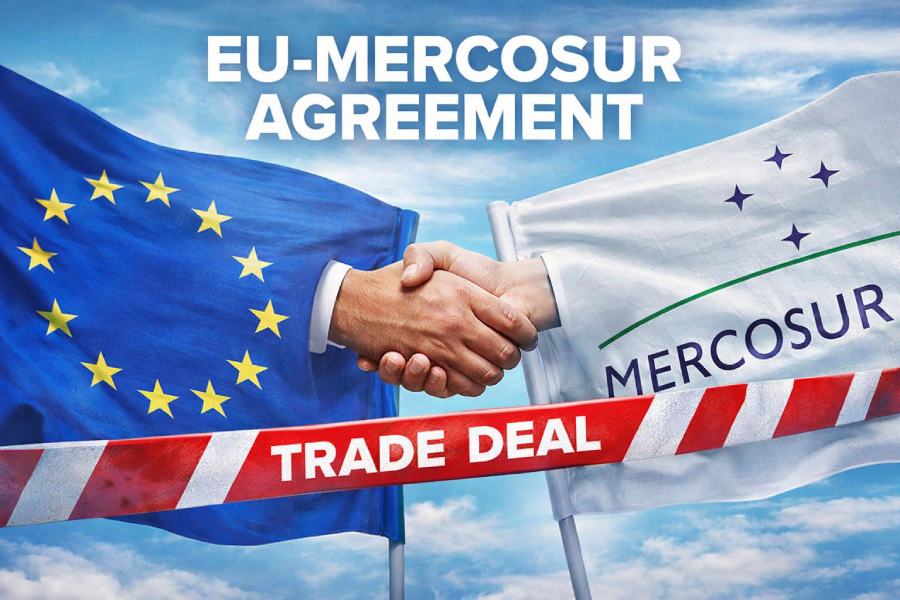
The EU–Mercosur agreement has entered provisional application, ending more than two decades of negotiations and opening a new phase in trade relations between Europe and South America.
The pact creates a commercial area of more than 700 million consumers and links the European Union with Argentina, Brazil, Paraguay and Uruguay. Its implementation will gradually reduce tariffs, simplify customs procedures and expand market access across sectors such as agriculture, food, automobiles, machinery, chemicals, services and public procurement.
For Europe, the agreement arrives at a critical moment. The bloc is trying to diversify supply chains, strengthen its presence in Latin America and reduce exposure to geopolitical shocks. It also comes as global trade becomes more fragmented and as Brussels seeks alternatives to overdependence on the United States and China.
European companies are among the expected winners. Automakers, machinery producers, chemical companies, pharmaceutical groups and wine exporters could benefit from lower barriers in Mercosur markets. European cars, for example, have historically faced high tariffs when entering the bloc, and the gradual reduction of those barriers could improve competitiveness for EU manufacturers.
For Mercosur, the main opportunities are concentrated in agriculture, food and raw materials. Beef, poultry, sugar, ethanol, grains and other products could gain improved access to the European market through lower tariffs or expanded quotas. The agreement also gives South American producers a clearer route into one of the world’s highest-value consumer markets.
The deal, however, will not benefit all sectors equally. European farmers remain among the most vocal critics, warning that South American agricultural imports could increase pressure on local producers. In Mercosur, parts of the industrial sector fear stronger competition from European companies with greater scale, technology and financing capacity.
The environmental debate remains another major challenge. European critics continue to demand strict safeguards on deforestation, sustainability and food standards, particularly in relation to the Amazon and agricultural expansion. For South American exporters, this means that market access will increasingly depend not only on price and volume, but also on traceability, certification and compliance with EU rules.
The agreement also has a strong geopolitical dimension. For the European Union, Mercosur offers access to food, energy, minerals and a large consumer base. For South America, Europe offers capital, technology and a more diversified trade relationship at a time when China has expanded its economic influence across the region.
Implementation will be gradual and politically sensitive. The agreement still faces legal and institutional challenges in Europe, and its full impact will depend on regulatory alignment, safeguard mechanisms and the ability of companies to adapt to the new rules.
Still, the start of provisional application changes the business landscape. What was once a long-delayed diplomatic project is now becoming an operational trade framework.
The EU–Mercosur agreement opens a major new chapter for Europe–Latin America trade. The biggest gains will go to companies that can adapt early, meet regulatory standards and position themselves inside the new transatlantic value chains.