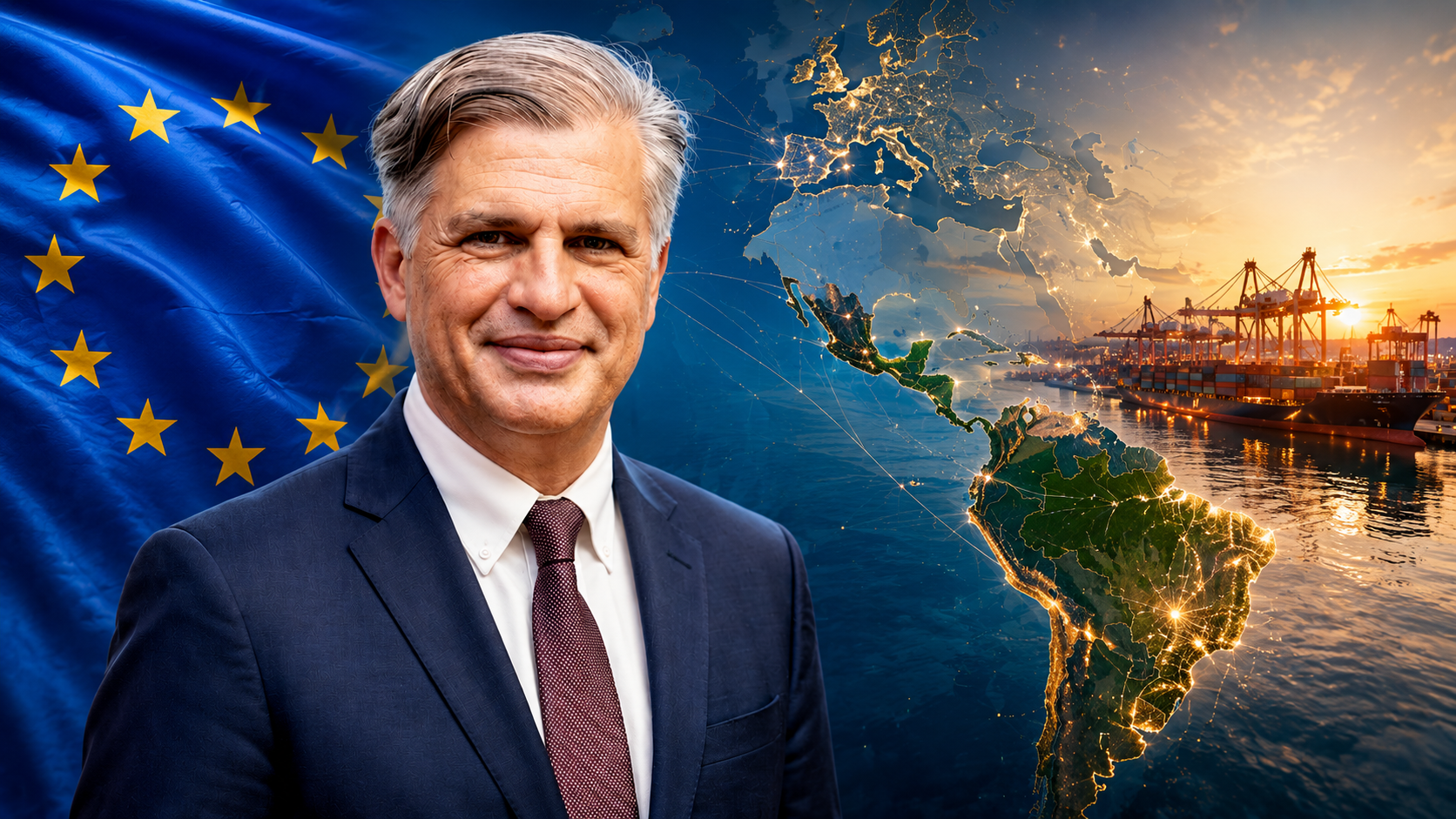
EU–Mercosur Deal Gains Strategic Importance in an Increasingly Fragmented Global Economy
The long-negotiated trade agreement between the European Union and Mercosur is emerging as a key geopolitical and economic tool as global trade becomes more fragmented.


The proposed trade agreement between the European Union and Mercosur is gaining renewed relevance as global economic fragmentation reshapes trade flows and geopolitical alliances.
In a context marked by rising tensions between major powers, supply chain disruptions and increasing protectionism, the EU–Mercosur deal is being reframed as more than a traditional trade agreement. It is increasingly viewed as a strategic instrument to strengthen economic ties between Europe and Latin America while reducing dependence on other global actors.
The agreement, which has faced years of negotiation and political resistance, would create one of the largest free trade areas in the world, connecting European economies with key Latin American markets including Brazil, Argentina, Uruguay and Paraguay. Beyond tariff reductions, the deal aims to facilitate investment, improve market access and deepen regulatory cooperation.
Its importance is amplified by the current global environment. As the United States and China continue to compete for influence, regions such as Latin America are becoming more strategically relevant. For the European Union, strengthening ties with Mercosur countries offers access to critical resources, expanding consumer markets and opportunities linked to energy transition and industrial supply chains.
For Latin America, the agreement represents a pathway to diversify economic partnerships and reduce reliance on a limited number of global trading partners. It also provides access to the European market, which is characterized by high standards and purchasing power, potentially boosting exports and investment flows.
However, the deal continues to face challenges. Environmental concerns, particularly related to deforestation and sustainability commitments, remain central to political debates within Europe. Differences in regulatory standards and domestic economic interests have also slowed ratification.
Despite these obstacles, the strategic rationale behind the agreement is becoming stronger. In a fragmented global economy, trade partnerships are increasingly shaped by geopolitical considerations as much as by economic benefits.
The EU–Mercosur deal reflects this shift. It is not only about trade liberalization, but about positioning both regions within a changing global order where alliances, supply chains and economic security are being redefined.
In an era of global fragmentation, the EU–Mercosur agreement is emerging as a key strategic bridge between Europe and Latin America, with implications that go far beyond trade.