
Europe's New Energy Challenge Is Strengthening Its Partnership with Latin America
As geopolitical tensions once again disrupt global energy markets, the European Union is accelerating efforts to diversify its energy partnerships. With one of the world's cleanest electricity matrices and vast renewable resources, Latin America is emerging as a strategic partner in Europe's quest for greater energy security and long-term resilience.

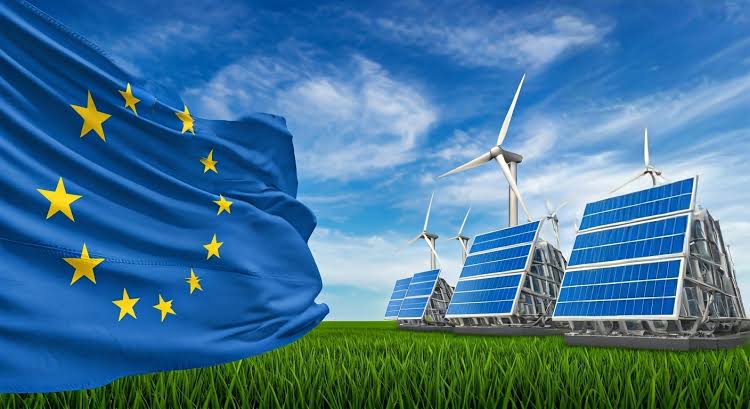
Europe is once again confronting the reality that energy security and geopolitics have become inseparable.
Three years after Russia's invasion of Ukraine forced the European Union to rapidly redesign its energy strategy, escalating tensions in the Middle East are creating fresh uncertainty across global oil and gas markets. The renewed volatility is reinforcing a lesson Brussels has learned repeatedly in recent years: reducing dependence on fossil fuels is no longer just an environmental objective—it is also a strategic necessity.
Against this backdrop, Latin America is becoming an increasingly important partner for Europe.
The region combines abundant renewable energy resources, one of the world's cleanest electricity mixes and growing investment in clean technologies, positioning itself as a natural ally for the European Union as it seeks to build a more diversified and resilient energy system.
The latest geopolitical tensions have once again highlighted the vulnerability of global energy supply chains.
The Strait of Hormuz, through which roughly one-fifth of the world's traded oil passes, remains one of the world's most sensitive maritime corridors. Any disruption to traffic through the route has immediate repercussions for international energy prices, affecting businesses, consumers and governments across multiple continents.
For Europe, the experience is particularly significant.
The energy crisis triggered by Russia's invasion of Ukraine fundamentally reshaped the bloc's priorities. Within months, Brussels accelerated investments in renewable energy, expanded liquefied natural gas (LNG) infrastructure, diversified suppliers and reinforced electricity interconnections across member states.
More importantly, energy policy evolved beyond climate objectives.
Today, Europe's energy transition is increasingly viewed as a pillar of economic competitiveness, strategic autonomy and geopolitical resilience.
That shift was evident throughout discussions at the EUCDs2 (European Union Clean Development Summit), where policymakers, industry leaders and energy experts repeatedly emphasized that the transition to clean energy can no longer be separated from security concerns.
The renewed instability in the Middle East has only reinforced that conclusion.
While the war in Ukraine exposed Europe's dependence on Russian gas, the latest tensions surrounding one of the world's most important oil transit routes demonstrate that fossil fuel markets remain highly vulnerable to geopolitical shocks.
For Brussels, reducing those vulnerabilities has become a long-term strategic objective rather than a temporary response to international crises.
Latin America is increasingly positioned to contribute to that strategy.
Unlike many other regions, Latin America already generates a significant share of its electricity from renewable sources, including hydropower, wind, solar and geothermal energy. Countries across the region are also investing heavily in green hydrogen, sustainable fuels and electricity infrastructure, creating opportunities for deeper cooperation with European partners seeking reliable, low-carbon energy sources.
The relationship extends beyond electricity generation.
Latin America also possesses abundant reserves of critical minerals—including lithium, copper and nickel—that are essential for batteries, electric vehicles and renewable energy technologies. As Europe accelerates its industrial transition, securing diversified access to these strategic resources has become a central component of its energy and industrial policies.
However, the region also faces its own challenges.
According to the latest report by the Latin American Energy Organization (OLADE), energy inflation in Latin America rose from 0.19% in February to 1.42% in March 2026, the highest level recorded over the previous twelve months. Overall inflation also increased from 0.38% to 0.75%, largely reflecting the sharp rise in international oil prices, which climbed to approximately US$116 per barrel during the period.
Although Latin America's electricity matrix remains among the cleanest globally, OLADE warns that many economies continue to rely heavily on oil and refined fuels for transportation and industrial activity, leaving them exposed to fluctuations in global hydrocarbon markets.
Government stabilization mechanisms have helped cushion the immediate impact on consumers, but they have not completely insulated regional economies from rising energy costs.
This dual reality highlights both the opportunities and the vulnerabilities facing Latin America.
On one hand, the region has the natural resources and renewable capacity to become one of Europe's most important long-term energy partners.
On the other, accelerating its own energy transition—particularly in transport, logistics and heavy industry—will be essential to reducing exposure to future geopolitical shocks.
For both regions, the convergence of successive global crises is redefining the meaning of energy security.
The transition toward renewable energy is no longer driven solely by climate commitments or decarbonization targets. It has become a strategic imperative for strengthening economic resilience, protecting supply chains and reducing dependence on increasingly volatile fossil fuel markets.
As Europe looks to build a more secure and diversified energy future, cooperation with Latin America is moving beyond traditional trade relations.
It is evolving into a broader strategic partnership centered on clean energy, critical minerals, sustainable investment and industrial transformation.
In an increasingly fragmented geopolitical landscape, that partnership may prove to be one of the defining pillars of Europe–Latin America relations over the coming decade.