German Firms Drive Azerbaijan’s Push for Green Energy and Infrastructure
Siemens Energy and other German firms are positioning themselves at the center of Azerbaijan’s green energy transition and infrastructure expansion, as Baku seeks to boost renewables and regional trade.

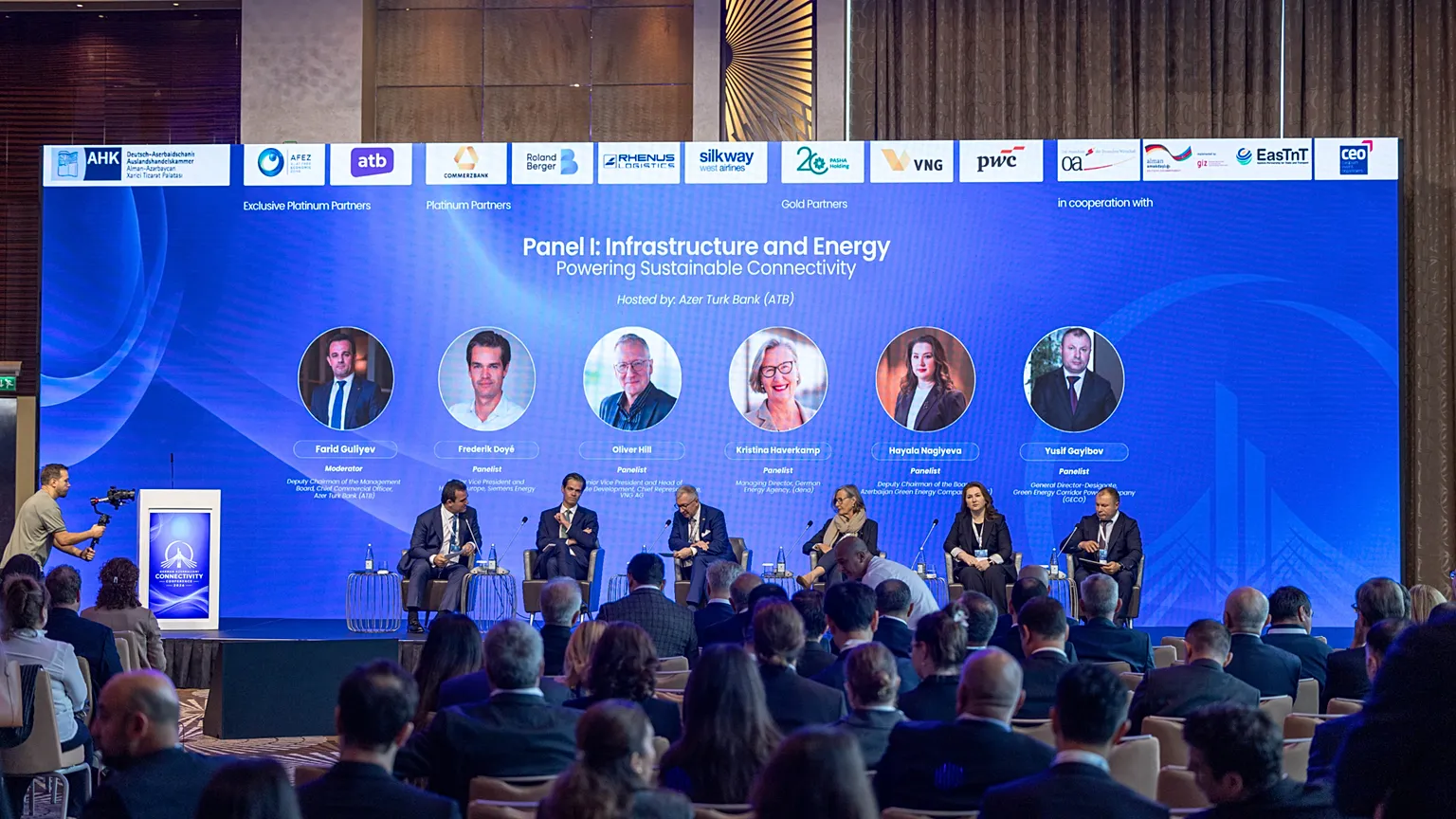
German industrial leaders, including Siemens Energy, have outlined plans in Baku to support Azerbaijan’s transition to renewable energy and infrastructure development, according to statements at the 2026 German-Azerbaijani Connectivity Conference.
The initiative comes as Azerbaijan targets handling 30 million tonnes of transit cargo by 2030 and aims for 30% of its electricity generation capacity to be sourced from renewables over the same period. The country’s government has announced plans to develop 8 GW of wind and solar projects by 2032, positioning Azerbaijan as a major regional energy hub.
Siemens Energy confirmed its readiness to provide technology for renewable energy projects in Azerbaijan, including contributions to the Caspian-Black Sea-Europe Green Energy Corridor. The company highlighted the cost of a single 7 MW wind turbine at between €7 million and €8 million, underlining the scale of investment required to meet Azerbaijan’s targets.
On the natural gas front, German gas importer VNG AG expressed interest in negotiating a 15- to 20-year supply agreement with SOCAR, Azerbaijan’s state oil company. Long-term agreements are seen as critical to ensuring stability for both suppliers and European buyers, especially as the EU seeks to reduce dependence on Russian fossil fuels.
German technology firms, among them Enercon, are also examining opportunities for local production of renewable energy equipment in Azerbaijan. According to the German-Azerbaijani Chamber of Commerce (AHK Azerbaijan), these efforts could stimulate investment and technology transfer, while supporting local industry development.
The cooperation aligns with European priorities to diversify energy sources and strengthen energy security. By expanding trade and investment ties, German and Azerbaijani stakeholders aim to create new supply routes and reinforce the strategic partnership between Europe and the Caspian region.
However, the success of these initiatives depends on the outcome of ongoing negotiations, the stability of investment frameworks, and the broader geopolitical environment. Market volatility and potential regional tensions remain risks for investors and policymakers.
For German firms, Azerbaijan offers a platform to expand into new markets and play a central role in the region’s green energy transformation. For Europe, the partnership promises to bolster energy diversification and reduce reliance on Russian gas, with concrete implications for energy security and commercial ties.