Mango sets October date for Argentina comeback as European brands accelerate their expansion
The Spanish fashion group will return to Argentina after more than two decades with a flagship opening at Alto Palermo in Buenos Aires. Local partner Grimoldi plans five stores over five years, while Rosario is emerging alongside the capital as another key destination for international retailers.

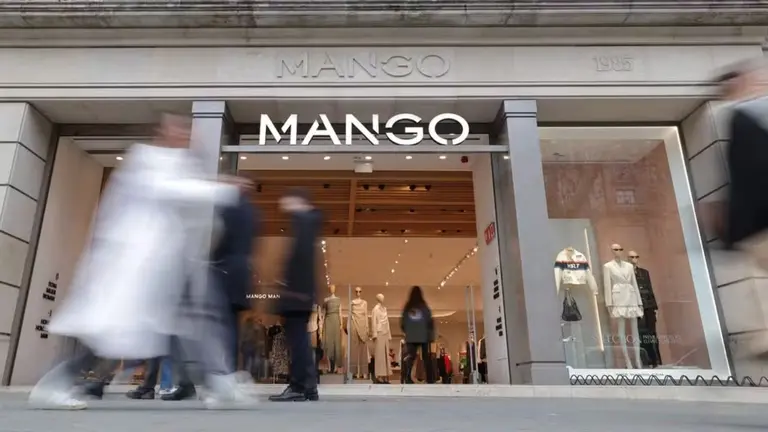
Spanish fashion retailer Mango is preparing to reopen in Argentina after more than two decades away from the market, becoming one of the most significant European brands to join the country's new wave of international retail investment.
The company is expected to open its first store on October 1 at Alto Palermo, one of Buenos Aires' busiest shopping centres. The return is being led by Argentine footwear and retail group Grimoldi, which secured the local franchise to develop Mango across the country.
The opening will mark Mango's return to Argentina 23 years after leaving the country in 2003, following an earlier expansion that began in 1998 but ultimately proved unsustainable amid Argentina's economic crisis and currency devaluation.
This time, the strategy is considerably more gradual.
Grimoldi plans to open five Mango stores over the next five years, initially concentrating on Buenos Aires before expanding into other major Argentine cities. An e-commerce operation will complement the physical retail network, giving the Spanish brand national reach while its store footprint develops.
Rosario is increasingly relevant to that strategy. The city, Argentina's third-largest metropolitan market, is becoming another focal point for European and international retailers looking beyond Buenos Aires, and a Rosario location is among those being considered for Mango's next stage of expansion. Recent reports point to Alto Rosario as one of the shopping centres under evaluation.
The move comes as Argentina's retail landscape undergoes one of its biggest international transformations in years.
Mango joins a new European retail wave
Mango's return is part of a broader reopening of the Argentine consumer market to global brands.
European fashion groups have become particularly active. Italian luxury and premium brands are expanding their presence, while French, Danish, Spanish and British retailers are launching or preparing operations across different price segments.
Among the newcomers is French fashion retailer Kiabi, which has begun its Argentine expansion with plans for a national store network. Danish fashion group Bestseller is also entering the country through brands including Jack & Jones and Only, while other international names are strengthening the competitive landscape.
The shift reflects a significant change from the previous decade, when import restrictions, currency controls and economic volatility made Argentina an unusually difficult market for global fashion companies.
Although domestic consumption remains challenging, a more open import environment and renewed interest from local franchise partners have encouraged international retailers to reassess a market of more than 45 million consumers.
For Grimoldi, Mango also represents a diversification strategy.
The century-old Argentine company has traditionally been associated with footwear but has increasingly used international licences and brands to broaden its business. Its agreement with Mango gives the group access to one of Europe's most recognisable fashion names at a time when competition in Argentine retail is intensifying.
Mango itself arrives with a very different international profile from the company that left Argentina more than two decades ago. The Barcelona-founded retailer now operates across more than 100 markets, making its Argentine comeback part of a much broader global business rather than an isolated regional experiment.
The initial plan calls for roughly one new store per year, although the pace could accelerate if market conditions and consumer demand justify faster expansion.
Potential locations previously considered have included additional shopping centres in the Buenos Aires metropolitan area as well as Rosario and Córdoba, giving the company a pathway towards a more geographically diversified Argentine network.
Rosario emerges as Argentina's second international retail hotspot
Buenos Aires remains the country's undisputed centre for luxury, premium and international fashion, but the latest expansion plans show that the international retail boom is beginning to spread beyond the capital.
Rosario is becoming one of the clearest examples.
Portal Rosario has attracted a cluster of international brands, with Kiabi, Only, Jack & Jones, Indian and Balmohk among the names announced for the shopping centre following the arrival of Decathlon.
Kiabi has selected Rosario as its second Argentine market, with an opening planned at Portal Rosario, while Bestseller brands are also incorporating the city into their expansion plans.
Mango could add another major European name to that trend. Alto Rosario is being evaluated as a possible future location as Grimoldi works on the next stages of the Spanish company's rollout.
The concentration of new brands is significant because it suggests that international retailers are no longer treating Argentina exclusively as a Buenos Aires story.
Rosario offers a large urban consumer base and an established shopping-centre market, making it an increasingly logical second step for companies seeking national scale without immediately committing to an extensive store network.
Córdoba is also attracting international investment, reinforcing a broader decentralisation of Argentina's retail map.
For shopping-centre operators, the arrival of global brands offers another advantage. International names can generate footfall and differentiate physical retail at a time when malls are competing not only with one another but also with e-commerce.
That dynamic is particularly important for fashion, where physical stores increasingly function as both sales channels and brand-building spaces.
Argentina returns to the radar of global fashion groups
Mango's comeback also illustrates a broader change in how international companies are approaching Argentina.
Rather than launching large store networks immediately, many are entering through experienced local partners and expanding progressively after testing consumer demand, pricing and operating conditions.
For Mango and Grimoldi, Alto Palermo will provide that first test.
The store will place the Spanish retailer in one of Buenos Aires' most established fashion destinations and allow the company to reconnect with Argentine consumers before moving deeper into the market.
The longer-term plan extends beyond the initial womenswear proposition. Depending on the performance of the business, additional Mango categories could eventually be incorporated as the network expands.
The competitive environment will nevertheless be substantially different from the one Mango encountered during its first Argentine chapter.
Consumers now have greater familiarity with global brands through travel and e-commerce, while international retailers are arriving across luxury, premium and mass-market segments. That creates an opportunity for Mango but also means it will compete for consumers with an increasingly broad selection of European and international labels.
The October opening will therefore be more than the return of a familiar fashion brand.
It will provide another test of whether Argentina's renewed openness to international retail can translate into sustainable long-term operations — and whether the current investment wave can expand beyond Buenos Aires into cities such as Rosario.
For Mango, Alto Palermo is the starting point. The bigger opportunity will be proving that the Spanish brand can build a national business in an Argentine retail market that is once again attracting the attention of the world's major fashion groups.