
Sparc Hydrogen tests an electricity-free route to green hydrogen as Europe searches for viable projects
The Australian venture is developing a system that uses concentrated sunlight and advanced materials to split water directly into hydrogen and oxygen. Its pilot plant has reached technology readiness level six, while the company considers Europe a priority market for future deployment.

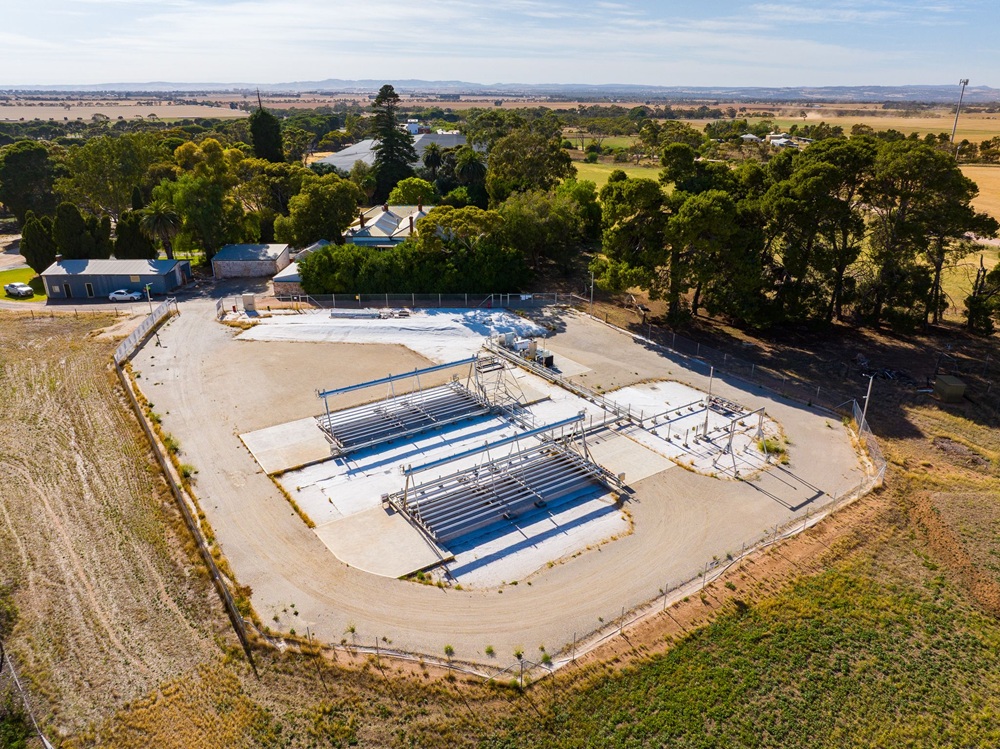
The cost and availability of renewable electricity remain among the main obstacles preventing green hydrogen projects from reaching final investment decisions. Sparc Hydrogen is developing an alternative process that removes electricity from the water-splitting reaction and replaces conventional electrolysis with concentrated sunlight and advanced materials.
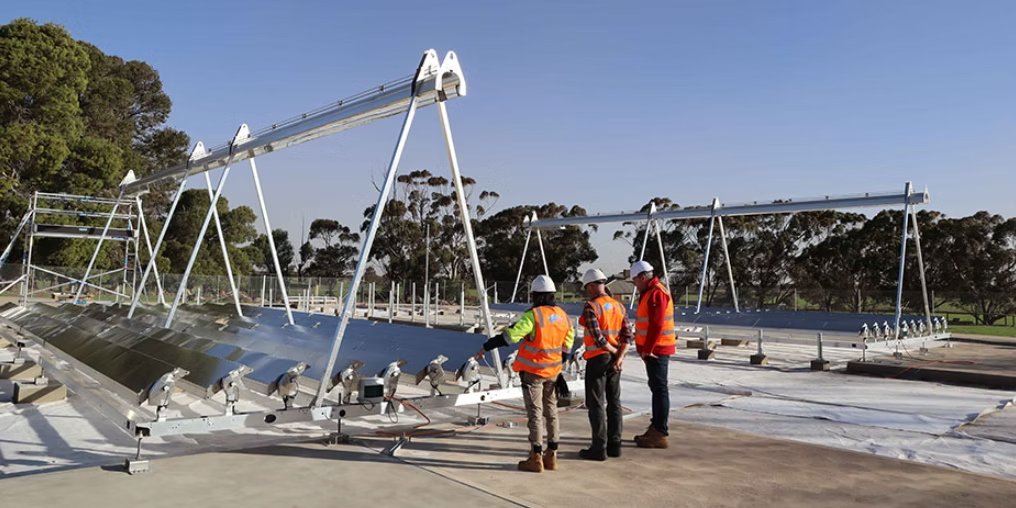
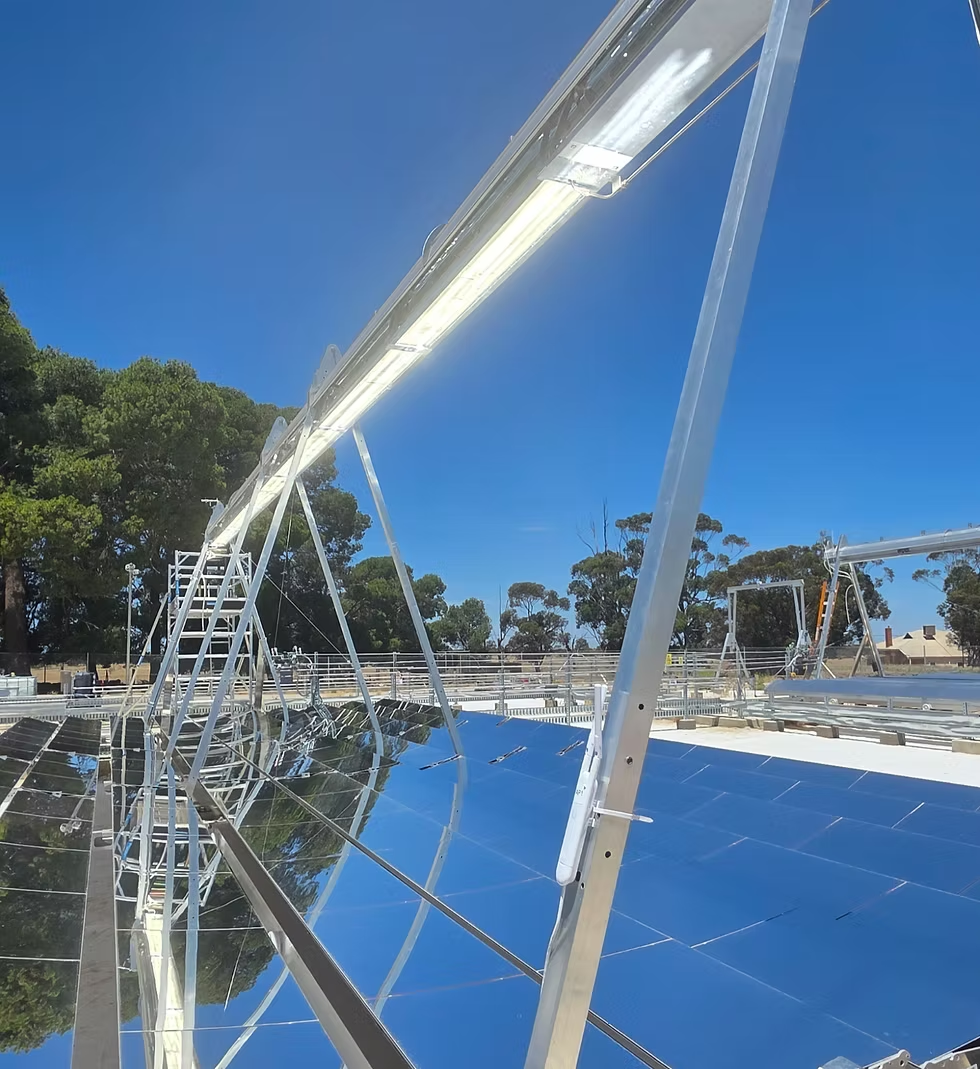
The Australian company’s technology uses linear Fresnel optics to concentrate sunlight by up to 30 times. That energy is directed towards a specialised material—typically a photocatalyst or photoelectrochemical component—which splits water directly into hydrogen and oxygen.
“Sparc’s process removes electricity from the water-splitting reaction entirely and can use lower-grade water quality,” Alana Barlow, CEO of Sparc Hydrogen, told EUBizNews.
The process performs the conversion in a single stage. According to Barlow, this could produce a simpler plant configuration without the large-scale electricity generation, storage and grid infrastructure required by conventional green hydrogen facilities.
From electricity prices to solar efficiency
Green hydrogen is generally produced by using renewable electricity to power an electrolyser. Sparc estimates that approximately 85% of the levelised cost of conventional production can be linked to securing firm renewable power capable of sustaining operations around the clock.
This exposes projects to changes in electricity prices, the cost of storage and the availability of renewable generation. Sparc’s model shifts the principal economic variable from power prices to solar-to-hydrogen efficiency, known as STH.
“Because Sparc decouples hydrogen production from grid electricity, cost instead follows solar-to-hydrogen energy conversion efficiency,” Barlow explained.
The company estimates that an STH rate of between 12% and 15% could place the technology on a comparable footing with an electrolysis plant connected to a photovoltaic solar farm.
In May 2026, Sparc validated an efficiency above 10% at laboratory scale using material supplied by US company SunHydrogen. The next step will be to determine whether that performance can be reproduced in the pilot reactor and eventually maintained at a larger scale.
Sparc has not disclosed a projected commercial cost per kilogram. Barlow nevertheless said the company expects continued improvements in water-splitting materials to narrow the gap with conventional hydrogen.
“With continued development in the efficiency of advanced water-splitting materials, we expect that our technology can reach parity with fossil-fuel-derived hydrogen prices by the end of this decade,” she said.
The forecast remains a company target rather than a commercially demonstrated result. Final costs will depend on conversion efficiency, equipment expenditure, material durability, operating conditions and the performance achieved when production is scaled up.
Lower-grade water and replaceable materials
Water quality represents another potential advantage. Electrolysers typically require highly purified water because contaminants can damage their stacks or accelerate degradation.
Sparc says its process can use lower-grade water, reducing the need for extensive treatment infrastructure and limiting the risk of equipment damage caused by contamination. This could be relevant in regions where access to purified water is limited or expensive.
The reactor has also been designed so that improved water-splitting materials can be installed as replacements rather than requiring a complete plant rebuild.
“Material upgrades are a drop-in swap in our reactor, not a plant rebuild, so deployed sites inherit material efficiency gains over time,” Barlow said.
The approach could allow operating plants to benefit from advances in photocatalysts and photoelectrochemical materials. It may also reduce technological obsolescence, although each new material would still have to demonstrate sufficient efficiency and durability for commercial use.
Pilot reactor reaches TRL 6
Sparc Hydrogen places its reactor at technology readiness level six, or TRL 6. The classification indicates that the technology has progressed beyond laboratory validation and is being tested in a relevant operating environment.
The Sparc Hydrogen Advanced Research Pilot, known as SHARP, produced its first hydrogen in December 2025 at Roseworthy in South Australia. It was commissioned in February 2026 and is now conducting autonomous, continuous operations during periods of sunlight.
The plant is collecting data on reactor performance, material behaviour and operating conditions outside the laboratory.
“In the next development stage, Sparc will continue on-sun operation at SHARP for field-testing data, assess compatibility of the SunHydrogen material at pilot scale, expand the qualified materials pipeline and explore manufacturing partnerships,” Barlow said.
The company is also discussing a larger commercial demonstration plant with hydrogen developers, strategic stakeholders and potential buyers.
“We are in discussions with strategic stakeholders, hydrogen developers and potential offtakers for our next scale-up commercial demonstration plant within the next two to three years,” she added.
No location, production capacity or investment figure has yet been confirmed for that facility.
A three-way Australian venture
The technology originated from photocatalysis research led by Professor Greg Metha at the University of Adelaide.
Sparc Hydrogen was established in 2022 as a joint venture involving Sparc Technologies, the University of Adelaide and Australian mining and energy company Fortescue.
Sparc Technologies and the university each own 36%, while Fortescue holds the remaining 28%. The University of Adelaide continues to act as the project’s research partner.
The ownership structure combines academic research, technology development and energy-sector experience. Its commercial outcome will depend on whether the partners can translate laboratory and pilot results into a system that can be manufactured, financed and operated at industrial scale.
Europe identified as a priority market
Sparc considers Europe a priority region outside Australia because of its demand for lower-emission hydrogen and the policy support provided by national governments and European Union institutions.
“Europe is a key target region for Sparc’s technology outside Australia, given the demand for cleaner hydrogen and policy support,” Barlow told EUBizNews.
The company already works with European businesses, including Spanish firm Solatom, which supplied the linear Fresnel solar concentration system used by Sparc.
The venture is looking for additional industrial, technology and investment partners for testing, demonstration and commercialisation. As the system remains pre-commercial, no European deployment has yet been announced.
Europe offers substantial potential demand, but its hydrogen industry faces difficulties. Projects must secure renewable electricity, obtain long-term purchase agreements, comply with emissions certification rules and raise capital at a time of elevated equipment and construction costs.
“Many European electrolysis projects have struggled to reach final investment decisions because they are exposed to renewable power price and supply volatility and rising electrolyser capital expenditure,” Barlow said.
She argued that eliminating grid electricity from the reaction could remove a central risk during project development.
“With input costs for a Sparc Hydrogen plant known at the front end of project development, for the life of the project, our technology removes a significant investment risk from the pathway to a final investment decision,” she added.
Steel and ammonia among potential first users
Worldwide hydrogen consumption stands at approximately 100 million tonnes per year, but most production continues to depend on fossil fuels.
Oil refining accounts for an estimated 45% to 50% of demand, followed by ammonia production with 30% to 35%, chemical feedstocks with 10% to 15% and direct-reduced iron for steelmaking with approximately 5%.
Sparc has received interest from developers of direct-reduced iron and ammonia projects seeking to lower emissions. The company is also examining applications in mobility and power generation.
“We are currently exploring global options for our first scaled-up commercial plant to demonstrate our technology in an operational environment,” Barlow said.
The initial industrial market will depend on the location of the demonstration facility, access to customers and the ability to integrate hydrogen production with downstream operations.
Durability remains a central test
Sparc says the pilot plant has addressed many of the challenges associated with scaling the reactor. The remaining work includes integration with downstream processing equipment and validation of the materials responsible for the reaction.
New photocatalytic and photoelectrochemical materials continue to emerge, but high laboratory conversion rates do not automatically guarantee commercial viability. They must also withstand prolonged sunlight exposure, variable weather and repeated operating cycles.
Sparc currently evaluates third-party materials without charging their developers. Barlow said a significant number of potential suppliers are based in Europe and the United Kingdom.
The next development phase must demonstrate whether direct solar hydrogen can move from pilot operation to an investable industrial project. The technology addresses two important constraints—electricity costs and water purity—but must still prove its durability, integration and economics at a larger scale.
For Europe, Sparc’s proposal arrives as policymakers and investors reassess how to convert hydrogen targets into operating plants. Removing electricity from the reaction may reduce one of the industry’s largest uncertainties. Whether that advantage is sufficient to unlock commercial deployment will depend on the results of the next demonstration facility.