Trump hits imported drones with tariffs of up to 100%, but EU manufacturers secure a 15% rate
Washington is tightening access to the US drone market in an attempt to reduce dependence on foreign technology and rebuild domestic production. European Union manufacturers will face a substantially lower 15% tariff, potentially improving their competitive position against Chinese suppliers in a sector increasingly linked to defence, security and industrial policy.

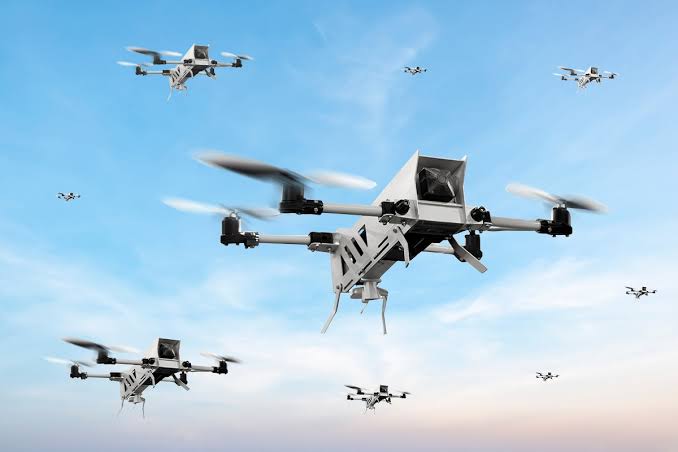
The United States is opening a new front in its trade and technology policy. President Donald Trump has approved tariffs of up to 100% on imported drones and key components, arguing that heavy dependence on foreign unmanned aircraft systems poses a risk to US national security.
The measure, signed on 13 August, establishes different tariff levels according to the characteristics and origin of the equipment. Certain drones considered particularly sensitive will face the maximum 100% levy, while smaller imported systems will generally be subject to a 25% tariff. The European Union, however, has secured preferential treatment: qualifying drones and components originating in the bloc will face a 15% rate. The United Kingdom will receive an even lower 10% rate.
The decision could significantly reshape one of the fastest-growing segments of the technology and defence industries. Drones have evolved from relatively niche consumer devices into strategic platforms used in warfare, surveillance, infrastructure inspection, agriculture, logistics, emergency response and industrial operations.
For Europe, the new US tariff regime presents a mixed picture. European manufacturers will still encounter an additional barrier when entering the American market, but the 15% treatment leaves them considerably better positioned than many competing foreign suppliers subject to much higher duties.
Washington puts national security at the centre of drone trade
The tariffs follow an investigation by the US Department of Commerce into the impact of imports of unmanned aircraft systems, or UAS, and their components.
Commerce Secretary Howard Lutnick concluded that penetration by foreign manufacturers was substantial and that the United States had become excessively dependent on overseas suppliers. The administration also argues that some foreign drones and components create security and safety vulnerabilities and that domestic manufacturing capacity is insufficient to meet US requirements during a national-security emergency.
That assessment transforms the drone industry from a conventional trade issue into a question of strategic autonomy.
Washington increasingly views unmanned systems as part of the industrial infrastructure required for modern warfare and national security. The conflict in Ukraine has reinforced the importance of inexpensive drones, autonomous systems and rapidly scalable production capacity.
The new tariffs are therefore designed not only to make imported products more expensive, but also to encourage manufacturers to relocate production and supply chains towards the United States and trusted partners.
The most sensitive drones face a 100% tariff
The maximum tariff will apply to categories considered particularly relevant to national security.
Reports on the proclamation indicate that this includes drones exceeding 25 kilograms in maximum take-off weight, as well as systems equipped with capabilities such as thermal imaging and certain associated hardware. Smaller drones that do not fall into those sensitive categories will generally face a 25% duty.
The distinction reflects Washington's attempt to differentiate between relatively conventional commercial equipment and technologies with greater potential military, surveillance or security applications.
For manufacturers, however, the implications go beyond complete aircraft.
Drone supply chains include cameras, communications systems, navigation technology, sensors, flight controllers, batteries, motors and other electronic components. The origin of those components is becoming increasingly important as Washington seeks to prevent foreign technology from entering the American market indirectly through assembly in third countries.
Europe gets a 15% ceiling
One of the most important provisions for European companies is the differentiated treatment granted to US allies.
Imports from the European Union, Japan, Liechtenstein, South Korea, Switzerland and Taiwan will face a 15% tariff, while qualifying UK products will be taxed at 10%.
The arrangement creates a potentially important competitive advantage for European drone manufacturers.
A 15% tariff is still a meaningful cost, particularly in a market where price competition can be intense. But compared with rates reaching 100% for some other imported systems, the differential could improve the relative attractiveness of European products to US customers.
That is especially relevant as American public agencies and companies seek alternatives to Chinese technology.
The effect could extend beyond finished drones. European suppliers of sensors, imaging systems, avionics, communications equipment and other specialised components could also benefit if American manufacturers increasingly seek supply chains based in allied countries.
China is the strategic backdrop
Although the tariffs extend beyond China, Beijing's dominance of the global drone industry forms an essential backdrop to Washington's strategy.
Chinese manufacturers have built enormous scale in consumer and commercial drones, components and associated technologies. The US government has progressively tightened restrictions on Chinese suppliers over concerns ranging from data security to dependence on foreign manufacturing.
The new tariff architecture seeks to go further by influencing where drones are manufactured and where their components originate.
Washington is particularly concerned about the possibility of Chinese components being routed through third countries or incorporated into products assembled elsewhere before entering the United States.
The result is a shift from simply asking where the final drone was assembled to examining where the technology inside it actually comes from.
That change could have significant consequences for global supply chains.
European manufacturers gain an opening in the US market
For the European drone ecosystem, Washington's move could create opportunities alongside the additional tariff cost.
Europe has developed a growing network of manufacturers specialising in defence drones, autonomous aircraft, mapping, industrial inspection and dual-use technologies. As the US attempts to reduce reliance on Chinese suppliers, European producers could increasingly position themselves as trusted alternatives.
The preferential tariff rate reinforces that possibility.
European companies able to demonstrate compliant supply chains and limited dependence on restricted components could gain access to American customers looking for technology from politically aligned jurisdictions.
The opportunity may be particularly significant in defence and dual-use markets, where procurement decisions increasingly incorporate cybersecurity, data sovereignty and supply-chain resilience alongside price and technical performance.
The tariff therefore creates an unusual situation: Europe is being taxed, but simultaneously being differentiated from Washington's principal strategic competitors.
The drone industry is becoming part of defence industrial policy
The measure also reflects a broader change in how governments view drones.
For years, commercial drones were largely treated as another electronics category.
That era is ending.
The war in Ukraine demonstrated that relatively inexpensive unmanned systems can destroy equipment costing many times more, perform reconnaissance, support artillery, attack infrastructure and fundamentally change battlefield tactics.
Governments are consequently focusing not only on sophisticated military aircraft but on the capacity to manufacture drones in very large numbers.
That requires an industrial base capable of producing airframes, sensors, motors, batteries, communications systems, software and electronic components at scale.
Washington's concern is that a country dependent on imported systems may struggle to expand production rapidly during a conflict or supply-chain disruption.
Tariffs are now being deployed as one of the instruments intended to change that equation.
A 21-day countdown for the first tariffs
The implementation will not occur simultaneously across every product category.
According to the US administration, the principal tariffs will take effect 21 days after the proclamation was signed. For drone components considered less sensitive, implementation will be delayed for 180 days. Certain products receiving relevant Pentagon approval connected with the Federal Communications Commission's Covered List will also receive a 180-day implementation period.
The staggered timetable gives companies some time to evaluate their exposure.
Importers will need to review suppliers, product classifications and component origins. Manufacturers may need to determine whether changing their supply chains could allow them to qualify for preferential treatment.
For European companies already selling into the United States, the coming weeks could therefore become an important period of contractual and logistical adjustment.
Tariffs could accelerate the relocation of supply chains
The broader objective is clear: Washington wants more drone manufacturing capacity either inside the United States or connected to trusted supply chains.
Higher import costs can make domestic production comparatively more attractive.
But rebuilding an industrial ecosystem is more complicated than imposing a tariff.
Drone production depends on specialised electronics, cameras, sensors, batteries and other components often manufactured through highly internationalised supply chains.
Moving final assembly to the United States does not necessarily eliminate dependence on foreign technology.
That explains why the administration is increasingly focusing on component origin as well as final manufacturing.
The consequences could ultimately encourage companies to redesign supply chains across North America, Europe and parts of Asia.
European technology could become more valuable to US manufacturers
This creates a second potential opportunity for Europe that goes beyond exporting finished drones.
American manufacturers seeking to reduce their exposure to Chinese components may increasingly need alternative suppliers.
European companies specialising in optics, thermal imaging, communications, semiconductors, navigation, cybersecurity and aerospace systems could find themselves in a stronger position.
In that scenario, the biggest European opportunity would not necessarily be selling complete drones to US customers.
It could be becoming part of a new allied drone supply chain designed around security and traceability.
That would fit a broader trend already visible across semiconductors, critical raw materials, batteries and defence equipment: governments increasingly care not only about cost, but also about the geopolitical origin of strategic technology.
Tariffs bring risks for European companies too
The preferential rate should not be confused with unrestricted access.
A 15% tariff still makes European products more expensive in the United States.
Companies operating with narrow margins may have to absorb part of the additional cost, raise prices or reconsider their commercial strategy.
US manufacturers could also gain a substantial advantage if the policy succeeds in stimulating domestic capacity.
European companies therefore face a delicate balance.
In the short term, the gap between the EU's 15% tariff and the much higher rates imposed on some competitors may generate opportunities.
Over the longer term, however, the policy is explicitly intended to create stronger American competitors.
European manufacturers entering the US market today could eventually find themselves competing against an industry that Washington is actively subsidising, protecting and expanding.
Drones join the new era of strategic trade
The US decision fits into a much larger transformation of international commerce.
Semiconductors, batteries, critical minerals, pharmaceuticals, energy technologies and defence equipment are increasingly treated differently from ordinary consumer products.
Governments now evaluate supply chains according to resilience, security and geopolitical exposure as well as efficiency.
Drones are joining that list.
The technology sits at an unusual intersection of civilian and military applications. The same advances in autonomous navigation, imaging, communications and artificial intelligence that improve industrial drones can also enhance battlefield systems.
This dual-use nature makes the sector particularly sensitive to trade restrictions.
Europe faces both an opportunity and a warning
For the European Union, the 15% tariff is better than the alternative, but Washington's decision also carries a broader message.
The global drone market is entering an era in which industrial capacity itself is becoming a strategic asset.
Europe has its own ambitions to strengthen defence production, technological sovereignty and resilience in critical supply chains. The American decision demonstrates how aggressively major economies are now prepared to intervene to achieve those objectives.
European drone manufacturers may gain market share as Washington distances itself from Chinese technology.
But Europe will also need to ensure that its own industry can scale.
The emerging competition is no longer limited to producing the most sophisticated aircraft. It increasingly involves the capacity to manufacture large numbers of affordable systems, secure the components inside them and control the software and data on which they depend.
Trump's new tariffs therefore extend far beyond the price of an imported drone.
They mark another step towards a global technology market divided by strategic alliances, trusted supply chains and national-security priorities — with Europe increasingly positioned between American protectionism and Chinese industrial dominance.