Volkswagen Reportedly Plans Overhaul That Could Affect 100,000 Jobs Worldwide
The German automotive giant is reportedly preparing a sweeping restructuring plan that could affect thousands of jobs and several production facilities as it adapts to the electric vehicle transition and intensifying global competition.

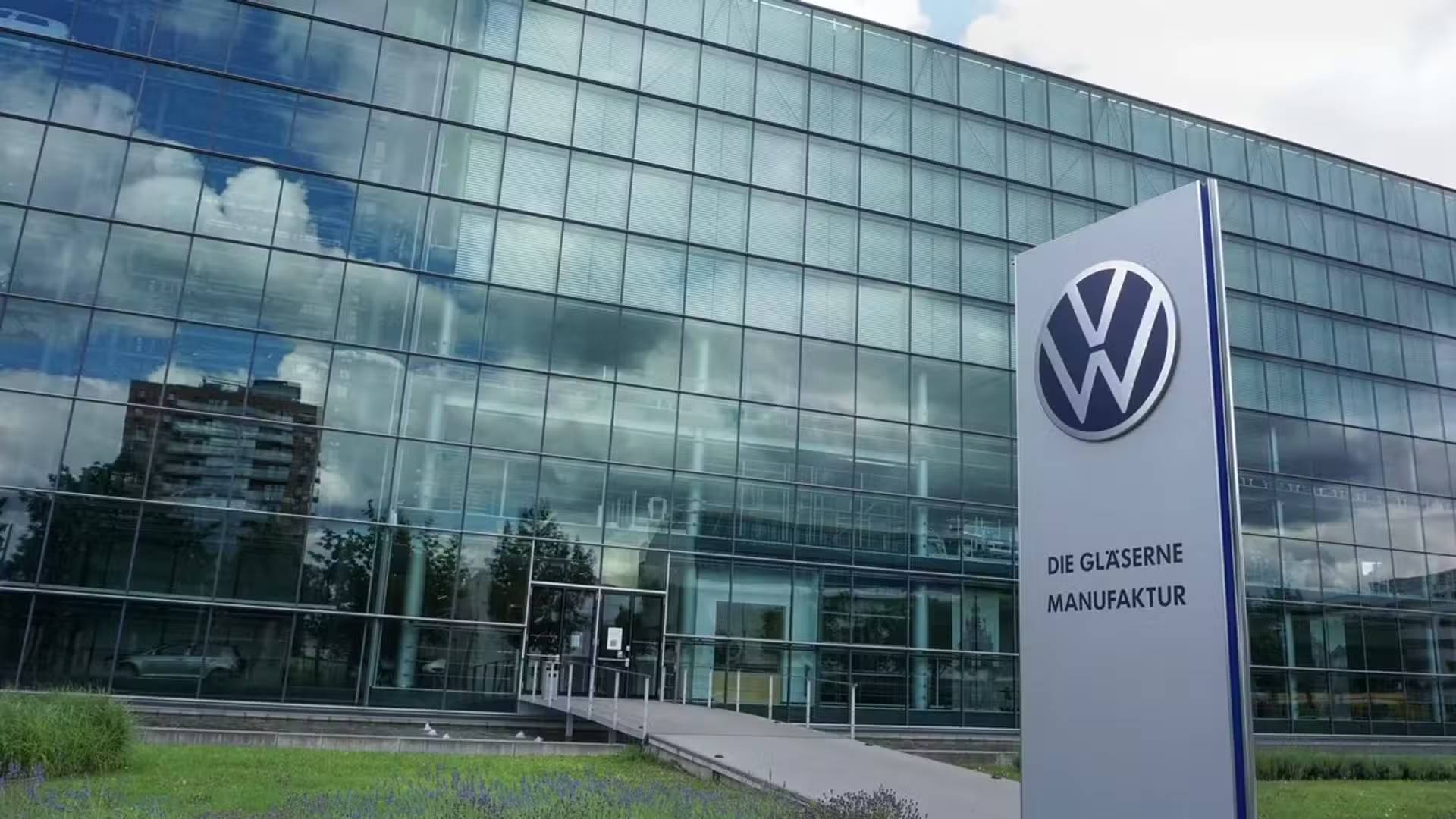
Volkswagen is reportedly considering one of the most significant restructuring programs in its recent history, a move aimed at improving efficiency, reducing costs and strengthening its position in an automotive industry undergoing profound transformation.
According to reports, the plan could involve the reorganization of production across several manufacturing sites and impact approximately 100,000 jobs worldwide as the company accelerates its transition toward electric mobility and digital manufacturing.
Although no final decisions have been officially confirmed, the proposal reflects the mounting pressure facing Europe's largest carmakers as they compete with rapidly expanding Chinese manufacturers, rising production costs and the enormous investments required for electrification.
The automotive industry is entering a new era where competitiveness increasingly depends on software development, battery technology, automation and highly efficient production systems.
For Volkswagen, restructuring its industrial footprint is viewed as part of a broader strategy to remain competitive while maintaining leadership in one of Europe's most strategic manufacturing sectors.
Germany remains the heart of Volkswagen's global production network.
Any major changes to factories or employment could therefore have significant implications not only for the company but also for suppliers, regional economies and Europe's broader industrial ecosystem.
The reported overhaul also reflects structural changes affecting the entire automotive sector.
As electric vehicles require fewer mechanical components and more digital technologies than traditional combustion-engine cars, manufacturers are redesigning production processes, investing in battery plants and reshaping workforce requirements.
At the same time, global competition is intensifying.
Chinese automakers continue expanding internationally, while Tesla and other electric vehicle manufacturers are raising expectations for production efficiency, software integration and innovation.
For European manufacturers, maintaining competitiveness increasingly requires balancing industrial modernization with social responsibility and employment protection.
The transition is further complicated by high energy prices, evolving environmental regulations and the need to secure resilient supply chains for batteries and critical raw materials.
Volkswagen has already announced significant investments in electrification, battery production and digital technologies across Europe, positioning these areas at the center of its long-term growth strategy.
For Europe, the reported restructuring highlights a broader industrial challenge.
The continent's automotive sector supports millions of direct and indirect jobs and remains one of Europe's largest exporters. Ensuring that manufacturers remain globally competitive while preserving industrial capacity has become a strategic priority for policymakers and businesses alike.
The implications extend beyond Europe.
Latin America, where Volkswagen operates major manufacturing facilities in countries such as Brazil and Argentina, is closely linked to the company's global production network. Any long-term adjustments to manufacturing strategy could eventually influence investment decisions, supply chains and production planning in the region.
Industry analysts argue that restructuring should not be viewed solely as a cost-cutting exercise.
Instead, it represents a broader effort to prepare one of Europe's most iconic industrial companies for a future defined by electrification, artificial intelligence, connected vehicles and increasingly digital manufacturing.
Whether the reported measures are implemented in full or modified through negotiations, the direction is clear: Europe's automotive industry is entering a period of profound transformation in which operational efficiency, technological innovation and global competitiveness will determine long-term success.