Zara relocates Gangnam flagship as Inditex turns South Korea into a global retail test market
The 2,130-square-metre store combines Korean-inspired products and architecture with a café, digital services and automated returns. The project reflects Inditex’s strategy of concentrating investment in larger locations capable of supporting sales, fulfilment and brand development.

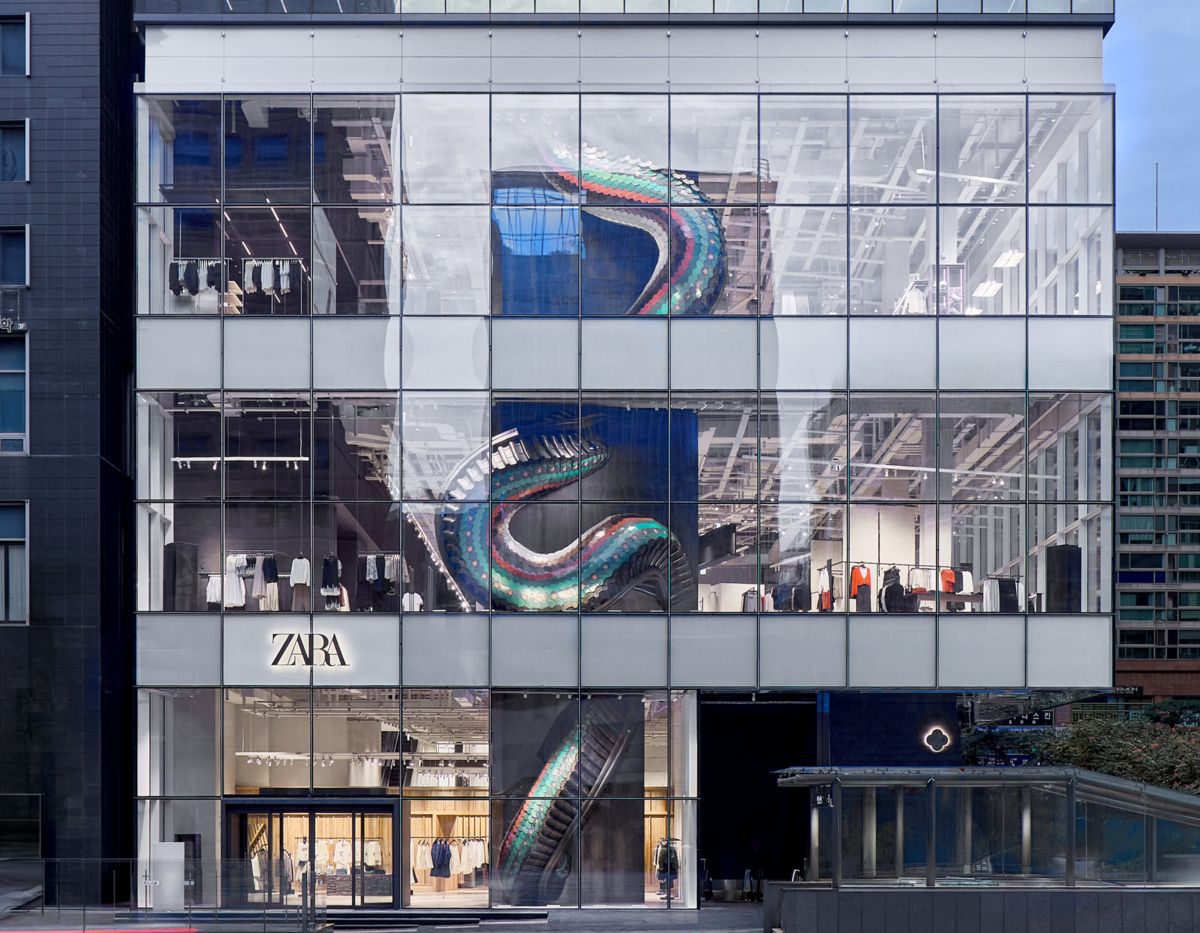
Zara opened its relocated and expanded Gangnam flagship in Seoul on 28 August, placing one of its largest South Korean stores in a district that Inditex regards as a testing ground for retail formats, products and customer services.
The opening is not Zara’s first arrival in Gangnam. The company moved its existing branch approximately 100 metres to a new three-storey location with an operating area of around 2,130 square metres. It is Zara’s second flagship in South Korea, following the renovation of its Myeongdong Noon Square store.
The first two floors are primarily dedicated to womenswear, while the third brings together menswear and specialised ranges including Zara Origins and the Athleticz sportswear line.
The store also offers a collection developed specifically for the South Korean market. The range includes designs influenced by the silhouette of the traditional hanbok, elements drawn from Korean streetwear and T-shirts carrying the “Seoul Gangnam” label and the store’s address.
This approach gives the company a way to test whether locally developed products can generate demand beyond Zara’s standard international assortment. Inditex has not said whether the collection will later be sold in other countries.
The building incorporates references to Korean architecture and decorative traditions, including dancheong, the multicoloured patterns historically used on wooden buildings, and forms associated with traditional roof tiles.
A serpentine installation titled “Imugi” extends across the store’s three floors. Developed by Zara’s architecture team in collaboration with a Korean creative studio, the work reinterprets a creature from Korean folklore that is often associated with transformation and the possibility of becoming a dragon.
The installation acts as a visual connection between the floors, but its role also reflects a wider change in the function of flagship stores. Large fashion locations are increasingly expected to combine merchandise, architecture, hospitality and digital services rather than operate exclusively as points of sale.
That strategy is also visible on the ground floor, where Zara has installed Zacaffè, its in-store café concept. The Gangnam branch is the second Zara location in South Korea to include the format after Myeongdong.
The café has its own terrace and incorporates books and other material related to Korean art, photography and architecture. Inditex is using hospitality spaces in selected flagships to extend customer visits and create another reason to enter the store outside a planned clothing purchase.
The commercial value of that model will depend on whether additional traffic translates into purchases, repeat visits and stronger use of Zara’s digital channels. The company has not disclosed the cost of the Gangnam project or its expected sales.
Technology forms another part of the store’s design. The location has 26 fitting rooms, eight checkout points and radio-frequency identification systems for inventory management.
A separate area handles the collection and return of online orders. Automated return processing is intended to reduce waiting times and integrate the physical store more closely with Zara’s e-commerce operation.
These services illustrate how Inditex is changing the role of its store network. Locations are no longer measured solely by the sales generated inside the building. They also function as collection points, return centres, local fulfilment infrastructure and customer-acquisition channels for the company’s online business.
Gangnam provides a relevant setting for that experiment. The district combines offices, entertainment, beauty, fashion and digital commerce, while its consumers are accustomed to rapid changes in store concepts and product presentation.
Inditex says it considers South Korea more than a sales market. The group wants to use the country to observe changes in fashion, service expectations and retail technology before applying selected findings to other parts of its international network.
Company representatives have described Korean consumers as attentive to product details, store design and service. That makes the market useful for testing concepts, but it also raises the threshold for success. Local fashion companies, department stores, online platforms and international brands compete for consumers who can move quickly between physical and digital channels.
Zara entered South Korea in 2008. Its official store directory now lists 30 locations in the country, including ten in Seoul. Inditex has not announced a target for further openings or disclosed Zara’s sales and profitability in the Korean market.
The Gangnam investment is consistent with the group’s global property strategy. Inditex has been reducing the number of smaller stores while expanding, relocating or renovating locations with higher sales potential and stronger links to its online platform.
At the end of its 2025 financial year, the group operated 5,460 stores, fewer than a year earlier, although its total selling area increased by 5.3%. Inditex completed more than 400 store interventions during the year, including openings, extensions and full refurbishments.
The company reported annual revenue of €39.9 billion and net profit of €6.2 billion. It plans to invest approximately €2.3 billion in 2026, with spending directed towards stores, digital capabilities, technology and logistics.
Against that background, the relocated Gangnam flagship is part of a wider allocation of capital towards fewer but larger and more integrated stores. Its product mix, café, cultural references and automated services allow Inditex to test several elements within a single location.
The Korean references also show how global fashion groups are adjusting their standardised formats to individual markets. In Gangnam, Zara has introduced local products and design elements without changing its centralised operating model.
The effectiveness of that strategy will depend on more than the visibility of the building or its installations. The main questions are whether the local collection attracts sustained demand, whether customers use the omnichannel services and whether the store produces ideas that can be transferred to other markets.
For Inditex, South Korea offers a concentrated environment in which physical retail, mobile commerce and local fashion culture interact. The Gangnam store gives the company a platform to observe those behaviours while strengthening Zara’s presence in Seoul.
The project therefore serves two purposes: it expands the commercial capacity of an existing location and provides Inditex with a testing site for the next phase of its store strategy.