Argentine Energy Companies Raise Nearly €4.5 Billion in Debt as Global Investors Back the Sector
Argentina's energy industry has secured almost €4.5 billion in corporate debt financing during 2026, highlighting renewed investor confidence in the country's oil, gas and electricity businesses despite continued constraints on sovereign borrowing. Companies linked to the Vaca Muerta shale formation and power generation have led the fundraising wave.

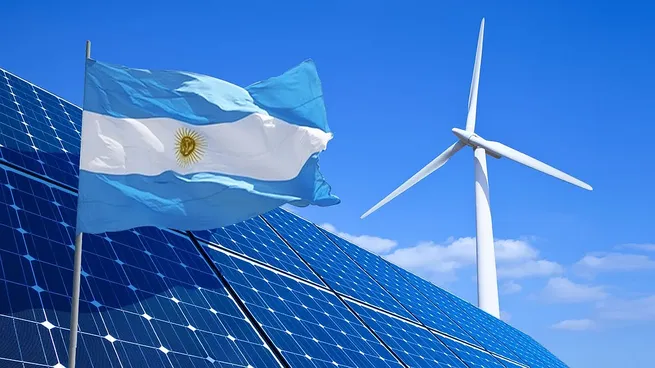
Argentina's leading energy companies have collectively raised approximately €4.5 billion through corporate bond issuances this year, reinforcing the sector's position as one of the country's strongest magnets for international capital.
The financing activity contrasts sharply with Argentina's sovereign funding conditions, as private companies continue to access international and domestic debt markets on more favourable terms than the national government.
Energy drives corporate financing
Electricity distributors, oil and gas producers and integrated energy groups have dominated Argentina's corporate bond market in 2026.
Among the largest transactions, electricity distributor Edenor issued debt equivalent to roughly €467 million, while Pampa Energía completed multiple offerings totalling around €594 million, reflecting sustained investor appetite for established companies with solid cash generation and export-linked revenues.
Analysts attribute the strong demand to companies benefiting from dollar-denominated income streams, particularly those involved in hydrocarbon production from the Vaca Muerta shale basin and electricity generation.
Private capital outpaces sovereign borrowing
The fundraising wave underscores the widening gap between Argentina's corporate sector and the country's sovereign financing capacity.
While energy companies continue attracting institutional investors, Argentina itself remains largely excluded from international bond markets at competitive borrowing costs, prompting authorities to rely on alternative financing mechanisms for public debt management.
This divergence reflects growing confidence in selected private issuers whose balance sheets are increasingly insulated from broader macroeconomic volatility.
Implications for Europe–Latin America investment
The resurgence of Argentina's energy debt market offers new opportunities for European institutional investors seeking exposure to Latin America's expanding energy industry.
For Europe, the trend reinforces the strategic importance of Argentina's natural resources—particularly Vaca Muerta—as the region looks to diversify global energy supply chains and strengthen investment ties with Latin America.