Austria’s ECON opens Brazilian subsidiary to make South America its next growth market
The Upper Austrian manufacturer of plastics pelletizing systems has launched ECON Brasil in Santa Catarina, combining sales, technical service, assembly and logistics. The expansion follows a year in which the export-driven company generated more than €34 million in revenue and strengthens a global network that already includes the United States, China and India.

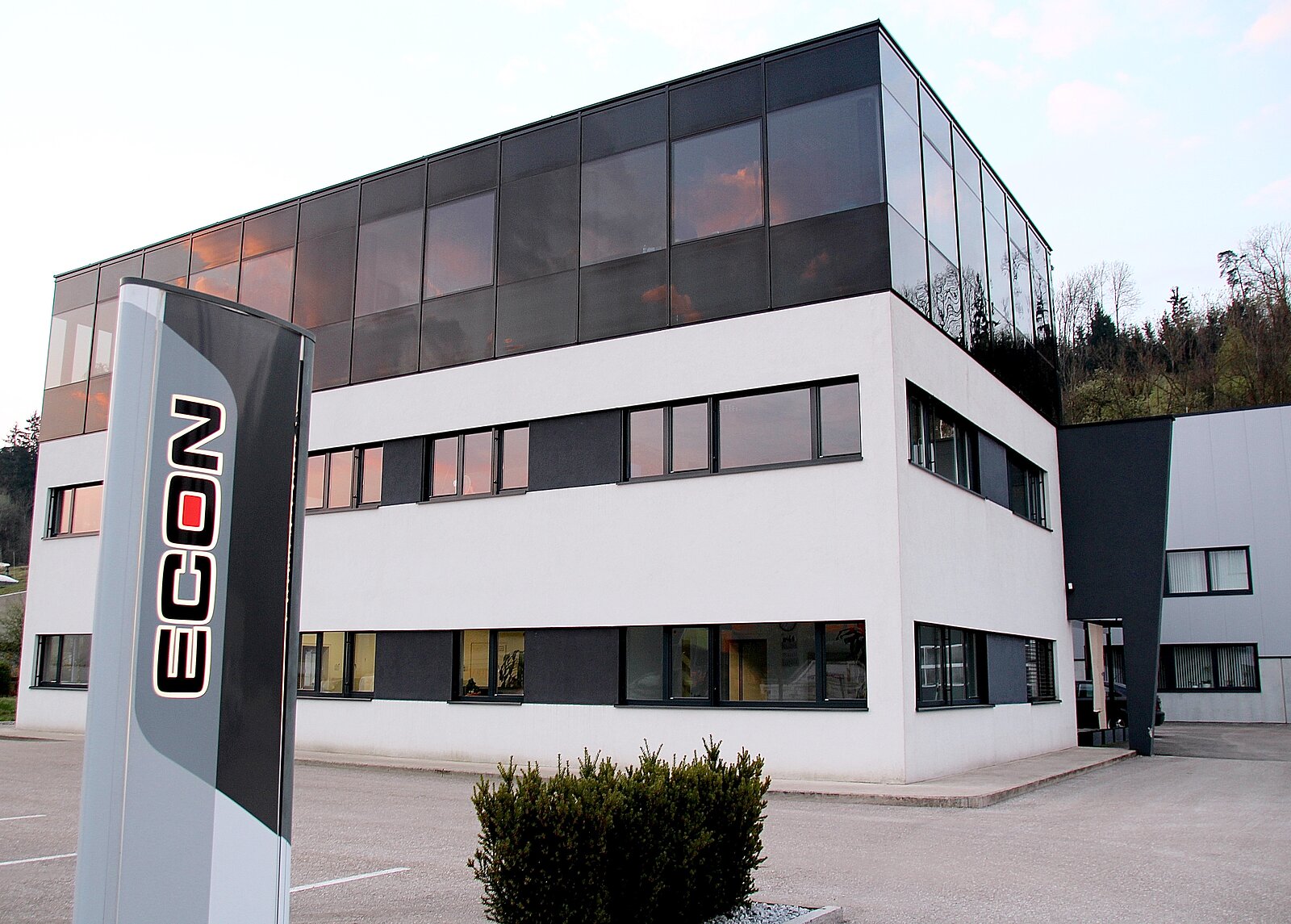
Austrian industrial machinery specialist ECON GmbH has opened a subsidiary in Brazil as it seeks to accelerate its expansion across South America and provide faster technical support to plastics processors in the region.
ECON Brasil began operations in Antônio Carlos, in the state of Santa Catarina, on 25 August. The new location brings together sales, customer service, assembly and logistics, giving the company a permanent operational platform in Latin America’s largest economy.
The investment represents more than the opening of a commercial office. ECON will store spare parts and machine assemblies locally, reducing the time required to respond to maintenance requests and allowing projects to be implemented with greater regional support.
The company describes the Brazilian operation as a sales, service and production subsidiary. However, the activities detailed for the site are primarily focused on assembly and customer assistance, while development and manufacturing of ECON’s patented core technologies will remain at its headquarters in Weißkirchen an der Traun, Upper Austria.
This structure reflects a broader model increasingly adopted by specialised European manufacturers: keeping research, engineering and high-value production close to the company’s technological base while establishing local service, inventory and assembly capabilities in strategic export markets.
Founder and chief executive Gerhard Hehenberger said Brazil and South America are becoming increasingly important to ECON’s international strategy. A local presence, he explained, will allow the company to understand customer requirements more directly and respond with greater speed.
The Brazilian subsidiary will be led by Dominik Kline, an executive with technical and international management experience as well as extensive knowledge of Brazil and other South American markets. His command of German, Portuguese, Spanish and English is expected to facilitate communication with customers across the region.
ECON has identified particularly strong opportunities in the compounding industry, where manufacturers combine polymers with additives, reinforcing materials, pigments or recycled content to produce compounds with specific technical properties.
These operations require stable pelletizing processes capable of handling materials with different viscosities, temperature requirements and filler contents. ECON argues that its technology can provide the flexibility needed for these applications while its Brazilian subsidiary will supply the local technical support required to keep equipment operating reliably.
Founded in 1999, ECON develops machinery that transforms molten plastics into uniform pellets for further industrial processing. Its customers include compound producers, masterbatch manufacturers, virgin resin companies and plastics recyclers.
Its portfolio includes underwater and air pelletizing systems, dryers, screen changers and pyrolysis furnaces. The company’s specialised thermal insulation technology is designed to reduce heat transfer between the polymer melt and cooling water, helping prevent blocked die holes and supporting the processing of temperature-sensitive, highly filled or otherwise demanding materials.
The expansion into Brazil comes as ECON records strong international growth. Figures released by the company in 2026 showed that revenue increased from approximately €28.3 million in 2023 to more than €34 million in 2025. Exports represented 91% of sales, highlighting the importance of overseas markets to a company that employs around 110 people worldwide, including approximately 80 at its Austrian headquarters.
Europe, North America, India and China have traditionally formed the main pillars of ECON’s international business. Latin America and the Middle East are now becoming more important as the company seeks additional markets for specialised plastics-processing equipment.
The addition of Brazil expands an overseas infrastructure that already includes ECON operations in the United States, China and India. These locations provide commercial and technical proximity, while Austria retains control over research, engineering and the manufacture of the company’s core systems.
That division of responsibilities is central to ECON’s expansion strategy. The company can preserve its Austrian technological and industrial base while shortening delivery and service times in distant markets. For customers, local access to spare parts and technicians can be particularly important because an interruption in a pelletizing line may affect the entire plastics production process.
The opening was attended by Hehenberger, Kline and Michael Forstner, president and chief executive of ECON USA. The company then presented its technology at Interplast 2026 in Joinville, one of the largest plastics industry events in Latin America.
Interplast’s organisers expected the 2026 edition to attract approximately 30,000 industry professionals, representing more than 150 cities and 26 countries, with around 400 brands participating. ECON used the event to introduce its new Brazilian team and demonstrate its EUP underwater pelletizing technology to customers and industrial partners.
The timing connects the establishment of the subsidiary with an immediate commercial push. Rather than entering Brazil solely through distributors or occasional visits from Europe, ECON can now offer local project support before, during and after the installation of its machinery.
A permanent presence could also help the company compete for investment associated with the modernisation of Brazil’s plastics industry, the growth of recycled polymers and increasing demand for materials engineered for the automotive, packaging, construction and consumer-goods sectors.
Pelletizing technology occupies a less visible but strategically important position in that value chain. The consistency, energy consumption and flexibility of the process can determine whether manufacturers are able to incorporate recycled materials, reuse production waste or create compounds with the properties required by industrial customers.
ECON has not disclosed the amount invested in the Brazilian subsidiary, its initial workforce, the size of the facility or how much manufacturing could eventually be localised. The operation is therefore beginning as a flexible regional platform whose future scale will depend on customer demand and the volume of projects secured across South America.
For ECON, Brazil provides both a large domestic market and a base from which it can serve neighbouring countries more directly. For Austria, the expansion illustrates how a highly export-oriented industrial company can internationalise without transferring its technological centre away from Europe.
The strategic balance is clear: Brazil will bring ECON closer to customers, while Austria will remain responsible for the knowledge, engineering and patented technology on which the company’s competitiveness depends.