
easyJet Rejects €6.9 Billion Takeover Bid as Europe’s Airline Sector Enters New Consolidation Phase
The low-cost carrier turned down a multi-billion-euro acquisition proposal, signaling confidence in its long-term strategy and highlighting renewed investor interest in Europe's aviation industry.

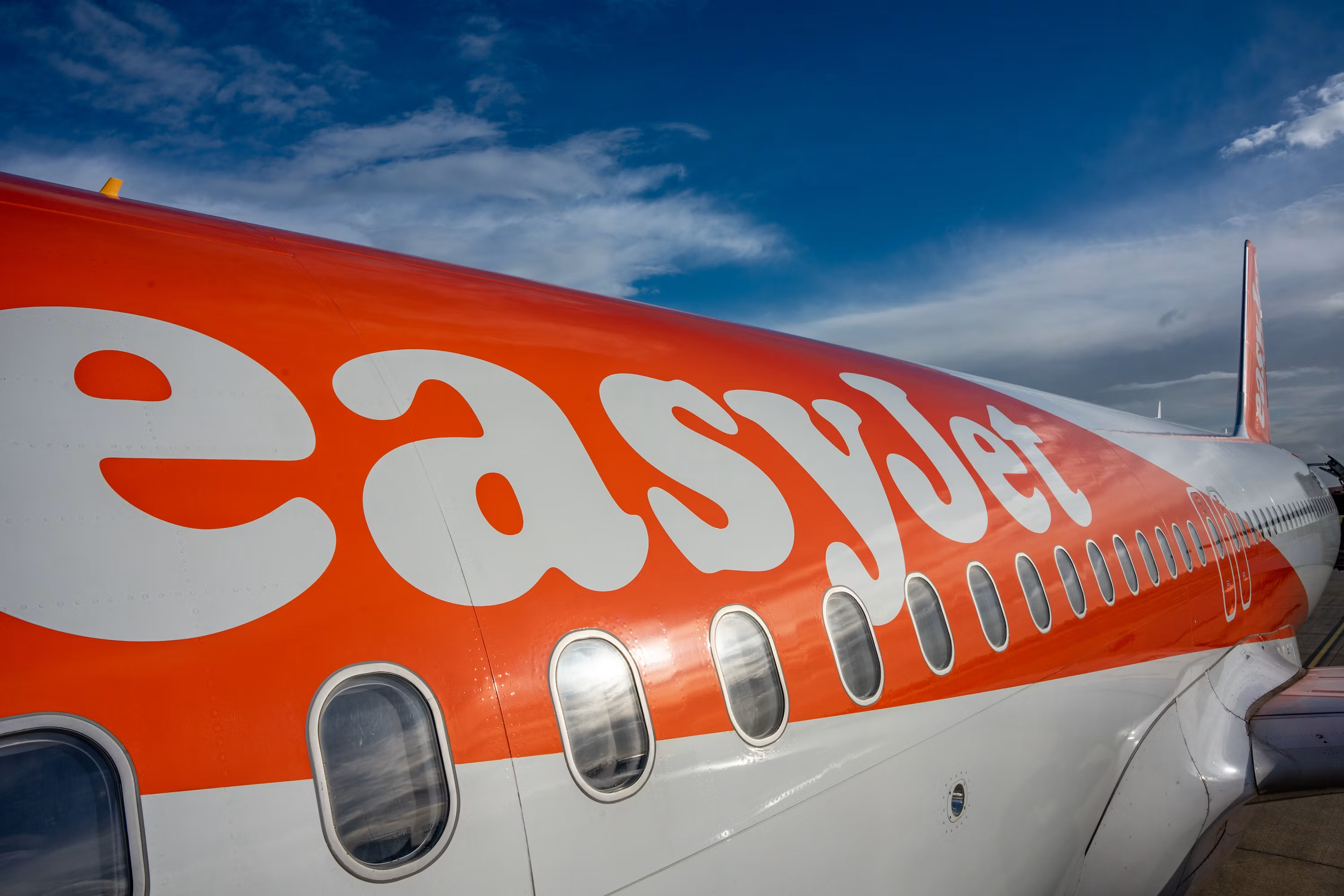
British low-cost airline easyJet has rejected a takeover approach valued at approximately €6.9 billion, choosing instead to continue pursuing its independent growth strategy amid a recovering European aviation market.
The proposal came from a US-based private equity investor seeking to acquire one of Europe's largest budget carriers at a time when air travel demand continues to strengthen across the continent.
According to market reports, easyJet's board unanimously concluded that the offer significantly undervalued the company's long-term prospects and future earnings potential. Executives argued that the airline is well positioned to benefit from rising passenger demand, fleet modernization and ongoing expansion in key European markets.
The decision immediately drew attention across financial and aviation circles, as it underscores growing investor confidence in the airline sector after several years marked by pandemic disruptions, operational challenges and rising costs.
For investors, the rejected offer highlights how aviation assets are once again attracting interest from private equity firms and institutional capital. As passenger volumes continue to recover and airlines improve profitability, many investors see opportunities to acquire strategic transportation assets with strong market positions.
easyJet has emerged as one of Europe's most recognizable low-cost carriers, operating extensive networks across the United Kingdom and continental Europe. The company has invested heavily in operational efficiency, digital services and sustainability initiatives aimed at reducing emissions and improving competitiveness.
The rejection also reflects broader consolidation trends within the aviation industry.
Airlines worldwide are facing increasing pressure to achieve scale, improve margins and adapt to evolving regulatory requirements. As a result, mergers, acquisitions and strategic partnerships are becoming more common as companies seek to strengthen market positions.
Industry analysts believe the bid could be an indication of further takeover activity in the sector, particularly among airlines that possess valuable airport slots, established brands and strong customer bases.
For Europe, the case highlights the strategic importance of aviation infrastructure within the continent's economy. Airlines play a critical role in tourism, trade, business travel and regional connectivity, making them attractive assets for both financial and strategic investors.
The development is also relevant for Latin America.
European airlines remain key partners for transatlantic connectivity, facilitating trade, tourism and investment flows between Europe and Latin America. Any major consolidation within the European airline market could influence route networks, competitive dynamics and future investment decisions affecting both regions.
Beyond the immediate transaction, the rejected offer illustrates how investor perceptions of the aviation industry have shifted. After years of uncertainty, airlines are increasingly being viewed not as recovery stories but as growth opportunities linked to mobility, tourism and economic expansion.
Whether additional bids emerge or easyJet continues independently, the episode signals that Europe's airline sector is entering a new phase in which strategic assets, market scale and long-term growth potential are attracting increasing attention from global investors.