EU Cooperation in Honduras Mobilises €700 Million as Brussels Deepens Global Gateway Investment
The European Union has consolidated its position as one of Honduras’ key development and investment partners. As EU Head of Mission Cristina Marín concludes three years in the Central American country, bilateral financial commitments stand at €173 million, while more than €250 million in non-repayable European funds are currently being implemented.
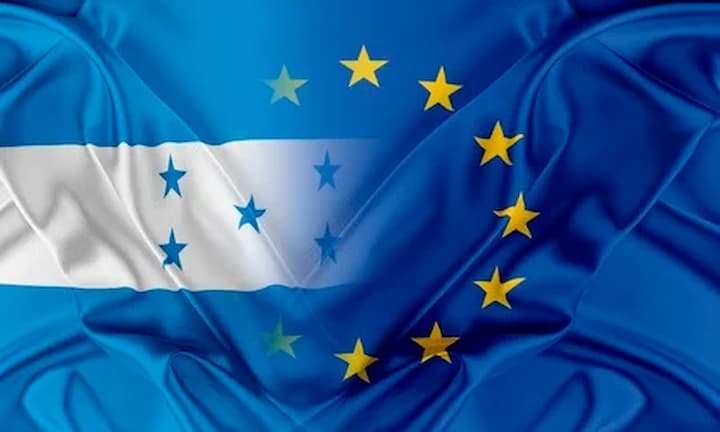
The European Union is strengthening its economic and development footprint in Honduras through a combination of grants, investment mobilisation and strategic projects that increasingly connect the Central American country with Brussels' wider Global Gateway agenda.
The scale of that relationship was highlighted by Cristina Marín as she concluded her three-year term as Head of the EU Mission in Honduras.
During her tenure, Marín travelled across all 18 departments of Honduras, gaining direct exposure to communities and projects supported through European cooperation. As she leaves the country, the financial dimension of that partnership has become increasingly significant.
€173 million in commitments and €250 million under implementation
The EU currently has €173 million in bilateral financial commitments with Honduras.
At the same time, more than €250 million is already being implemented through non-repayable funding included within the European Union's Multiannual Indicative Programme for the country.
The figures illustrate the different layers of European engagement.
Rather than concentrating funding on a single sector, Brussels has constructed a portfolio spanning environmental, economic, institutional and social priorities.
European resources are being directed toward natural-resource management, climate change, energy, employment, sustainable development, democratic governance, security and human rights.
For Honduras, this means European cooperation is increasingly connected not only with traditional development assistance but also with the country's longer-term productive and institutional transformation.
European commitments mobilise up to €700 million
One of the most significant figures disclosed by Marín concerns the capacity of European funding to attract additional capital.
According to the outgoing EU representative, the €173 million in bilateral financial commitments have helped mobilise as much as €700 million in total investment in Honduras.
This multiplier effect is particularly relevant to the EU's evolving international cooperation strategy.
Brussels increasingly seeks to combine grants with development financing, guarantees, private capital and institutional partnerships. The objective is to use European public resources as a catalyst for significantly larger investment programmes rather than treating development funding as an isolated source of financing.
For Honduras, the result potentially expands the economic impact far beyond the original amount committed by European institutions.
Global Gateway gains importance in Central America
The investment strategy is closely connected with the EU's broader Global Gateway strategy.
Global Gateway is Brussels' international infrastructure and connectivity programme, designed to mobilise public and private investment in areas including clean energy, digitalisation, transport, health, education and sustainable infrastructure.
Honduras is becoming part of that broader European strategy in Latin America and the Caribbean.
Marín highlighted initiatives connected with Global Gateway as one of the principal mechanisms through which the EU intends to reinforce strategic investment in the country over the coming years.
The approach represents an important evolution in Europe-Latin America relations: development cooperation is increasingly being combined with investment, infrastructure and economic partnerships.
Energy and climate action emerge as strategic priorities
Energy and environmental sustainability occupy an important place in the bilateral agenda.
Honduras has considerable renewable-energy potential but simultaneously faces infrastructure requirements, climate vulnerability and the need to improve the resilience of its productive economy.
European cooperation therefore encompasses energy, climate change and management of natural resources, sectors that closely align with the EU's own external investment priorities.
For European institutions and companies, Central America's energy transition can also create opportunities in renewable generation, grids, storage, energy efficiency and sustainable infrastructure.
The challenge will be turning development programmes into projects capable of attracting long-term investment while producing measurable benefits for local communities.
Employment moves to the centre of the next phase
Job creation is another priority identified by the European delegation.
Marín indicated that the EU is preparing new initiatives for the coming years aimed at extending cooperation to additional Honduran communities while responding more directly to national priorities.
Among those needs, creating employment opportunities has been identified as particularly important.
The focus reflects one of the fundamental challenges facing Honduras and much of Central America: translating investment into productive employment capable of improving household incomes and creating opportunities for younger generations.
For Brussels, this also links economic development with broader objectives such as social stability and reducing some of the structural pressures behind migration.
From traditional aid to investment partnership
The numbers presented at the conclusion of Marín's mandate illustrate a broader change in European development policy.
The EU continues to provide substantial non-repayable resources—more than €250 million are currently under implementation in Honduras—but the strategy increasingly seeks to multiply those funds through investment mobilisation.
The €700 million associated with the €173 million in bilateral commitments provides an example of that model.
European cooperation can act as the initial layer of capital that helps projects obtain additional financing from development banks, governments and potentially private investors.
That approach is particularly important in infrastructure-intensive sectors, where grants alone are rarely sufficient to finance projects at the scale required.
Governance, security and human rights remain part of the relationship
The EU-Honduras agenda is not exclusively economic.
European resources continue to support democratic governance, security and human rights, reflecting the political and institutional dimension of the relationship.
This combination differentiates the European approach from a purely commercial investment strategy.
For Brussels, economic development, institutional capacity and democratic governance are interconnected. The ability to attract sustainable long-term investment depends partly on legal certainty, effective institutions and predictable public administration.
These areas therefore remain integral to European cooperation even as Global Gateway increases the emphasis on infrastructure and investment.
Honduras within Europe's renewed Latin American strategy
The growing financial relationship also needs to be viewed within a broader geopolitical context.
The European Union has been seeking to strengthen its economic presence across Latin America and the Caribbean as global competition for investment opportunities, strategic resources and commercial partnerships intensifies.
Central America represents a comparatively small market individually, but its geographical position, renewable-energy potential, proximity to North America and trade relationship with Europe give the region strategic relevance.
For Honduras, closer cooperation with the EU also provides an opportunity to diversify sources of investment and development financing.
Global Gateway can become one of the mechanisms through which that relationship moves from conventional donor-recipient cooperation toward a broader economic partnership.
Three years that leave a substantial financial footprint
Marín described her three years in Honduras as an extraordinary period, highlighting her visits throughout the country's 18 departments and the opportunity to observe European-supported projects directly.
Her departure nevertheless comes at a moment when the bilateral relationship appears to be expanding rather than concluding a cycle.
The financial figures provide the clearest indication: €173 million in bilateral commitments, more than €250 million in grants currently being implemented and as much as €700 million in investment mobilised.
The next stage will be measured not simply by the volume of European funding but by its capacity to generate productive investment, infrastructure, employment and sustainable economic development.
For Honduras, the EU is therefore increasingly becoming more than a development donor. Brussels is positioning itself as a long-term investment and strategic partner in the country's economic transformation.