EU–Mercosur Agreement Enters Provisional Application, Opening a 700 Million Consumer Market
The European Union and Mercosur have started provisional application of their long-awaited trade agreement, creating one of the world’s largest commercial areas and reshaping business ties between Europe and South America.

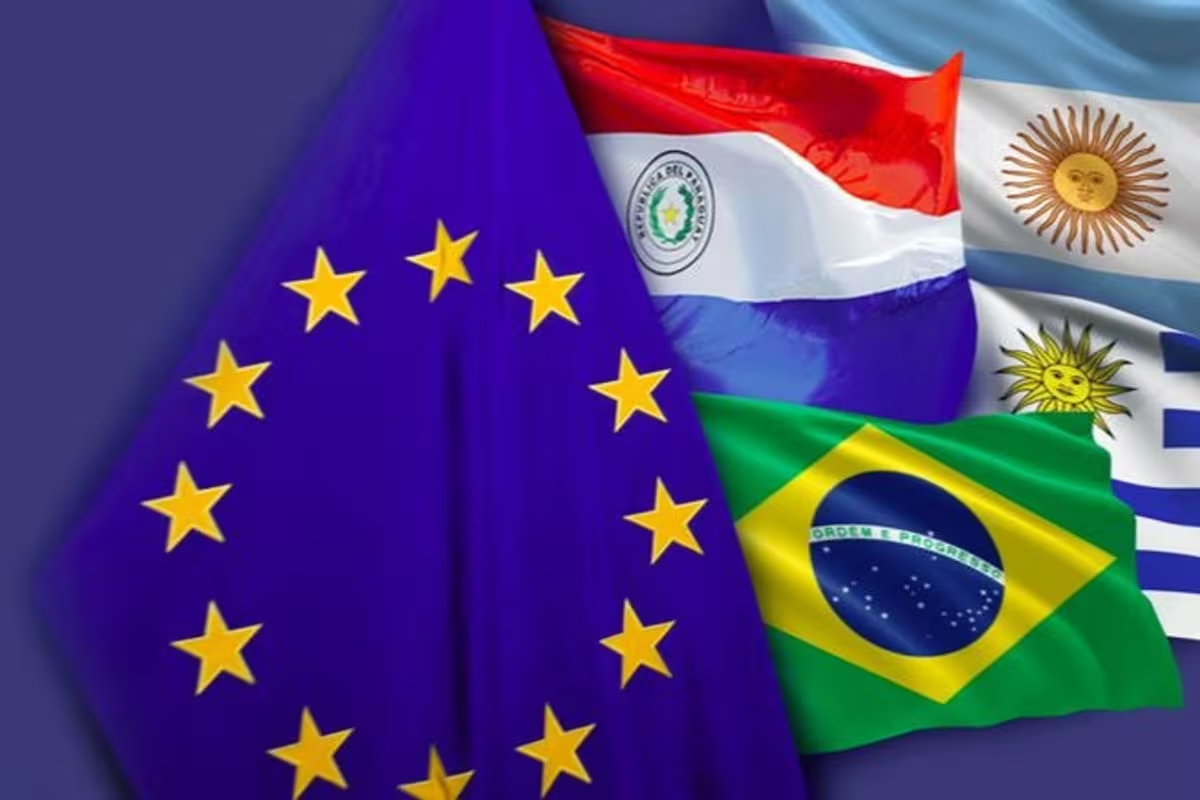
The trade agreement between the European Union and Mercosur has entered provisional application, marking a historic shift in relations between Europe and South America after more than two decades of negotiations.
The pact connects the EU with Argentina, Brazil, Paraguay and Uruguay, creating a commercial space of more than 700 million consumers. Its implementation is expected to progressively reduce tariffs, open market access and deepen cooperation in sectors ranging from agriculture and food to machinery, vehicles, services, energy and critical raw materials.
For Europe, the agreement arrives at a strategic moment. Brussels is seeking to diversify trade partners, reduce exposure to geopolitical shocks and strengthen its presence in Latin America at a time when China has expanded its influence across the region. The deal is also part of a broader EU effort to defend open trade while global commerce becomes more fragmented.
For Mercosur countries, the agreement offers access to one of the world’s highest-value consumer markets. Agricultural exporters, food producers and industrial sectors could benefit from lower barriers, while governments in the region see the pact as a way to attract investment and modernize production chains.
The agreement remains politically sensitive. European farmers have warned about competition from South American beef, sugar and poultry, while environmental organizations continue to raise concerns over deforestation and sustainability commitments. In South America, some industrial sectors fear stronger competition from European companies with greater scale and technology.
Even so, the provisional start changes the business outlook. Companies on both sides of the Atlantic can now begin preparing for a new trade framework that will gradually alter pricing, sourcing and investment decisions. European exporters are expected to gain improved access to Mercosur markets, while South American producers will face stronger incentives to meet EU standards on traceability, sustainability and food safety.
The broader significance goes beyond tariffs. The EU–Mercosur agreement is becoming a geopolitical instrument in a world where supply chains, energy security and access to raw materials increasingly define economic power. For Europe, South America offers food, energy, minerals and a growing consumer base. For Mercosur, Europe offers capital, technology and access to a market with high purchasing power.
The full impact will depend on implementation, regulatory alignment and political resistance in both regions. But the start of provisional application sends a clear signal: Europe and Mercosur are moving from negotiation to execution.
The EU–Mercosur deal is no longer only a trade promise. It is now an active framework with the potential to reshape investment, exports and strategic cooperation between Europe and Latin America.