EU redraws its global trade map as Brussels looks beyond traditional partners
Europe is accelerating a network of trade agreements across Latin America, Asia, Australia and the Gulf as geopolitical tensions reshape global commerce. Brussels sees diversification as increasingly essential to competitiveness, supply-chain resilience and reducing strategic dependencies.

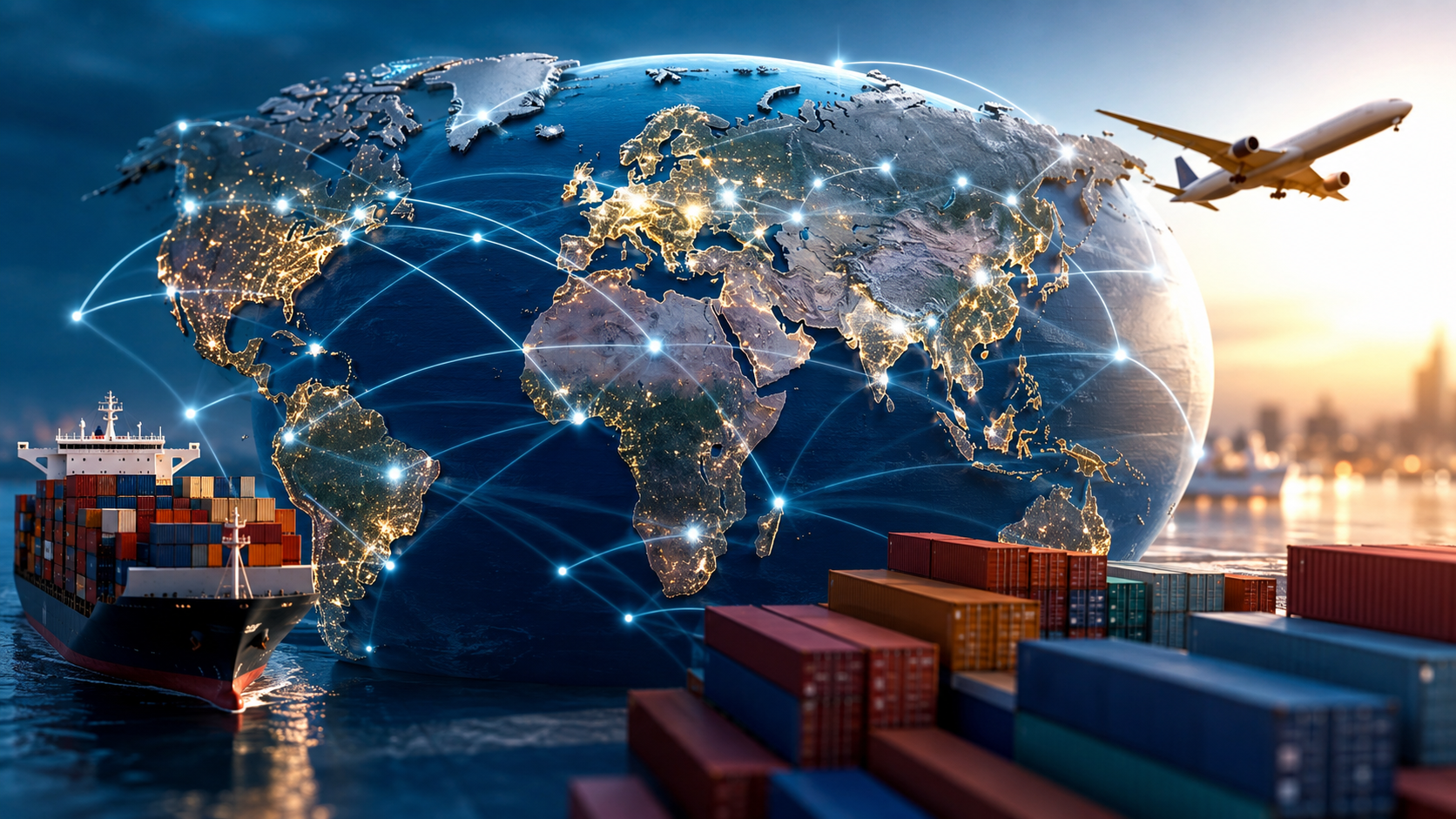
The European Union is quietly redrawing the map of its external trade. Faced with a more fragmented global economy, intensifying competition with China and persistent uncertainty surrounding transatlantic trade, Brussels is accelerating an ambitious series of agreements designed to give European companies greater access to some of the world's fastest-growing markets while reducing the bloc's dependence on a limited number of commercial partners.
The strategy stretches from Mercosur and Mexico in Latin America to India, Indonesia, Australia, Malaysia, Thailand and the Philippines in the Indo-Pacific, as well as the United Arab Emirates in the Gulf. Some negotiations have already concluded, others have entered the ratification process, while several remain at the negotiating table.
Together, they illustrate a fundamental shift in European trade policy. Free trade agreements are no longer being viewed simply as instruments for reducing tariffs. They have become part of the EU's broader economic-security strategy, connecting market access with investment, critical raw materials, supply chains, digital trade and geopolitical influence.
That urgency has grown as the international trading system becomes increasingly shaped by industrial subsidies, tariffs, export controls and strategic competition between the world's largest economies.
For Europe, which remains heavily dependent on external markets for both exports and essential inputs, diversification has become an economic necessity.
The EU already has an extensive network of trade agreements covering dozens of countries. European Parliament research estimated earlier this year that agreements covered 78 countries, but Brussels is now trying to extend that preferential network towards markets that will account for an increasing share of global consumption, manufacturing and resource production in the coming decades.
From Mercosur to India: a new geography of European trade
Latin America has become one of the most visible parts of that strategy.
After more than two decades of negotiations, the EU and Mercosur moved into a new phase in 2026. The EU-Mercosur Interim Trade Agreement has been provisionally applied since May 1, covering the commercial pillar with Argentina, Brazil, Paraguay and Uruguay, while the broader Partnership Agreement continues through the ratification process.
For European businesses, Mercosur offers access to a large South American market while creating opportunities in industries ranging from machinery and automobiles to chemicals, pharmaceuticals and services. For Europe itself, the relationship also has strategic importance because South America possesses substantial agricultural, energy and mineral resources.
The agreement remains politically sensitive, particularly among European farmers concerned about competition from South American agricultural imports. Yet from Brussels' perspective, Mercosur has acquired a geopolitical significance that extends beyond individual sectors: it strengthens economic ties with Latin America at a time when China has dramatically expanded its commercial footprint across the region.
Mexico represents another important piece. The EU and Mexico have worked to modernise a commercial relationship dating back more than two decades, and the two sides signed their Interim Trade Agreement in May 2026, according to the Council of the EU.
But the centre of gravity of the EU's next trade push is increasingly shifting towards the Indo-Pacific.
Negotiations for an EU-India Free Trade Agreement concluded in 2026, putting one of the world's largest and fastest-growing economies within reach of a new preferential framework with Europe. Investment protection and geographical indications remain subject to separate negotiations.
India's significance is difficult to overstate. Its population, expanding middle class, manufacturing ambitions and growing role in global supply chains make it one of the key markets European companies want to access more deeply. At the same time, a closer economic relationship with New Delhi provides Brussels with another route for diversifying supply chains away from excessive concentration in China.
Indonesia represents a similar strategic opportunity. Negotiations on the EU-Indonesia Comprehensive Economic Partnership Agreement were finalised in 2025, and the agreement is now moving through adoption and ratification.
Beyond Indonesia's enormous consumer market, the country plays a central role in global supplies of nickel and other materials needed for batteries and the energy transition. This makes the relationship relevant not only for trade volumes but for Europe's industrial strategy.
Australia is another major piece now approaching implementation. Negotiations on an EU-Australia free trade agreement were concluded in 2026, with the deal expected to eliminate the overwhelming majority of tariffs on European exports while expanding cooperation in services, agriculture and critical minerals.
The common thread connecting these agreements is diversification.
Europe wants more customers for its industrial products, but it also needs more suppliers.
The transition towards electric vehicles, renewable energy, semiconductors and digital infrastructure has made access to critical minerals and strategic technologies increasingly important. Trade policy therefore overlaps with industrial policy in ways that would have been less prominent a decade ago.
Southeast Asia and the Gulf move higher on Brussels’ agenda
The next frontier is a group of agreements that remain under negotiation.
The EU resumed free trade negotiations with Malaysia in 2025, while talks with Thailand and the Philippines are continuing. Negotiations with the Philippines made progress across areas including rules of origin, intellectual property, digital trade, services, investment and public procurement during a negotiating round in May.
These markets are strategically important because Southeast Asia has become one of the main manufacturing centres of the global economy. Stronger agreements could provide European companies with alternative production networks while expanding access to rapidly growing consumer markets.
The United Arab Emirates represents another direction in the strategy. Brussels resumed negotiations with the UAE in 2025, giving the EU a potential route towards deeper economic integration with one of the Gulf's major commercial, financial and logistics hubs.
EU trade ministers have explicitly linked this expanding network with supply-chain resilience, competitiveness and economic diversification. In May, they reviewed negotiations with Thailand, Malaysia, the Philippines and the UAE while discussing how to accelerate internal European procedures for agreements already concluded with Indonesia, India and Australia.
The European strategy therefore has two speeds: conclude new negotiations and reduce the time between political agreement and actual implementation.
That second challenge is particularly important.
European trade deals frequently require complex approval processes involving EU institutions and, depending on their legal architecture, national or regional parliaments. Negotiations can take years and ratification can add another lengthy period.
In a global economy changing much faster than that, Brussels increasingly faces pressure to shorten the distance between negotiating an agreement and delivering practical benefits to businesses.
The stakes are considerable. Analysis presented by the European Central Bank this year grouped Australia, Mercosur, India and Indonesia among agreements being adopted, with Malaysia, the Philippines, Thailand and the UAE among those under negotiation. The same analysis suggested that expanding the EU's network could increase the share of global commerce covered by preferential relationships.
For European companies, the benefits can include lower tariffs, easier access to public procurement, more predictable rules for services and investment, protection of geographical indications and reduced non-tariff barriers.
But the strategic value is becoming equally important.
The EU cannot replicate the scale of China's state-directed industrial model, nor can it assume that the transatlantic economic relationship will always provide the predictability that characterised previous decades. Its alternative is to build a broader web of economic relationships.
That means strengthening ties simultaneously with Latin America, India, Southeast Asia, Australia and the Gulf rather than replacing dependence on one major partner with dependence on another.
The emerging strategy could be described as commercial diversification as economic security.
It does not amount to deglobalisation. In many respects, Brussels is pursuing the opposite: more agreements, more partners and more routes through which European companies can trade and invest.
But it is a different form of globalisation — one shaped less by the assumption that economic interdependence is automatically beneficial and more by the recognition that the geography of trade itself has become a strategic asset.
For the EU, the next chapter of trade policy will therefore be measured not only by how much Europe exports.
It will also depend on how many alternative markets, suppliers and economic partnerships it can build before the next global disruption arrives.