EU suspension of Brazilian meat imports puts €1.58 billion in trade at risk
Brussels removed Brazil from its list of approved suppliers over concerns about compliance with EU rules on antimicrobial use, affecting beef, poultry and other animal products. Brazilian authorities are seeking a negotiated solution and have warned that reciprocal measures remain an option.

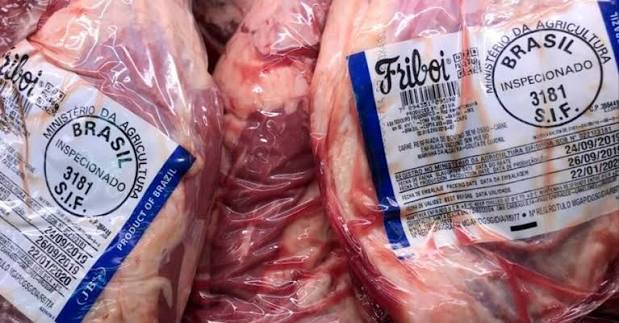
The European Union (EU) has suspended imports of several Brazilian animal products after concluding that the South American country had not provided sufficient guarantees that its livestock production complies with EU restrictions on antimicrobial substances.
The measure, which entered into force on September 3, affects trade worth approximately €1.58 billion a year, with beef and poultry accounting for the bulk of Brazilian exports currently excluded from the European market.
According to figures from Brazil’s Ministry of Agriculture, beef exports covered by the restriction were worth around €904 million in 2025, while chicken meat accounted for another €657 million.
The decision does not stem from the detection of prohibited residues in Brazilian meat shipments. Instead, European authorities have questioned whether Brazil’s monitoring and certification system provides adequate guarantees that antimicrobials banned under EU legislation are not being used in livestock production.
EU rules prohibit the use of certain antimicrobial substances for growth promotion and restrict medicines considered critical for human healthcare, as part of the bloc’s broader strategy to combat antimicrobial resistance.
A significant market for Brazilian exporters
The European Union remains an important destination for Brazil’s meat industry, particularly for higher-value beef cuts.
In 2025, the bloc represented close to 5.9% of Brazil’s beef export revenue and around 8% of Brazilian chicken export volumes. Italy, the Netherlands, Spain and Germany are among the main European buyers of Brazilian beef, while the Netherlands, Spain and Germany are also major destinations for poultry.
Brazil is currently the world’s largest exporter of both beef and chicken and is home to some of the industry’s largest global companies, including JBS, MBRF and Minerva Foods.
The suspension therefore creates a new regulatory challenge for Brazilian producers at a time when trade flows between the European Union and Mercosur are receiving increased attention.
Poultry could see a faster resolution
Brazilian authorities have intensified technical talks with Brussels since the European Commission first raised concerns over the country’s compliance framework earlier this year.
EU inspectors recently reviewed Brazil’s poultry and honey production systems as part of efforts to determine whether those sectors can regain access to the European market.
Brazil believes poultry exports could return sooner because the chicken production cycle is considerably shorter than that of cattle, allowing producers and regulators to demonstrate compliance with new requirements more rapidly.
Brazilian poultry association ABPA has maintained that the country's industry already meets European import standards. Beef industry group Abiec, meanwhile, says companies authorised to export to the EU have implemented specific antimicrobial-control protocols.
For cattle, however, the process could be significantly longer because production cycles extend over several years, making it more difficult to demonstrate full compliance across the supply chain in the short term.
Brazil raises the possibility of retaliation
The dispute has also moved beyond the technical level.
Brazil’s government said it could consider reciprocal measures against the European Union if negotiations fail to produce what Brasília considers a satisfactory solution.
The warning was issued jointly by the country’s agriculture and foreign affairs ministries, although no retaliatory measures have yet been announced.
Brazil could also pursue formal dispute mechanisms available through its trade relationship with the EU or take the matter to the World Trade Organization.
The episode highlights how regulatory standards are becoming an increasingly important component of EU–Latin American trade relations. For Brazilian food exporters, access to the European market will depend not only on competitiveness and production capacity, but also on their ability to demonstrate compliance with the bloc’s increasingly stringent health and traceability requirements.
For the European Union, meanwhile, the dispute offers another example of how Brussels is using market access requirements to extend its regulatory standards across international supply chains.