Exein raises €234 million and reaches €1.45 billion valuation amid surge in attacks on connected devices
The Rome-based cybersecurity company will use the funding to develop autonomous protection for robots, vehicles, drones and industrial systems. Exein says its network is detecting around 5,000 new attacks every week, five times more than a year ago.

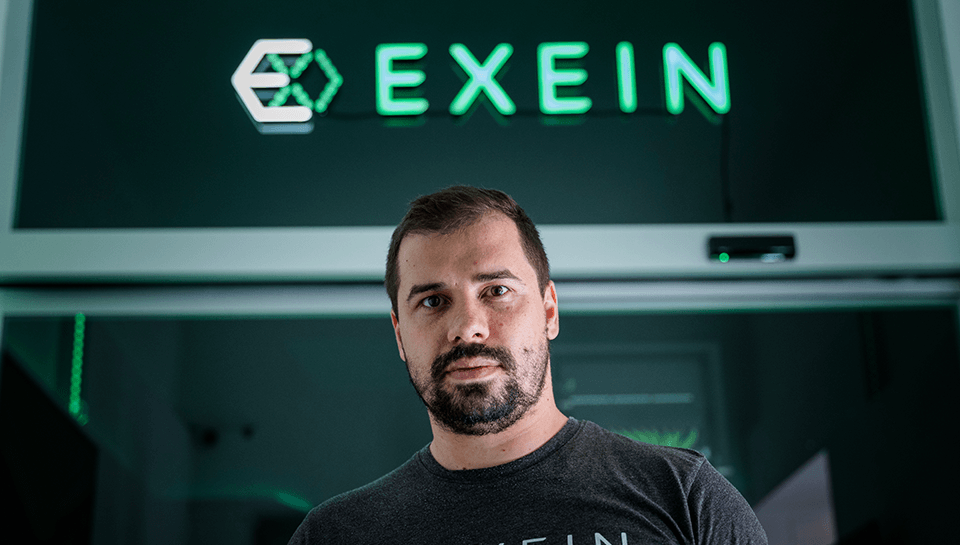
Italian cybersecurity company Exein has raised approximately €234 million in new funding, reaching a valuation of around €1.45 billion as demand grows for technology capable of protecting connected machines and artificial intelligence systems operating in the physical world.
The oversubscribed round was led by Headline. New investors included Sofina, Goldman Sachs, the European Investment Bank Group through the European Tech Champions Initiative, KfW Capital and T.Capital.
Existing shareholders Balderton Capital, HV Capital, Intrepid Growth Partners, 33N Ventures, Lakestar, Supernova Invest, Blue Cloud Ventures and Geodesic Capital also participated.
The transaction establishes Exein as one of Europe’s most highly valued privately owned cybersecurity companies. Its valuation has more than doubled since its previous financing round nine months ago and increased thirtyfold over two years, according to the company.
Founded in Rome by chief executive Gianni Cuozzo, Exein develops cybersecurity technology embedded directly into the firmware and operating environments of connected devices. Its products protect equipment ranging from industrial machinery and energy infrastructure to cars, medical devices, robots, drones and consumer electronics.
This area is gaining importance as AI moves beyond data centres and software applications into machines capable of sensing their surroundings, making decisions and performing physical actions.
A successful intrusion into these systems can have consequences beyond the loss of information. An attack could disrupt production, alter the behaviour of an autonomous machine, interfere with transport or affect equipment used in energy and healthcare.
Exein says its technology has a footprint covering more than two billion connected devices. Across that network, the company is detecting approximately 5,000 new and non-repetitive attacks per week, five times the number observed one year earlier.
Its approach is based on placing security within the device rather than relying exclusively on external monitoring. Earlier in 2026, the company introduced Photon, a runtime architecture operating at kernel level that seeks to stop malicious execution before it can affect the system.
Exein is now developing a proprietary foundation model for physical AI security. The model is being trained on two years of telemetry collected from connected machines, allowing it to learn how devices behave during normal operation and identify deviations that could indicate an attack.
The company intends to use that model to power autonomous security agents capable of detecting and responding to threats at machine speed, without waiting for human intervention.
The first version of its agentic security architecture is expected by the end of 2026, while the initial foundation models are scheduled for the first quarter of 2027.
The funding will also support international expansion. Exein plans to increase its presence in the United States, enlarge its workforce and open an office in the San Francisco Bay Area.
In Asia-Pacific, which already generates around half of its revenue, the company has established a regional headquarters in Taiwan and created a legal entity in Japan. It expects to expand its Japanese operations during the final quarter of 2026 and open a South Korean office by 2027.
Exein’s annual recurring revenue during the first half of 2026 was four times higher than in the same period of the previous year, according to company figures. It has also formed partnerships across semiconductors, industrial computing and connected infrastructure.
Alongside the equity round, Exein expanded its revolving credit facility, led by J.P. Morgan, with KfW joining as an additional lender. The facility is intended to provide capacity for potential acquisitions in Europe and the United States.
The company’s growth coincides with new European cybersecurity requirements. The EU Cyber Resilience Act is placing greater responsibility on manufacturers to address vulnerabilities throughout the lifecycle of connected products, increasing demand for tools that can be integrated during design and production.
However, autonomous cybersecurity systems will also have to demonstrate that they can respond rapidly without disrupting essential equipment or producing unacceptable false positives. This is particularly important in vehicles, factories, medical technology and critical infrastructure.
Exein’s new financing illustrates how investors are treating embedded cybersecurity as an infrastructure market rather than a specialised software segment. As intelligence moves into physical devices, the ability to secure their behaviour is becoming part of the broader competition over industrial technology, digital sovereignty and control of AI systems.