First EU–Mercosur Business Forum to bring companies and policymakers together in Uruguay
The inaugural meeting will take place in Punta del Este on 2 December, seven months after the provisional application of the interim trade agreement. Sectoral panels and business meetings will focus on agribusiness, digital transformation, logistics, energy and critical raw materials as both regions seek to convert the new framework into trade and investment.

Business leaders, government representatives and financial institutions from the European Union and Mercosur will meet in Uruguay for the first forum created specifically to examine the commercial opportunities emerging from the agreement between the two blocs.
The First Mercosur–European Union Business Forum will be held on 2 December 2026 at the Convention Center in Punta del Este under the theme “From the Agreement to business, trade and investments”.
The event is being organised by the European Union and the Government of Uruguay, with support from the Inter-American Development Bank, CAF – Development Bank of Latin America and the Caribbean, the European Investment Bank and investment promotion agency Uruguay XXI.
Its objective is to move the relationship from political negotiation to commercial implementation by connecting companies, public authorities and financial organisations interested in developing projects across both regions.
The forum will take place seven months after the EU–Mercosur Interim Trade Agreement began to apply provisionally on 1 May 2026, following more than 25 years of negotiations.
It will also precede the first EU–Mercosur Council under the new framework and the Mercosur Summit, giving the private sector an opportunity to raise implementation issues before the next round of high-level political meetings.
Uruguay will host the gathering while holding the Mercosur Pro Tempore Presidency, placing the country at the centre of the initial institutional and commercial agenda associated with the agreement.
Five sectors on the agenda
The programme will concentrate on five areas where European and South American companies could expand cross-border activity:
Agribusiness
Digital transformation
Logistics and transport
Energy
Critical raw materials
The organisers plan to combine sectoral discussions with business-to-business meetings and networking sessions. The format is intended to help companies identify partners, investment projects, suppliers and potential customers.
Agribusiness will be one of the central subjects. The agreement reduces or eliminates tariffs on several European food and beverage exports, while expanding controlled access to the EU market for agricultural products from Mercosur.
European producers previously faced tariffs of up to 35% on wine and spirits, 20% on chocolate and 31.5% on olive oil. The European Commission estimates that the agreement could increase EU agricultural exports to Mercosur by almost 50%.
For South American exporters, however, access will continue to depend on compliance with European sanitary, environmental and traceability requirements. Safeguards and import quotas covering sensitive products such as beef and poultry will also remain part of the framework.
Digital transformation presents another area for cooperation. European technology providers could find demand in sectors including manufacturing, financial services, public administration, agriculture and logistics, while Mercosur companies could use the agreement to improve their access to European customers, capital and business partners.
Logistics and transport will be critical to determining how much trade can grow in practice. Higher commercial volumes will require investment in ports, roads, railways, storage facilities, customs systems and digital platforms capable of reducing delays and improving supply-chain visibility.
Energy and critical materials move up the agenda
Energy and critical raw materials have acquired greater strategic importance as Europe seeks to diversify its suppliers and reduce dependence on a limited number of external markets.
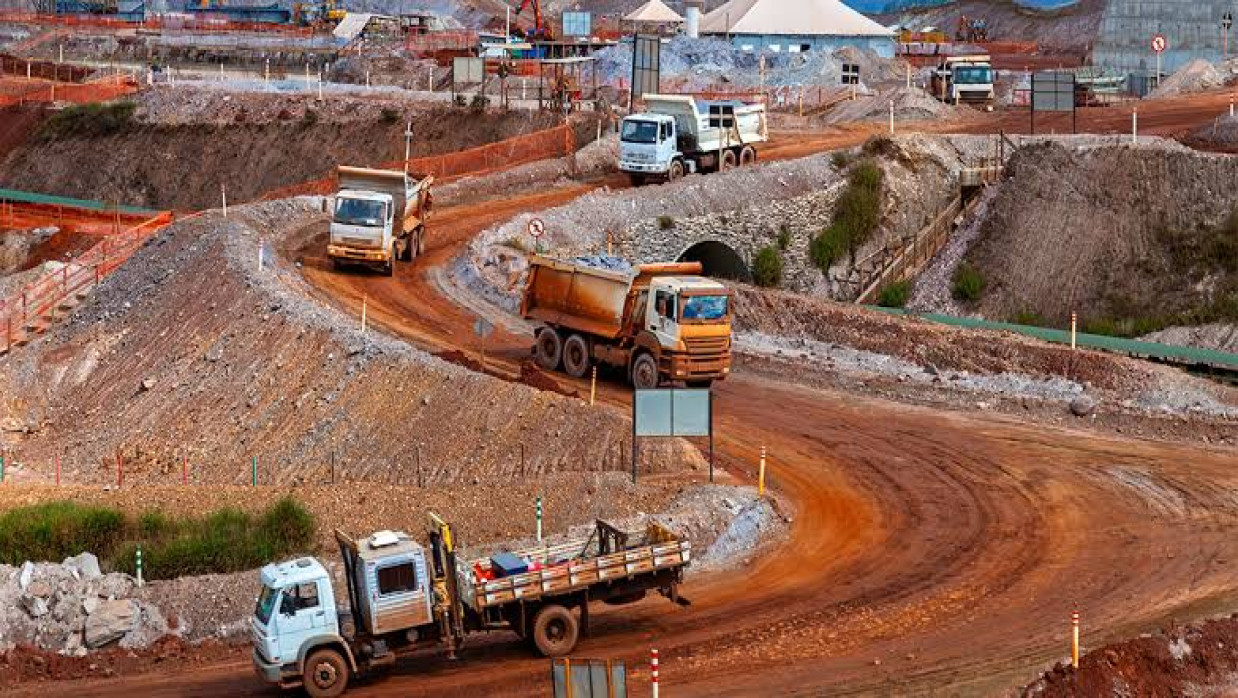
Mercosur countries possess substantial reserves of minerals used in advanced manufacturing, renewable energy systems and other industrial technologies. The European Union currently obtains approximately 82% of its niobium imports from Mercosur, principally from Brazil.
The business opportunity extends beyond extracting and exporting raw materials. Governments and companies in South America are seeking investment in processing, refining, infrastructure and industrial activities that can retain more value within producing countries.
The energy discussion is expected to cover renewable generation, electricity networks, biofuels, energy storage and low-carbon industrial projects. European technology, engineering and financing could be combined with Mercosur’s natural resources and expanding energy demand.
Public and development banks participating in the forum could play an important role in that process. Large infrastructure and industrial projects frequently depend on blended financing, guarantees or risk-sharing mechanisms before private capital is prepared to commit.
A market of 700 million people
The European Commission says the EU–Mercosur agreement creates a trade area covering approximately 700 million people.
The EU exported €55 billion in goods to Mercosur in 2024, while exports of services reached €29 billion in 2023. The European Union accounted for 16.9% of Mercosur’s total trade in 2023.
The Commission projects that the agreement could increase annual EU exports to the South American bloc by as much as €50 billion by 2040, representing growth of approximately 39%. It also estimates an increase of more than €77.6 billion in European GDP and support for up to 600,000 jobs.
Those figures are projections rather than guaranteed outcomes. Their fulfilment will depend on business investment, regulatory implementation, economic conditions and the ability of companies to use the agreement’s provisions.
European industrial exporters are among the potential beneficiaries. Before the agreement, Mercosur tariffs reached 35% on cars, between 14% and 20% on machinery, and as much as 14% on pharmaceutical products.
The European Commission estimates that tariff reductions could save EU companies more than €4 billion annually. The agreement also gives European businesses greater access to public procurement markets, including Brazil’s federal procurement market, valued at more than €8 billion per year.
Mercosur companies, meanwhile, could use improved access to Europe to diversify exports, attract industrial partners and connect with European supply chains. The scale of that opportunity will depend on their ability to meet technical requirements, prove product origin and compete in a highly regulated market.
Implementation becomes the central issue
The forum’s importance will therefore lie less in restating the political value of the agreement than in addressing the operational barriers that companies encounter when trying to use it.
Rules of origin, customs procedures, technical standards, financing conditions, regulatory certainty and transport costs will determine whether lower tariffs translate into actual transactions.
Smaller businesses may face the greatest difficulty. Large corporations generally possess the legal, logistical and financial capacity required to enter new markets, while small and medium-sized enterprises often need local partners and institutional support to navigate unfamiliar regulations.
The participation of investment agencies and multilateral banks could help connect these companies with financing programmes, technical assistance and regional networks.
The meeting will not by itself guarantee new investment or trade flows. Its role is to create an initial pipeline of contacts and projects under the new commercial framework and identify the obstacles that still require political or technical solutions.
For both regions, the economic logic is broader than tariff reduction. Europe is looking for new export markets, energy partners and sources of critical materials. Mercosur is seeking investment, technology and greater access to one of the world’s largest consumer markets.
The Punta del Este forum will provide an early indication of whether the agreement can move from institutional approval to commercial execution—and whether companies on both sides are prepared to build the partnerships required to turn market access into operating businesses.