Lucciano’s Uses Spain to Drive Its European Expansion
With eight stores in Spain, a production hub in Barcelona and a presence in Rome, the Argentine ice cream chain is preparing its next European move through a master-franchise agreement for Portugal.

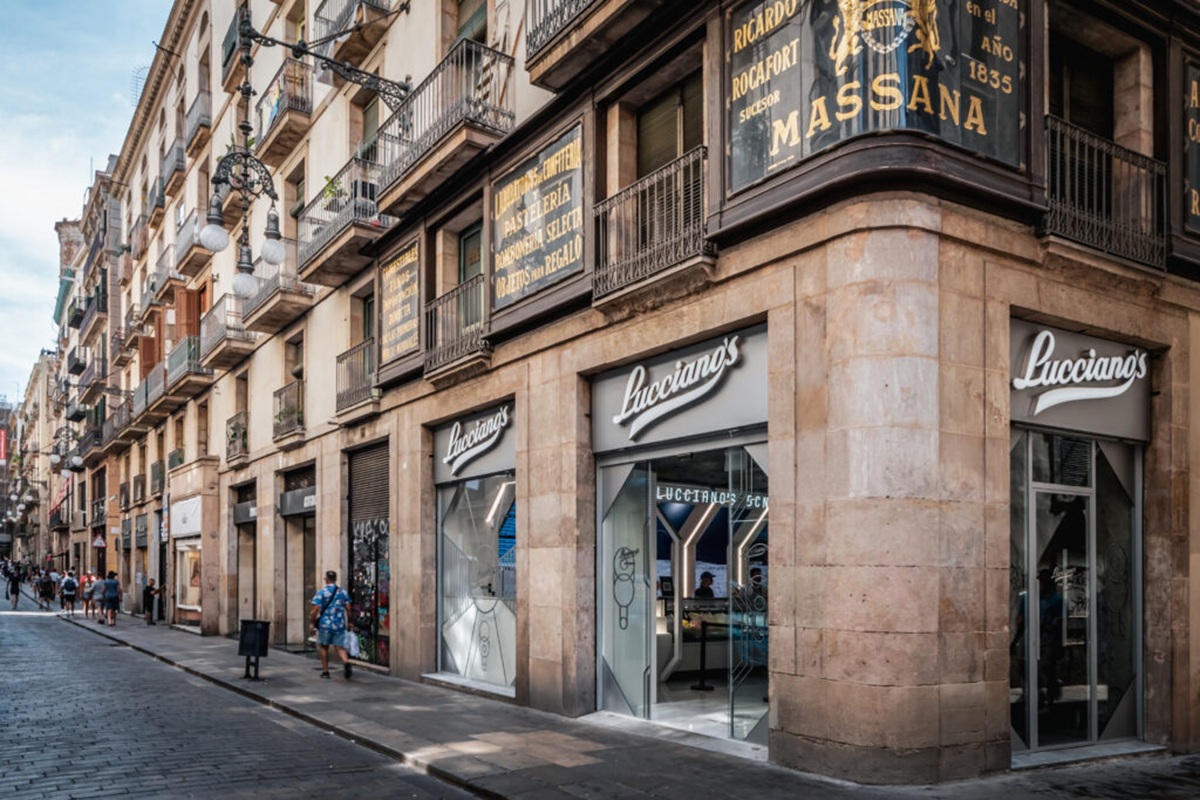
Lucciano’s is building its European expansion around a combination of stores, regional production and partners able to develop entire markets. Spain is central to that strategy: the Argentine ice cream chain operates eight locations there, while Barcelona also serves as a manufacturing hub for its international business.
The company has signed a master-franchise agreement for Portugal, alongside agreements for the United Arab Emirates and Peru, Gonzalo Alfonsin, Business General Manager of Lucciano’s, told EUBizNews. The approach combines further growth in established markets with preparations to enter new countries.
Founded as a family business in Mar del Plata in 2011, Lucciano’s recently reported more than 120 stores in Argentina. Its operating network extends to Spain, Italy, the United States, Uruguay and Chile, although Argentina remains its main market and headquarters. Alfonsin put the network outside Europe at six stores in the United States, four in Uruguay and one in Chile.
Spain Becomes a European Operating Base
Lucciano’s entered Spain in 2022, opening its first store in Barcelona. Its network now spans Barcelona, Málaga, Valencia, Granada, Madrid and Alicante.
The company reported 30% sales growth in Spain during the first five months of 2026, compared with the same period a year earlier. The figures, released in June, provide context for its expansion, although Alfonsin stressed that individual store performance depends heavily on location and size.
“Our best-selling store in Europe is the first one we opened in Barcelona,” he said.
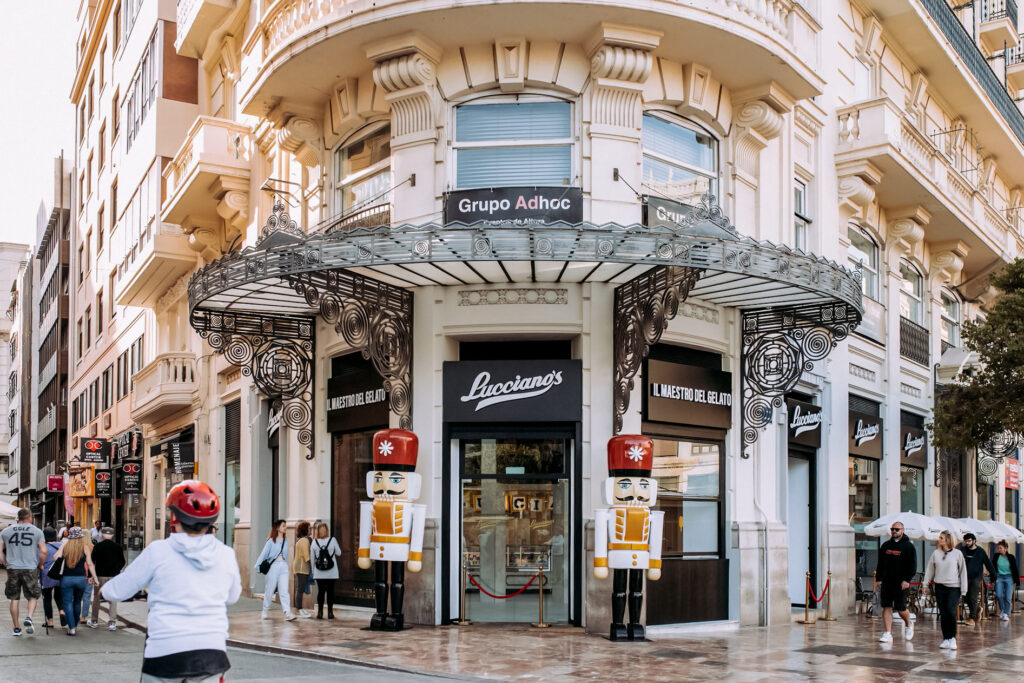
Alfonsin also highlighted Valencia and the company’s Rome store, close to the Trevi Fountain, as strong performers.
Portugal is the next European market covered by a signed master-franchise agreement, according to the executive. The company has also identified France as a potential destination in its publicly communicated European growth plans.
Franchises Designed to Develop Entire Markets
Lucciano’s uses different expansion structures depending on the country.
In Spain and the United States, it has its own local teams and grants individual franchises. In markets including Chile, Uruguay and Morocco, its model relies on master-franchise partners responsible for developing a wider network.
“We grant the master franchise to develop the whole territory, not to open one store, but to carry out a complete development of the country,” Alfonsin explained.
Those agreements include territorial exclusivity. The company looks for partners capable of building the brand across a market, rather than simply operating a single location.
“They are food-service groups, not necessarily Argentine,” he said. Partners can be local or international operators with the resources and experience to develop the business.
That distinction is important to the European strategy: Lucciano’s is seeking a broader consumer audience and partners with local operating capabilities.
Production Follows the Geography of Expansion
Behind the stores sits a supply model tailored to each market.
“We have plants that serve as hubs in the United States, Barcelona and Argentina,” Alfonsin said.
Barcelona therefore plays a role beyond retail. Alongside the company’s other production centres, it supports an international network in which the choice between local manufacturing and exports depends on the destination.
Chile, for example, receives ice cream exported from Argentina. In Morocco, the planned first store in Casablanca is designed to include production facilities that can supply subsequent openings in the country.
Alfonsin also outlined plans for a first store in Asunción, Paraguay, and further expansion in Uruguay and Chile. Morocco and Paraguay remain part of the company’s announced expansion programme; its recent public update continued to describe both as forthcoming markets.
The growth sequence described by the executive envisages entry into two new countries, followed by a further four or five markets in the next stage, alongside additional stores in countries where Lucciano’s already operates.
The Moroccan project includes halal certification for its products. Alfonsin said the intention is to offer the broader range sold in Argentina, including ice cream, chocolates and alfajores.
The alfajores, filled sandwich biscuits, are manufactured in Argentina and exported. Lucciano’s has also reported that these products are available through retail channels in Mexico and Brazil, extending its international reach beyond its ice cream stores.
Argentine Origins, an International Product Range
Alfonsin sees the combination of product development and store design as central to the brand’s appeal abroad.
“We are an Argentine brand, but our stores have a very Italian, very global range of flavours,” he said.
That approach allows the company to take familiar gelato flavours into new markets while also introducing products associated with Argentina. In Morocco, Alfonsin expects alfajores to require more explanation to consumers than the ice cream range.
The stores themselves are another part of the proposition. The executive said each location has its own design and architectural treatment, with the aim of making the visit part of the product experience.
For a company that began in Mar del Plata, Argentina, the international network also carries a dimension beyond commercial growth.
“It means planting Argentine flags around the world,” Alfonsin said.