Mango expands in Poland with first Zielona Góra store as NEPI Rockcastle relationship deepens
The new location at Focus Mall covers more than 500 square metres and represents Mango’s first store in Zielona Góra and the wider Lubusz region. It is the fourth Mango opening at a Polish shopping centre owned by NEPI Rockcastle in 2026, consolidating a relationship that is helping the Spanish fashion group extend its reach beyond the country’s largest metropolitan markets.

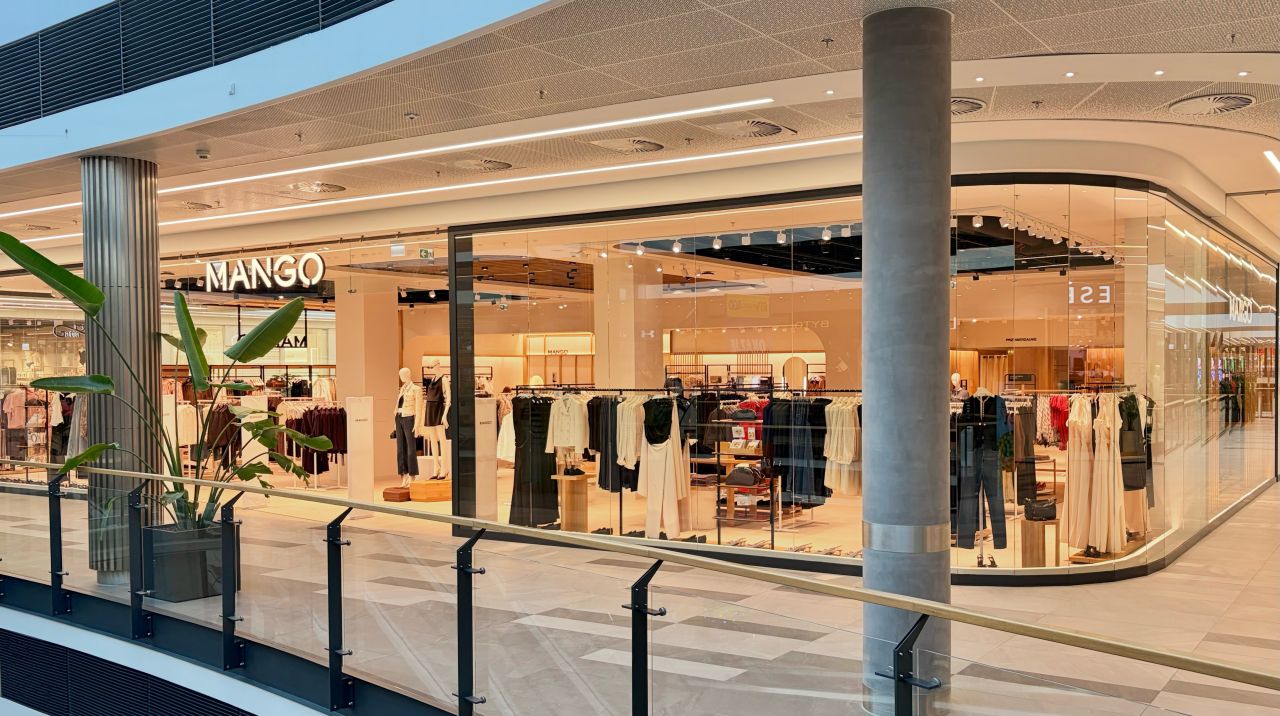
Mango has strengthened its presence in Poland with the opening of a new store at Focus Mall Zielona Góra, continuing the fashion company’s physical expansion and deepening its commercial relationship with shopping-centre operator NEPI Rockcastle.
The store opened on 19 August 2026 and occupies more than 500 square metres. It is Mango’s first location in both Zielona Góra and the Lubusz Voivodeship, giving the brand a physical presence in a part of western Poland where it had previously served customers primarily through digital channels or stores in other cities.
The location offers Mango’s women’s collections, including clothing, footwear and accessories. No men’s, children’s or home departments have been announced for the store.
The opening is strategically relevant because it expands the brand outside Poland’s most obvious retail destinations. Rather than concentrating exclusively on Warsaw, Kraków, Gdańsk or other large metropolitan areas, Mango is using established regional shopping centres to reach consumers in cities with fewer international fashion stores but meaningful spending potential.
Focus Mall provides an important platform for that strategy. The centre has approximately 44,000 square metres of leasable space, more than 1,400 parking spaces and a mix of retail, entertainment and service tenants that includes H&M, TK Maxx, HalfPrice, CCC, Bershka, Guess, Media Markt and Cinema City.
The property stands on the former site of Polska Wełna, once one of Poland’s largest wool-manufacturing complexes. The industrial site was converted into a shopping and leisure destination in 2008 while retaining elements of its architectural heritage.
According to NEPI Rockcastle, Focus Mall now accommodates 162 brands and supports approximately 1,900 jobs, making it an important commercial and employment centre for Zielona Góra and its surrounding area.
Mango’s arrival is intended to reinforce the fashion segment of that tenant mix. For the retailer, meanwhile, the shopping centre offers an established customer base and a high-visibility location without the cost and complexity associated with developing an independent high-street flagship.
The new store uses Mango’s New Med design concept, an interior format inspired by Mediterranean homes. The layout combines an open glazed frontage with wood, stone, ceramics, natural fabrics, rounded shapes and warm colours.
The concept is intended to make the store feel less transactional and encourage customers to spend more time discovering collections, trying products and engaging with the brand. This has become particularly important as physical shops increasingly operate alongside e-commerce rather than as separate sales channels.
The Zielona Góra location is the latest in a sequence of Mango projects at NEPI Rockcastle properties in Poland.
In February, Mango opened a store of approximately 400 square metres at Galeria Copernicus in Toruń. It became the company’s second and largest location in the city and introduced the New Med format with a complete women’s assortment.
In June, the retailer returned to Bonarka City Center in Kraków with a 573-square-metre store, one of its largest in the city. That location offers both women’s and men’s fashion and includes Mango’s first complete men’s department in Kraków.
The expansion continued in July with a store of approximately 300 square metres at Galeria Warmińska in Olsztyn, the brand’s first location in the city and in the Warmian-Masurian region.
The Focus Mall opening is therefore the fourth Mango store inaugurated at a Polish NEPI Rockcastle property during 2026, demonstrating how the two companies are progressively building a repeatable expansion model.
Their relationship should not, however, be interpreted as an acquisition, joint venture or exclusive national agreement. Mango remains an independent retail tenant, while NEPI Rockcastle owns and operates the shopping centres.
The companies have not disclosed the investment made in the Zielona Góra store, the duration or financial conditions of the lease, employment numbers, sales expectations or a fixed programme of future openings. Their public communications describe a growing commercial collaboration developed project by project.
That structure provides benefits for both sides.
Mango gains access to a network of established regional destinations operated by a single large landlord, potentially simplifying the identification of locations, lease negotiations, construction coordination and store delivery.
NEPI Rockcastle, in turn, secures an internationally recognised fashion tenant capable of attracting additional customers and strengthening the positioning of its shopping centres. Global brands can also help landlords maintain demand for space as properties compete not only with nearby malls but also with online retail.
The operating environment appears supportive. During the first half of 2026, tenant sales across comparable NEPI Rockcastle properties increased by 2.7%, while average spending per visit rose by 3.3%. Occupancy remained high at 98.2%.
The property group’s net operating income, including its energy activities, increased by 3.8% to €318 million, while the value of its portfolio reached approximately €8.4 billion.
Those figures indicate that well-positioned shopping centres in Central and Eastern Europe continue to attract both consumers and international retailers, even as e-commerce changes the role of physical stores.
Mango is itself combining both channels rather than prioritising one at the expense of the other.
The Barcelona-based company generated revenue of €3.77 billion in 2025, an increase of approximately 13%. It opened more than 260 points of sale during the year and ended the period with 2,931 locations in more than 120 markets, covering close to 900,000 square metres of retail space.
The company’s online business generated approximately one-third of total revenue, while international markets accounted for 78% of sales.
That momentum continued during the first half of 2026. Mango’s revenue increased by 7.2% to €1.85 billion, or 10.7% at constant exchange rates. The group opened 127 stores and refurbished another 37 during the six-month period, bringing its global network to more than 2,960 points of sale.
Mango invested close to €90 million during the half-year in stores, technology, operations and its corporate campus. Its stated objective is to reach annual revenue of approximately €4 billion in 2026.
The Polish expansion illustrates the continuing importance of stores within that growth strategy. Although the online channel accounts for 32% of Mango’s business, physical locations remain essential for customer acquisition, product discovery, fitting, exchanges, returns and the visibility of the brand.
Poland is also a highly competitive market. Mango must contend with international groups such as Inditex and H&M as well as domestic companies including LPP, whose Reserved, Mohito and rapidly expanding Sinsay formats benefit from extensive local distribution networks.
Opening stores in underpenetrated regional cities allows Mango to broaden its addressable market without relying solely on costly flagship locations. The strategy can also reduce the distance between its digital customers and the nearest physical store, improving the practicality of its omnichannel model.
For NEPI Rockcastle, the four Mango projects show how active management of the tenant mix can generate value from existing properties. For Mango, they provide an efficient route into Polish cities where the company sees room for further development.
No additional Polish openings arising from the relationship have yet been confirmed. Nevertheless, the sequence of launches in Toruń, Kraków, Olsztyn and Zielona Góra suggests that the collaboration could support further expansion if the new stores meet their commercial targets.
The significance of the Focus Mall opening therefore extends beyond one retail unit. It represents Mango’s attempt to turn Poland’s regional shopping centres into a broader growth platform, while giving NEPI Rockcastle another international brand with which to strengthen the commercial appeal of its Central European portfolio.