Mexico Strengthens EU Trade Ties With Zero-Tariff Deal Amid Rising U.S. Trade Uncertainty
Mexico is deepening its commercial relationship with the European Union as companies and policymakers seek alternatives to potential tariff risks linked to future U.S. trade policy shifts.

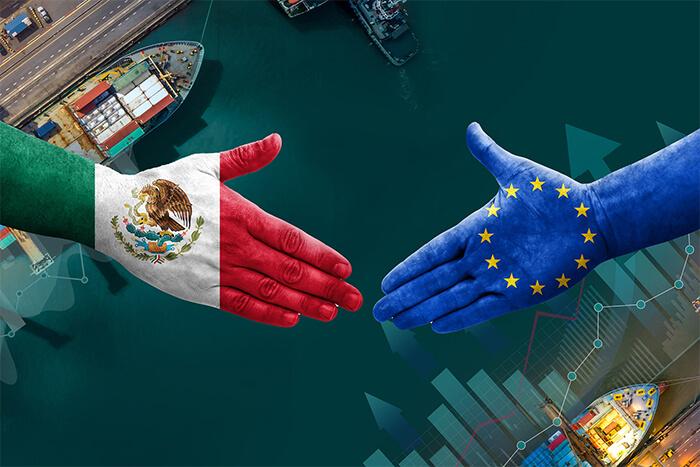
Mexico is advancing a zero-tariff trade agreement with the European Union in a move aimed at strengthening economic diversification and reducing exposure to potential disruptions in U.S. trade policy.
The agreement comes at a moment of renewed uncertainty surrounding future tariff measures and protectionist rhetoric in the United States, particularly linked to the possibility of tougher trade policies under a new Donald Trump administration.
For Mexico, expanding preferential access to European markets represents a strategic hedge against excessive dependence on the U.S., which currently absorbs the majority of Mexican exports.
The agreement reinforces the growing importance of Europe–Mexico trade relations as global supply chains continue evolving amid geopolitical tensions, reshoring strategies and increasing fragmentation of international commerce.
Mexico has become one of the world’s most important manufacturing and export hubs, particularly in sectors such as automotive, electronics, aerospace and industrial production. Deeper integration with Europe could create new opportunities for Mexican exporters while strengthening supply chain diversification for European companies.
For the European Union, the agreement supports efforts to expand commercial ties with reliable manufacturing partners outside Asia and strengthen strategic positioning in North America through closer cooperation with Mexico.
The deal also reflects a broader shift in global trade strategy. Governments and multinational companies increasingly prioritize diversification, resilience and geopolitical risk management instead of relying heavily on single export markets or supply chains.
At the same time, the agreement could increase European investment flows into Mexico as companies seek access to the country’s industrial base, trade infrastructure and proximity to the U.S. market.
The automotive sector is expected to be among the major beneficiaries, alongside agribusiness, pharmaceuticals, renewable energy and advanced manufacturing industries.
For Latin America, Mexico’s strategy highlights how countries in the region are adapting to a more fragmented global trade environment where geopolitical tensions increasingly influence economic policy and investment decisions.
The agreement also reinforces Europe’s growing economic engagement with Latin America as the EU seeks stronger trade alliances across the region.
Mexico’s zero-tariff agreement with the European Union underscores how global trade is being reshaped by geopolitical uncertainty, diversification strategies and the search for more resilient international partnerships.