Nordic business leaders explore single regional stock market to deepen liquidity and attract IPOs
Nordic Compass is examining whether the exchanges of Sweden, Denmark, Norway and Finland could operate as a more integrated marketplace. The initiative could range from harmonised regulation and settlement systems to a full combination of the national bourses, although discussions remain preliminary and no agreement has been reached.
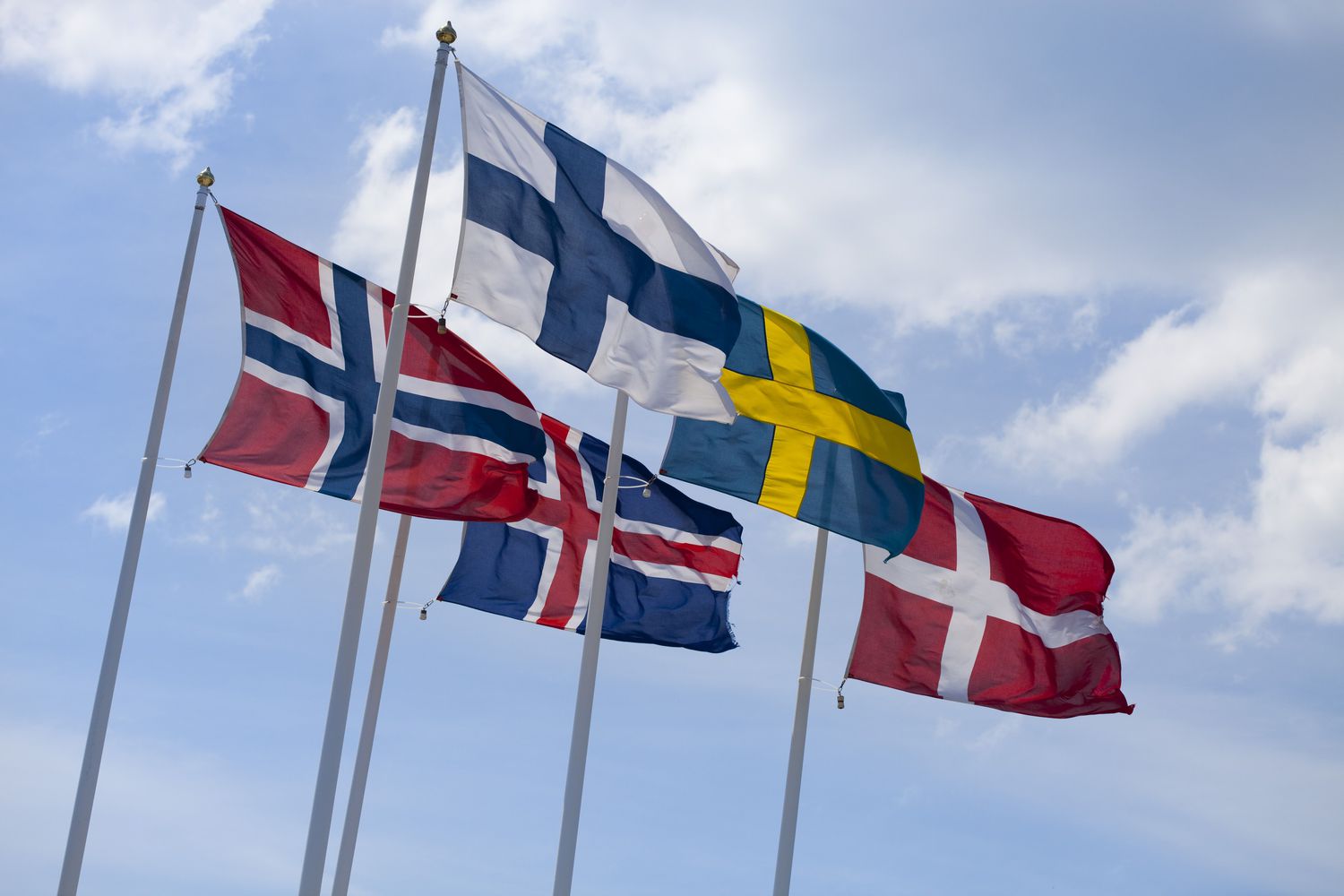
Some of the Nordic region’s most influential companies, investors and financial institutions are exploring the creation of a single regional stock market capable of concentrating liquidity, attracting more international capital and strengthening the financing available to businesses.
The work is being conducted through Nordic Compass, a pan-Nordic industrial alliance examining how the equity markets of Sweden, Denmark, Norway and Finland could become more closely integrated.
One of the options under consideration is the consolidation of their national stock exchanges. Other possibilities include harmonising listing requirements, regulatory frameworks, trading infrastructure and post-trade processes without necessarily placing every market under a single corporate owner.
The distinction is important because the initiative has not yet produced a formal transaction, an agreed institutional structure or a timetable. Nordic Compass said its analysis remains at an exploratory stage and that no conclusions have been approved.
The alliance’s Capital Markets Track is studying how to improve access to financing throughout the corporate lifecycle, from start-ups and venture-backed businesses to scale-ups, initial public offerings and established listed companies.
Christian Clausen, chair of the Capital Markets Track and BlackRock’s chairman for the Nordic region, said the work includes several possible initiatives related to liquidity. However, he emphasised that “no agreement has yet been reached on specific initiatives or conclusions”.
Nordic Compass was launched in May 2026 to convert closer regional cooperation into practical business projects. It currently brings together around 30 companies, foundations and organisations, including Wallenberg Investments, EQT, Nordea, SEB, Nasdaq Nordic, the Novo Nordisk Foundation, Ericsson, Nokia, KONE, Saab, Vattenfall and Ørsted.
The alliance is chaired by Jyrki Katainen, the former prime minister of Finland and former vice-president of the European Commission. Its work is divided into four areas considered critical to Nordic competitiveness: capital markets, deep technology, defence and energy.
The first proposals are expected to be presented at the Nordic Compass Summit in Gothenburg on 4 and 5 November 2026. That event could provide the first indication of whether the stock-market project will move beyond research and into negotiations over a specific model.
The financial resources available across the region explain the attraction of greater integration. Nordic pension funds and sovereign investors manage assets estimated at close to €3.43 trillion and receive annual inflows of approximately €150 billion.
Those resources currently operate across different national markets, legal systems, currencies and financial infrastructures. Supporters of integration believe that reducing those divisions could make it easier for Nordic savings to finance regional companies and for international investors to treat the area as a single investment destination.
A larger common marketplace could increase the number of buyers and sellers available for each security, improving liquidity and potentially reducing the cost of executing transactions. Greater trading activity could also help smaller listed companies gain visibility and make the region more attractive to businesses considering an IPO.
For issuers, harmonised rules could reduce the expense and administrative burden involved in accessing investors across several countries. For investment banks, brokers and asset managers, a more unified system could simplify market access and reduce the need to adapt operations to multiple national procedures.
The proposal would not begin from zero. Nasdaq already operates the stock exchanges in Stockholm, Copenhagen and Helsinki, as well as Iceland’s market and the three Baltic exchanges. The operator has integrated its seven Nordic and Baltic equity markets through a common trading platform and a single point of access.
However, the national markets retain their own legal structures, regulatory supervision and local listing ecosystems. The publicly reported Nordic Compass discussions currently focus on Sweden, Denmark, Norway and Finland; it remains unclear whether Iceland could be incorporated at a later stage.
Norway also creates the most significant corporate obstacle to a full combination. Oslo Børs has belonged to Euronext since 2019, while the other three principal exchanges involved in the proposal are controlled by Nasdaq.
A genuine merger would therefore require cooperation between two global exchange operators with their own commercial interests, technologies and expansion strategies. It would also need regulatory approval in each affected jurisdiction.
Post-trade infrastructure adds another layer of complexity. Euroclear plays a central role in securities settlement in Sweden and Finland, while Euronext operates central securities depositories in Norway and Denmark. A unified trading market would deliver only part of the potential benefit if the registration and settlement of securities remained fragmented.
The four countries do not share a currency either. Finland uses the euro, while Sweden, Denmark and Norway retain their own national currencies. Their tax systems, corporate laws, supervisory practices and investor-protection rules also contain differences that would have to be managed even if a common trading platform were established.
Norway is part of the European Economic Area but is not a member of the European Union, adding another institutional distinction to a project that already crosses multiple national regulatory frameworks.
As a result, a Nordic stock market could emerge through several intermediate steps instead of a conventional corporate merger. The region could first adopt common listing standards, simplify dual listings, align market calendars, improve connections between settlement systems or create a unified gateway for brokers and investors.
A deeper model could eventually involve a shared order book or rulebook while allowing the individual exchanges to preserve their names, local management and relationships with national issuers.
Euronext has indicated that it is open to the initiative and is discussing possible practical measures with Nordic Compass. The group argues that its own federal structure demonstrates how exchanges can share technology, liquidity and harmonised rules while maintaining strong local identities.
That model could be particularly relevant to the Nordics. Oslo has built an international reputation in energy, shipping and seafood, while Stockholm, Copenhagen and Helsinki each possess established corporate and investor ecosystems. Excessive centralisation could weaken some of those local advantages, even if technological and regulatory integration increases regional scale.
Nasdaq has not publicly commented on the possibility of a formal exchange merger. However, it is leading Nordic Compass’s capital-markets work and has previously argued that the Nordic countries are among Europe’s most homogeneous financial markets, sharing many of the same banks, institutional investors, private-equity firms and corporate-governance practices.
The discussion is also taking place at a moment of strength rather than immediate crisis. Nasdaq’s Nordic markets led European exchange groups during the first half of 2026 with 25 new listings, including 13 IPOs.
On 29 May, trading in shares, exchange-traded funds and other listed products across Nasdaq’s Nordic markets reached €12.2 billion, the highest daily level recorded in 20 years. Auction trading amounted to a record €9.32 billion.
The strategic question is therefore not whether the Nordic countries possess viable stock markets, but whether individually successful markets could compete more effectively as a coordinated regional platform.
The initiative also mirrors the European Union’s wider effort to create a Savings and Investments Union. Brussels argues that fragmented capital markets prevent European savings from reaching productive investments and make it more difficult for innovative companies to obtain the financing required to expand.
The European Commission estimates that Europe needs an additional €750 billion to €800 billion in investment every year by 2030 to finance competitiveness, digitalisation, the energy transition and other strategic priorities.
A successful Nordic model could show how a smaller group of countries with similar institutions can advance more quickly than the entire European Union. It could also provide a blueprint for preserving national financial centres while combining enough liquidity and infrastructure to compete on a global scale.
The potential benefits are considerable, but so are the obstacles. Exchange ownership, regulation, currencies, settlement systems and local interests will all determine whether the initiative becomes a genuine integrated market or remains a programme of gradual harmonisation.
For now, there is no agreed merger and no definitive proposal. The Gothenburg summit will be the next major test of whether Nordic Compass can transform the idea of a single regional capital market into a structure acceptable to exchange operators, regulators, investors and listed companies.