Revolut moves beyond digital banking with its own airport lounge network, starting in Copenhagen
The European fintech will open its first branded airport lounge in Copenhagen in 2027, marking a new step into physical customer experiences. The space is expected to become the largest common-use lounge in the Schengen area and will serve as the starting point for a broader international network.

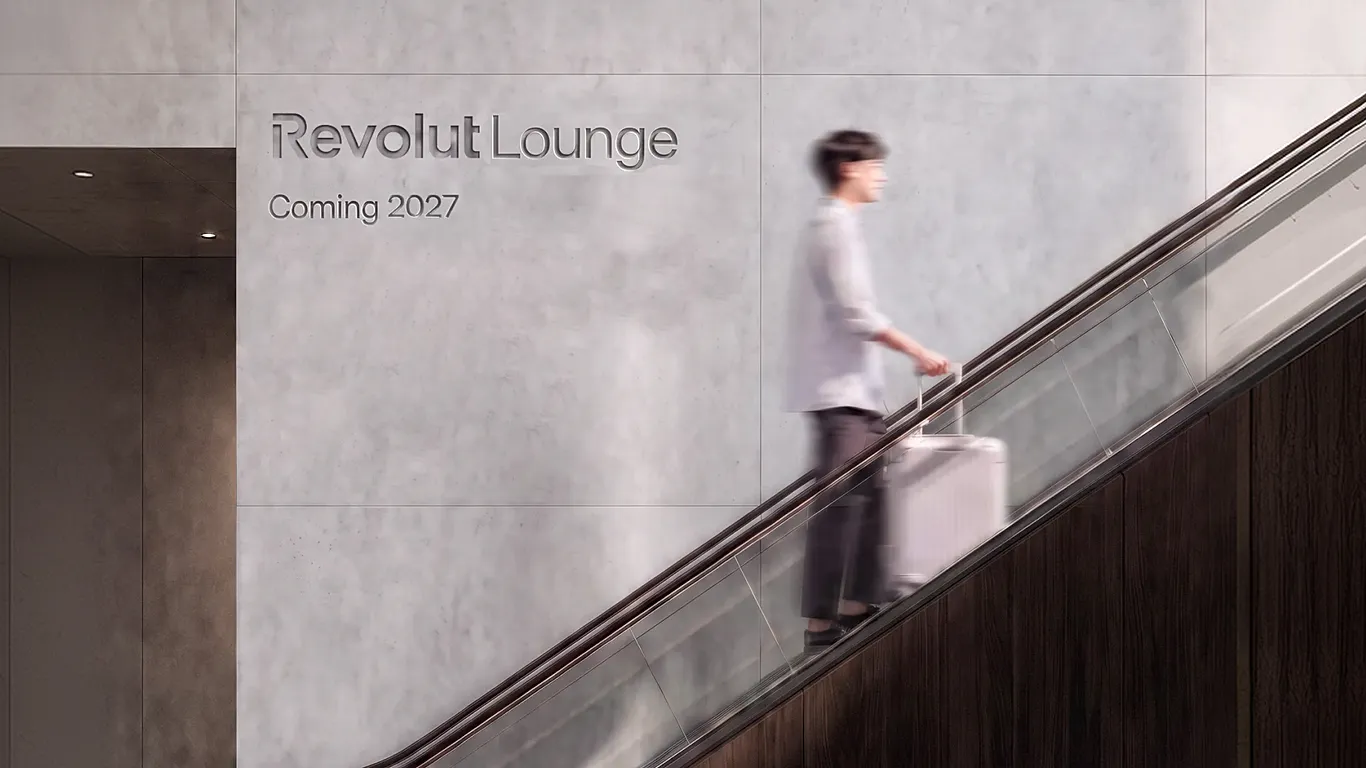
Revolut is preparing to take its brand from smartphones into airports. The European fintech plans to launch its own network of premium airport lounges, beginning with a flagship location at Copenhagen Airport in 2027, as it expands beyond financial products and seeks a larger role in the travel experience of its customers.
The planned CPH Revolut Lounge will be the company's first proprietary branded airport lounge and, according to the announcement, will become the largest common-use lounge in the Schengen area. The facility will be operated by airport hospitality specialist Plaza Premium Group.
The Copenhagen project is only the beginning. Revolut says it intends to develop a network of premium lounges across some of its priority markets over the coming years, although it has not yet disclosed which airports will follow Denmark or exactly which customers will receive access to the new facilities.
The move represents a notable strategic shift for a company whose growth was built almost entirely through a digital interface. Revolut emerged by offering foreign exchange, payments and banking services through an app, eliminating much of the physical infrastructure traditionally associated with financial institutions. Now it is selectively moving in the opposite direction: using physical spaces to deepen its relationship with customers.
Rather than opening traditional bank branches, however, Revolut is targeting an environment closely connected with one of its strongest consumer propositions — international travel.
The fintech has spent years building travel-related benefits into its paid subscriptions. Its Ultra plan, currently priced at €55 per month, includes unlimited airport lounge access alongside unlimited foreign exchange without additional fees, a global eSIM allowance, medical insurance and coverage related to car rentals, delayed flights and lost or damaged baggage. Customers across its plans can also accumulate RevPoints, which can be transferred to selected loyalty programmes.
Existing lounge access is provided through third parties. Revolut's current terms state that lounge passes purchased through its app have been provided by LoungeKey since June 2026, with different purchasing or discount arrangements depending on the customer's subscription tier.
Creating its own branded locations introduces a different dimension. Instead of merely including access to somebody else's airport lounge as a financial-product perk, Revolut will be able to control the environment, design and customer experience itself.
From financial app to lifestyle ecosystem
The strategy reflects an increasingly important battle among digital banks and fintech companies: how to turn millions of users into deeper and more profitable customer relationships.
Basic banking and payments have become highly competitive across Europe. Digital banks therefore increasingly differentiate themselves through subscription models that combine financial services with insurance, travel products, loyalty programmes and other benefits.
Airport lounges offer an especially visible way of reinforcing that proposition among frequent travellers and higher-spending customers.
Revolut has not yet specified whether its proprietary lounges will be reserved for subscribers to particular plans, available through RevPoints, sold as individual passes or accessible through a combination of those mechanisms. That detail will be crucial in determining whether the lounges function primarily as an exclusive retention benefit or become a broader hospitality business.
What is already clear is that the company wants the experience to carry its own identity. Hadi Nasrallah, Revolut's director for product GP and new bets, said the company intends to apply its design philosophy to physical spaces and set a new standard for airport hospitality in Europe.
Choosing Copenhagen as the starting point is also strategic.
The Nordic countries represent an important growth market for Revolut. According to reporting on the project, the company has more than two million customers across the Nordic region and aims to reach approximately 500,000 customers in Denmark alone before 2027.
Copenhagen Airport provides the company with both an important European hub and a location capable of showcasing the concept to an international passenger base.
The initiative arrives while Revolut itself is growing rapidly. The company reported 68.3 million retail customers at the end of 2025, up 30% during the year, while group revenue increased 46%. It has since said it serves more than 75 million customers globally and continues to target 100 million retail customers by mid-2027.
That scale increasingly puts the company in competition not only with fintech startups but also with established European banks and global financial groups.
Revolut's evolution is particularly significant because its ambitions are expanding on several fronts simultaneously. Alongside new consumer products and international expansion, the company recently secured a full French banking licence, following an assessment by France's ACPR and the European Central Bank. The move strengthens its banking infrastructure within the European Union as the group continues to scale across the continent.
The airport lounge strategy adds another layer to that transformation.
Traditional financial groups have long used premium credit cards and travel benefits to attract affluent customers. What Revolut is attempting now is to internalise a greater part of that experience under its own brand.
That could turn airport lounges into physical extensions of the app: locations where the company's identity becomes tangible and where premium subscribers encounter Revolut outside the digital environment.
The model also illustrates a broader convergence between banking, travel, loyalty and lifestyle services. As financial products become easier to replicate digitally, customer experience and ecosystem benefits can become more important sources of differentiation.
There are still significant unanswered questions. Revolut has not disclosed the investment required for its lounge network, the number of locations it ultimately plans to open or the access rules for the Copenhagen facility. It has also not announced the next airports in the rollout.
But the direction is clear.
The company that built its identity around eliminating many of the physical elements of traditional banking now sees value in creating physical spaces of its own — not as branches, but as premium extensions of a financial and travel ecosystem.
When the doors of the Copenhagen lounge open in 2027, Revolut will no longer exist solely inside the customer's smartphone. Its brand will have a physical address inside one of Europe's airports — and Copenhagen is intended to be only the first.