SKY Airline and Abra Group advance share swap while preserving the Chilean carrier’s autonomy
SKY’s shareholders will receive an ownership interest in Abra, the parent company of Avianca and GOL, while the airline will be transferred to a newly created independent company. The transaction strengthens Abra’s presence in Chile and Peru, although it will only become effective after closing and does not introduce immediate changes for passengers or employees.

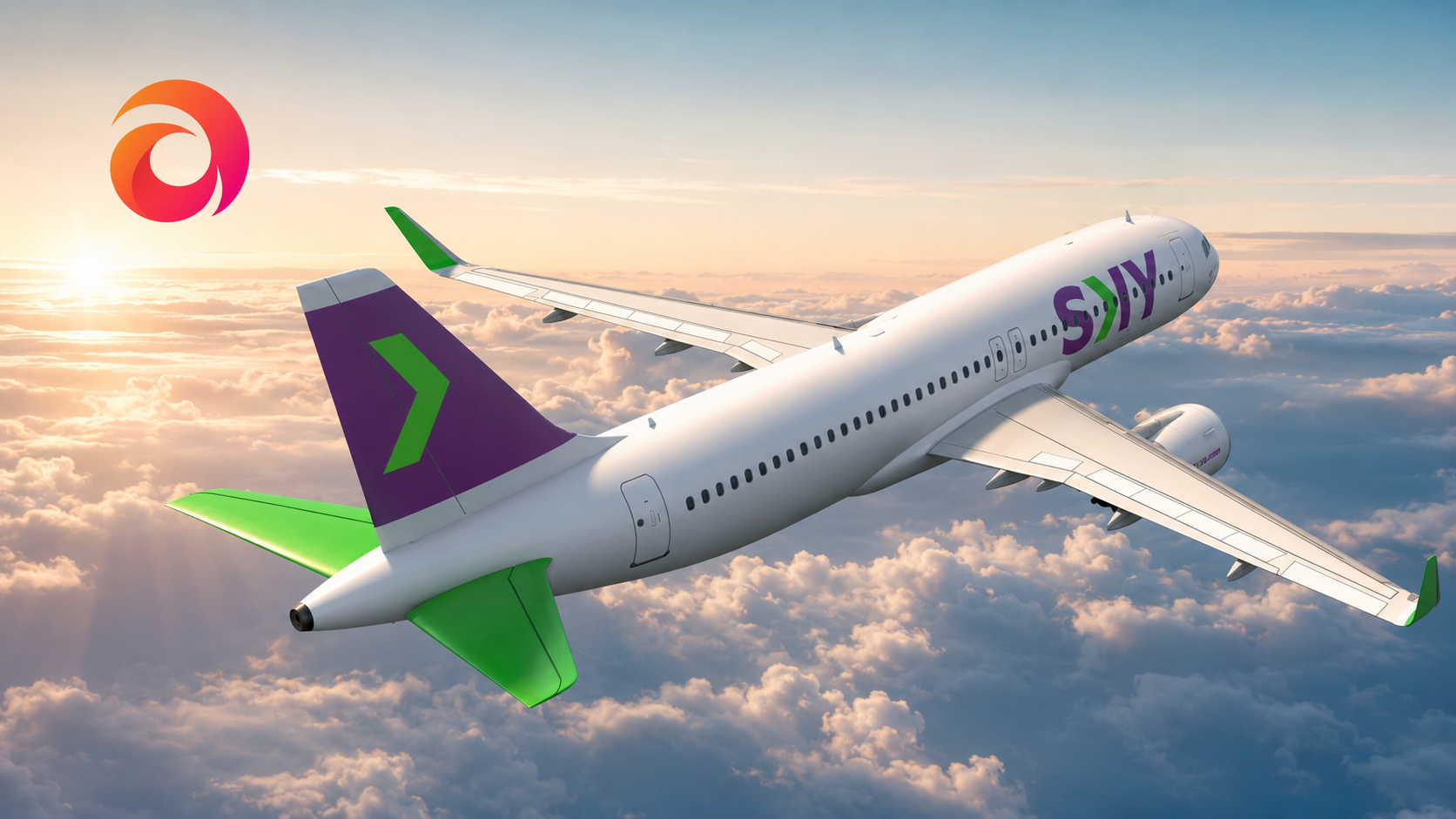
SKY Airline and Abra Group have signed a share-exchange agreement that takes the Chilean low-cost carrier another step closer to joining one of Latin America’s largest aviation platforms after securing the required competition approvals.
Under the agreed structure, SKY’s current shareholders will receive an ownership stake in Abra, while ownership of the airline will be transferred to a new independent company responsible for overseeing its operations.
The companies have not disclosed the percentage of Abra that SKY’s shareholders will receive, the valuation assigned to the airline, the financial terms of the exchange or whether the Chilean carrier’s controlling shareholders will obtain representation on Abra’s board.
The agreement has been signed, but the transaction has not yet become legally effective. Completion remains subject to the fulfilment of customary closing requirements and any outstanding procedural conditions.
For SKY’s passengers, employees and commercial partners, the immediate impact is expected to be limited. The airline will continue operating autonomously, preserving its brand, management structure and internal processes while the companies complete the transaction.
No immediate changes have been announced to tickets, schedules, sales channels, customer service, employment conditions or the airline’s low-cost business model. Any future cooperation involving routes, loyalty programmes, connecting flights or commercial services will require separate implementation.
This distinction is important because the transaction represents an economic and ownership integration, rather than the absorption of SKY into Avianca or GOL. The three carriers will continue operating under their own brands and regulatory certificates.
For Abra, the transaction fills an important geographic gap. The group already controls Avianca, with a strong presence in Colombia, Central America and northern South America, and GOL, one of the largest airlines in Brazil. It also holds a strategic investment in Spanish aircraft and crew provider Wamos Air.
Adding SKY gives Abra a significantly stronger position in Chile and Peru, two markets where the low-cost carrier has built major domestic operations and increasingly important international networks.
Founded in 2001, SKY currently serves 45 destinations across seven countries with a fleet of 36 Airbus A320neo and A321neo aircraft. Its principal operating bases are Santiago and Lima, and the company is one of the leading airlines in both Chile and Peru when measured by available seat capacity.
Abra, meanwhile, brings together approximately 30,000 employees, more than 300 aircraft and scheduled services to over 145 destinations in more than 25 countries. Its wider platform also includes the LifeMiles and Smiles loyalty programmes, cargo operations and growing commercial partnerships with international airlines.
The industrial logic of the transaction therefore extends beyond adding another airline brand. Abra could eventually use SKY’s network to build more efficient connections between the Southern Cone, the Andean region, Brazil, Colombia, Central America and long-haul services.
The combination may also create opportunities in areas such as aircraft procurement, maintenance, technology, distribution, loyalty programmes, cargo capacity and network planning. Abra has previously used coordination between its businesses to reduce costs and generate operational synergies while maintaining separate airline brands.
However, the companies have not yet detailed which of those potential benefits will be implemented at SKY. Operational autonomy will remain particularly important as Abra works to demonstrate that closer financial integration will not weaken competition in the markets served by its airlines.
The transaction was reviewed by competition authorities in Chile, Brazil and Peru.
Chile’s Fiscalía Nacional Económica concluded that the airlines’ networks were predominantly complementary and did not identify current overlaps on nonstop routes. Its assessment covered indirect competition on services connecting Santiago with Punta Cana, Cancún and Miami, as well as potential competition involving São Paulo, Rio de Janeiro and Bogotá.
The Chilean regulator approved the acquisition subject to modifications to certain non-compete and non-solicitation clauses, which were considered broader than necessary. Their duration and material scope were therefore restricted.
Peru’s Indecopi subjected the transaction to a more detailed second-stage review after initially identifying potential concerns involving the Lima–Miami and Cusco–Miami markets. The authority also examined contractual provisions that could limit competition or the ability to recruit employees. The approval process ultimately required adjustments to the scope of those clauses.
The regulatory scrutiny explains part of the unusual structure selected by the companies. Placing SKY under a separately governed company while maintaining operational independence is intended to reduce disruption and preserve a clear distinction between the airlines’ commercial activities.
Holger Paulmann, chairman of SKY Airline, said the agreement respects the carrier’s history and is based on a shared vision of strengthening air connectivity across Latin America. Abra chief executive Adrián Neuhauser described the operation as another step towards meeting the region’s mobility needs and expanding access to aviation.
The transaction also has a European dimension. Abra’s portfolio includes an investment in Madrid-based Wamos Air, which provides wide-body aircraft, crews, maintenance and insurance services, while SKY already maintains a codeshare agreement with Spain’s Air Europa. No new European routes or partnerships were announced as part of the share exchange.
For Latin America’s airline industry, the deal reflects a wider consolidation trend. Large aviation platforms are seeking scale, broader networks and stronger negotiating power to manage volatile fuel prices, aircraft shortages, currency movements and the high capital requirements of fleet expansion.
SKY will retain its identity and operational independence, but its shareholders will become part of a much larger aviation group with greater access to capital, aircraft, technology and regional partnerships.
The strategic opportunity is significant: Abra gains a stronger foothold in Chile and Peru, while SKY gains the backing of a pan-Latin American platform capable of connecting more markets and competing at greater scale.
The ultimate impact for passengers will depend on how that scale is used. More connections and operational efficiencies could expand travel options, but preserving competition, affordable fares and independent decision-making will remain central as the integration moves from corporate structure to commercial execution.