
UK Car Industry Faces Strategic Dilemma Between Chinese Investment and EU Market Access
British carmakers must navigate a complex trade-off as the UK weighs tariffs on Chinese vehicles, risking EU retaliation and threatening their largest export market.

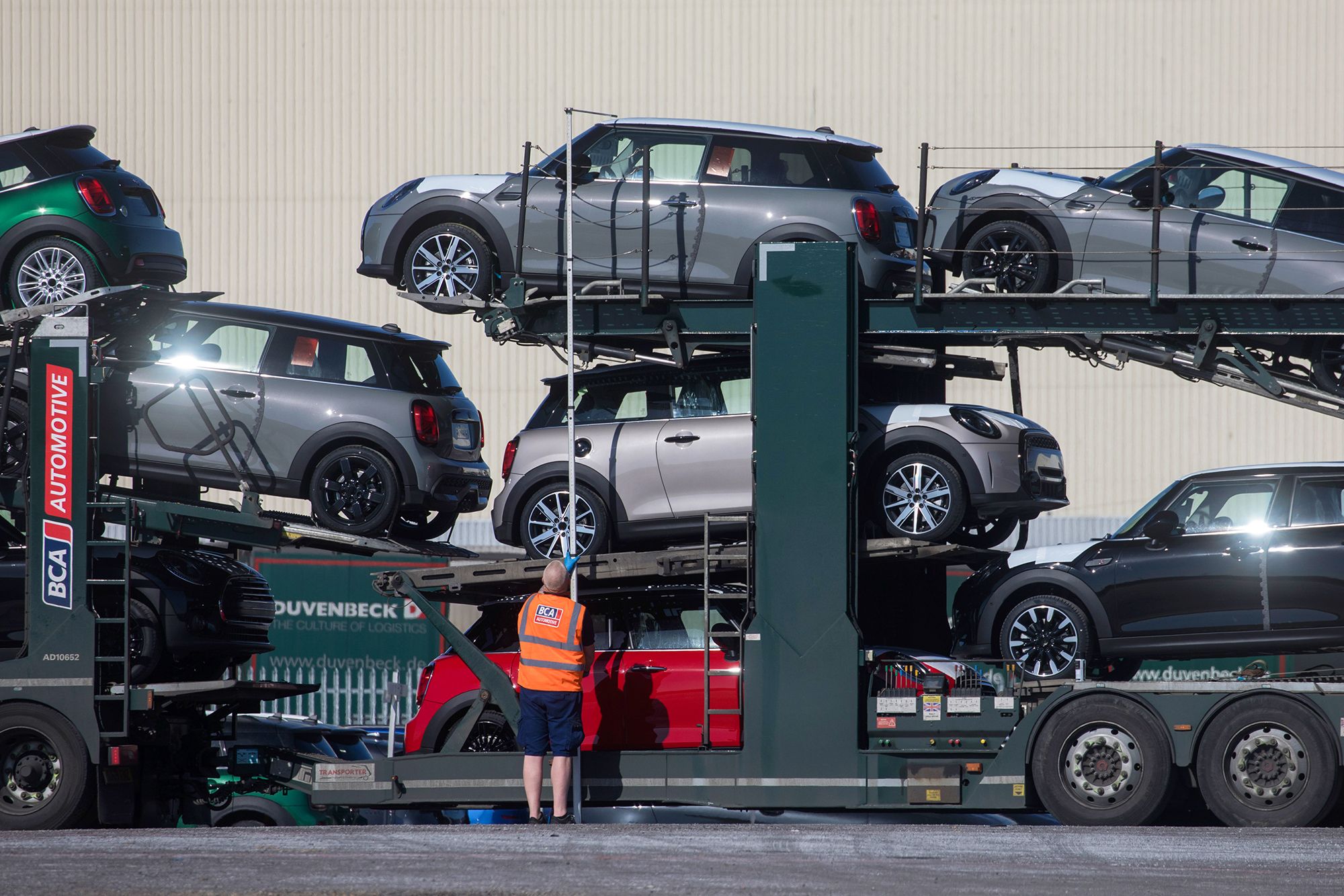
UK carmakers are under mounting pressure as they confront a critical decision over whether to support tariffs on Chinese vehicle imports, a move that could provoke EU retaliation and disrupt their most important export market.
The dilemma follows the EU's decision to impose duties of up to 45% on Chinese vehicles, a policy that has already affected sales trajectories since 2024. According to industry data, 58% of UK car exports went to the EU in the first half of 2026, compared to just 4% to China. This heavy reliance on the European market underscores the stakes for British manufacturers.
Industry leaders such as Mike Hawes, chief executive of the Society of Motor Manufacturers and Traders (SMMT), have highlighted the deep integration between UK and EU automotive supply chains, warning that any new barriers could significantly harm British carmakers' sales and market share. Jonathan Reynolds, UK business secretary, has publicly argued against imposing tariffs, citing the risk to export access.
The UK government is currently considering its tariff policy, with some, including Tim Tozer, the former chair of Vauxhall, advocating for tariffs to shield domestic manufacturers from low-cost Chinese competition. However, others point to the risk of losing crucial EU market access if Brussels responds with protectionist measures against British exports.
Andy Burnham and other UK officials have received warnings from EU counterparts about the consequences of mirroring the bloc's protectionist stance. Consultant Emily Sawicz of RSM UK described the situation as a "difficult trade-off" for the sector, while Ian Plummer, commercial director at Autotrader, noted that tariffs could raise prices for British consumers and dampen demand.
Despite these headwinds, the UK market has recently shown resilience, with new car registrations rising 12% in the year to September 2026, the strongest growth since 2017. The prospect of increased Chinese investment, defended by Victor Zhang, deputy UK chief of Chery, could offer a lifeline to local manufacturers—provided the UK remains an attractive destination.
Massimiliano Messina, Nissan’s chair in Europe, emphasized that future growth depends on maintaining access to both Chinese capital and the EU market. Industry observers agree that while affordable Chinese models present new opportunities for sales in the UK, exclusion from the EU could have far-reaching consequences for the sector’s competitiveness.
The outcome of the UK’s policy deliberations will therefore set the direction for its automotive industry, with implications for supply chains, investment, and the balance of trade between Europe, China and the UK.