Von der Leyen Touts AI to Cut Red Tape for European Businesses
European Commission President Ursula von der Leyen proposes using artificial intelligence to streamline business reporting, aiming to boost EU competitiveness by reducing administrative burdens.

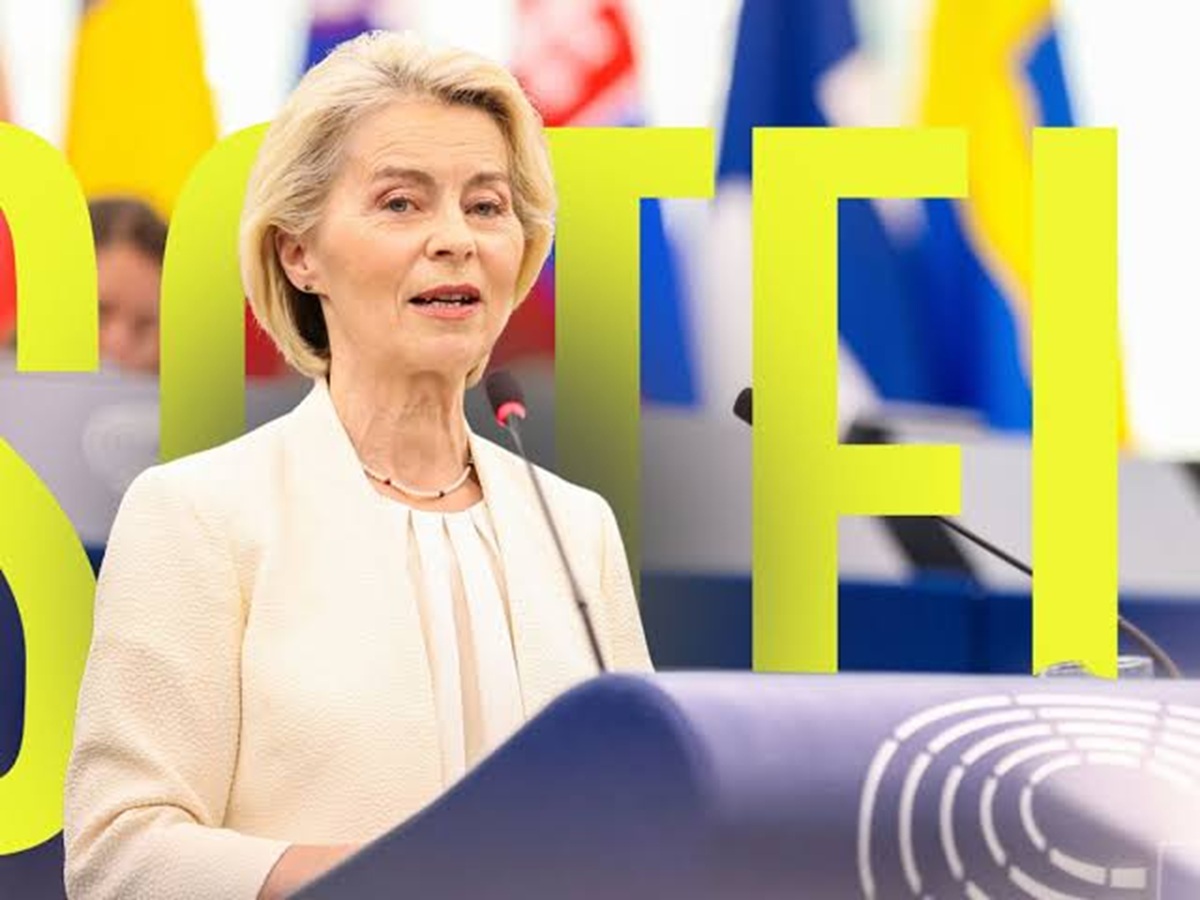
Ursula von der Leyen, President of the European Commission, has unveiled a proposal to harness artificial intelligence as a tool to reduce the administrative burden on businesses across the European Union.
Speaking at a meeting in Taormina, Sicily, von der Leyen argued that AI-powered systems could enable companies to report information to public authorities just once, with data then shared efficiently across relevant administrations. The approach, known as the 'only once' principle, aims to simplify regulatory compliance and remove duplicative paperwork for businesses operating within the EU single market.
The initiative builds on the EU Inc. proposal presented in March 2026, which first outlined the 'only once' concept as part of broader efforts to streamline business reporting. Von der Leyen’s latest remarks underscore the European Commission’s intent to leverage AI to make these ambitions a reality, potentially driving down costs and freeing up resources for companies.
By cutting the time and expense associated with repeated submissions of similar information, the Commission hopes to enhance the overall competitiveness of EU businesses. This, in turn, could bolster growth and innovation within the bloc, while making the single market more attractive for both domestic and international investors.
However, the practical details of implementing an AI-supported reporting system remain unclear. There is uncertainty over which AI tools will be adopted and how member states will respond, with potential resistance to the broader simplification pact a noted risk.
Despite these challenges, the proposal signals a significant step toward digitalising and harmonising business regulation in the EU. If successful, it could serve as a reference for other regions seeking to reduce regulatory friction and support economic dynamism.