Argentina’s critical minerals boom could reshape Europe’s lithium and copper supply chains
Argentina holds some of the world’s largest lithium and copper resources and could produce more than 1.5 million tonnes of copper annually by 2035. But turning geological wealth into strategic supply will require more than mines: Europe and other partners will need to bring capital, infrastructure and long-term buyers.

Argentina is moving into the centre of the global race for critical minerals as governments and manufacturers seek new sources of the lithium, copper and other raw materials needed for electrification, batteries, power grids, data centres and advanced manufacturing.
The scale of the opportunity is exceptional. Argentina reported 216.32 million tonnes of lithium-carbonate-equivalent resources and 117.91 million tonnes of copper resources as of February 2026, figures equivalent to roughly 27% of reported global lithium resources and around 8% of identified unextracted copper resources on comparable terms. The country also has potash and uranium assets that could become strategically relevant for food and energy security.
Argentina-Critical-Minerals-Report.pdf
Yet Argentina’s next mining chapter will not be determined simply by how much mineral lies beneath the Andes.
The decisive question is whether the country can convert those resources into projects with permits, financing, electricity, roads, water systems, skilled workers and customers prepared to commit to long-term purchases.
That distinction is becoming increasingly important for Europe. The European Union is trying to reduce excessive dependence on concentrated critical-mineral supply chains, while Argentina is simultaneously seeking a broader mix of investors and buyers beyond the partners already established in its mining industry.
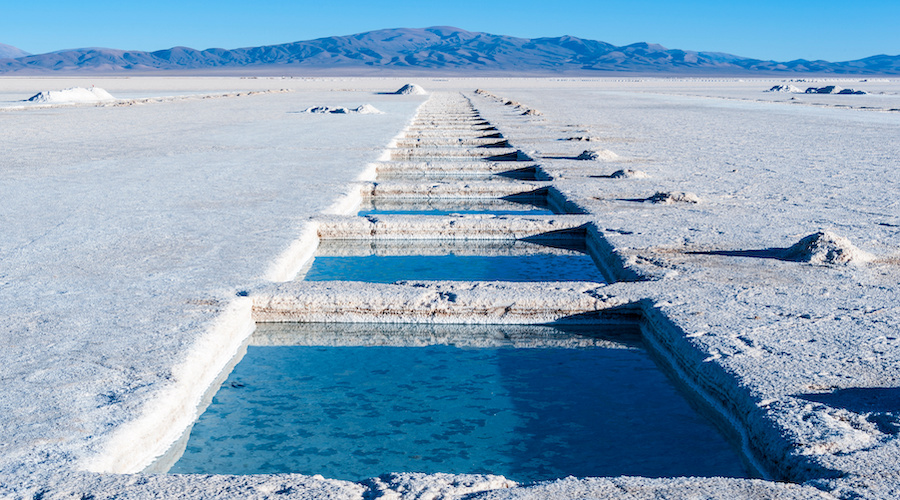
Lithium provides the clearest example of how far Argentina has already advanced. Seven projects were operating in 2025, concentrated primarily in Jujuy, Salta and Catamarca. Production reached an estimated 116,000 tonnes of lithium carbonate equivalent, supporting 5,405 jobs and generating exports of approximately €783 million.
Argentina-Critical-Minerals-Report.pdf
The next stage, however, is no longer simply about increasing output.
Argentina needs to deliver consistent battery-grade quality, strengthen water management, secure dependable energy and transport, improve processing reliability and diversify its customer base. Many lithium projects would welcome more European and US participation, but Western industrial buyers have yet to create financing and long-term purchasing mechanisms with the same level of integration frequently offered by Chinese companies.
China already occupies an important position in Argentina’s lithium industry. Chinese groups can often combine equity, construction, technology, processing and offtake commitments within the same investment package — something Western competitors frequently struggle to match.
Argentina-Critical-Minerals-Report.pdf
For Argentina, the strategic objective is therefore not to replace China but to avoid excessive dependence on any single source of capital, technology, processing or demand. That creates a direct opportunity for European investors and manufacturers.
Copper could become Argentina’s next export engine
If lithium is the most mature part of Argentina’s critical-minerals industry, copper offers the largest long-term economic prize.
Argentina has nine advanced copper projects across San Juan, Mendoza, Catamarca and Salta, including Altar, El Pachón, Filo del Sol, Josemaría, Los Azules, MARA, San Jorge/PSJ Cobre Mendocino, Taca Taca and a potential restart of Alumbrera.
Together, those projects would require more than €23.96 billion in capital expenditure. If developed, they could produce more than 1.5 million tonnes of copper annually by 2035 and generate yearly exports above €14.55 billion.
That output would represent approximately 6.1% of projected global copper production in 2035, potentially transforming Argentina from a largely prospective copper jurisdiction into one of the world’s significant sources of new supply.
Argentina-Critical-Minerals-Report.pdf
The timing is particularly important.
Copper demand extends well beyond electric vehicles and renewable energy. The metal is essential for electricity grids, buildings, industrial machinery, electronics, advanced manufacturing, defence and, increasingly, the massive infrastructure required for artificial intelligence and data centres.
But copper projects are significantly harder to develop than lithium operations. They require multibillion-euro investments, high-voltage electricity, access roads, water systems, construction logistics and a workforce capable of supporting projects that may operate for decades.
That makes the next several years decisive.
A project that cannot secure financing, infrastructure, environmental approvals and community support soon enough may miss the period in which global copper markets are expected to become increasingly constrained.
Infrastructure is emerging as one of the biggest tests. Many Argentine deposits are located far from transmission lines, railways, ports and major labour markets. When each company is required to build those systems independently, costs increase and project economics weaken.
This is why the development of shared mining corridors could become as important as the mines themselves.
San Juan offers a clear opportunity. The concentration of several major copper assets could justify common transmission infrastructure, roads, specialised suppliers and technical training. Instead of treating each mine as an isolated project, coordinated infrastructure could reduce capital requirements and make multiple developments easier to finance.
The same logic applies to lithium in the northwest, where producing operations still face shortcomings in power, roads, water management and export logistics.
For international investors, the calculation is increasingly straightforward: a world-class deposit without dependable infrastructure is not necessarily a bankable asset.
Argentina has attempted to improve the investment equation through the Régimen de Incentivo para Grandes Inversiones (RIGI), which provides greater fiscal and regulatory stability for large capital-intensive projects.
Rincón Lithium in Salta, with an estimated investment of €2.14 billion to €2.31 billion, and the multibillion-euro Vicuña/Josemaría-Filo copper district in San Juan illustrate the scale of mining projects associated with the new investment framework.
Argentina-Critical-Minerals-Report.pdf
RIGI can help reduce one of Argentina’s historic weaknesses: uncertainty over the rules governing investments that require many years before producing returns.
But the incentive regime cannot solve everything.
Mining projects in Argentina face a two-level regulatory reality. National authorities determine areas such as macroeconomic policy, customs, taxation and foreign-exchange rules, while provinces own natural resources and are directly responsible for many mining rights, environmental approvals, royalties, water issues and local procedures.
That means national reforms will only translate into investment if provincial execution is equally predictable.
Environmental and social questions have become part of the same financial equation. Water is particularly sensitive in the northwestern lithium basins and for large copper developments, while community relations can determine whether projects remain on schedule or face prolonged delays.
Argentina also confronts another bottleneck that receives less attention: human capital.
If several large copper and lithium projects move forward simultaneously, the country could face shortages of mining engineers, geologists, hydrogeologists, environmental specialists, operators, electricians, welders and qualified contractors. Mining companies could also recruit scarce technical professionals away from provincial regulators, weakening the agencies responsible for overseeing the industry.
Argentina-Critical-Minerals-Report.pdf
The challenge is therefore considerably broader than attracting mining companies. Argentina needs to build an ecosystem capable of supporting an entire investment cycle.
Europe has the opportunity — but it needs to bring contracts, not only standards
Europe already has an institutional foundation for a deeper relationship with Argentina.
The EU-Mercosur interim trade agreement has applied provisionally since May 1, 2026, while the EU-Argentina partnership on sustainable raw-material value chains provides a framework for cooperation in investment, ESG standards, infrastructure, skills and industrial development.
The agreements could lower barriers around critical raw materials, diversify European supply and create new investment opportunities. Argentina’s lithium potential is particularly relevant as Europe seeks to reduce dependence on individual suppliers.
Argentina-Critical-Minerals-Report.pdf
But Europe faces a fundamental challenge: turning political agreements into commercial commitments.
For a mining project, interest from European manufacturers has limited value unless it produces offtake agreements, financing, processing partnerships or direct investment.
Offtake — a long-term commitment to buy future production — can be crucial because it provides lenders and investors with greater confidence that a project will have customers once it enters operation.
European automakers, battery manufacturers, power-equipment companies and other industrial buyers could therefore play a role long before an Argentine mine begins exporting material.
The gap between European regulation and actual investment is one of the defining competitive issues. The EU brings sophisticated sustainability standards and a vast industrial market, but Chinese investors frequently arrive with integrated commercial packages that move faster from mine development to financing, processing and purchases.
To compete, European companies and financial institutions may need to become more willing to share project risk.
That could mean combining export credit, guarantees, infrastructure financing, long-term purchasing agreements and processing partnerships rather than waiting to buy material after mines are already operating.
The opportunity extends beyond Europe. The United States established a critical-minerals framework with Argentina in February 2026 covering investment, processing, financing, insurance and offtake, while Japan and South Korea represent natural potential buyers because of their battery, automotive and electronics industries. Brazil provides an obvious market for Argentine potash, while Chile could contribute expertise, infrastructure and cross-border mining capabilities.
Argentina-Critical-Minerals-Report.pdf
Potasio Río Colorado in Mendoza shows how those partnerships could extend beyond lithium and copper. The project could potentially produce between 1.05 million and 4 million tonnes of potash annually, with a first phase requiring around €856 million in investment.
Brazil, one of the world’s largest fertiliser importers, represents a natural market. In 2024, the country imported roughly €3.63 billion worth of potassium chloride, underlining the potential regional demand for an Argentine supply source.
Argentina-Critical-Minerals-Report.pdf
The real obstacle is logistics.
Moving large volumes of potash economically requires roads, rail, transfer facilities and port access. A dedicated logistics corridor anchored by mineral exports could potentially serve other industries as well, illustrating how mining investment can become part of a broader infrastructure strategy.
Argentina’s critical-minerals opportunity is therefore becoming far larger than a conventional mining story.
It touches energy security, food security, artificial intelligence, industrial competitiveness and the geopolitical contest to diversify global supply chains.
The country already possesses the geology.
What it needs now is enough infrastructure to move the minerals, enough regulatory credibility to attract long-term capital, enough skilled workers to build the projects and enough international buyers willing to commit before production begins.
For Europe, the choice is equally clear.
If the EU wants Argentina to become part of a more diversified critical-minerals supply chain, European engagement will have to move beyond memoranda and sustainability standards towards capital, infrastructure and long-term contracts.
Argentina could become one of the major new suppliers of lithium and copper during the next decade.
Whether that happens will depend less on what lies beneath the ground than on who is prepared to finance, build and buy what comes out of it.