Argentina’s Tostado targets European expansion after testing its model in Madrid
The Argentine fast-casual chain has three locations in the Spanish capital and is preparing a franchise-led expansion across Europe. Founder and director Fernando Goijman told EUBizNews that Italy is among the markets under consideration, but says the priority is to consolidate the Spanish operation before accelerating growth.

Argentine café and fast-casual chain Tostado is laying the groundwork for a broader expansion across Europe, using Madrid as a testing ground for a franchise model that could eventually take the brand into other Spanish cities and European markets, including Italy.
Founded in Buenos Aires in 2015, Tostado has grown from its first store at the intersection of Córdoba and Paraná avenues into a network of 63 locations in Argentina and nine abroad, according to founder and director Fernando Goijman. Its international footprint includes Spain, Brazil, Uruguay and the United States, while Madrid has become the focal point of its European strategy.
The company currently operates three Tostado locations in Madrid, all under a regional franchise for Spain. The Spanish business is led by operators who previously worked within Tostado's Argentine operation, creating a direct connection between the teams on both sides of the Atlantic.
That relationship, Goijman explained, has helped the company navigate one of the most difficult parts of international expansion: understanding how much of a successful domestic concept can be replicated abroad and how much needs to change.
“I think the main lesson was understanding that a brand is not exported: it adapts,” Goijman told EUBizNews. “You can arrive with a proven concept, a solid operation and many years of experience, but every market has its own habits, codes, schedules, price sensitivity and ways of consuming.”
Madrid was not chosen by accident. For Tostado, Spain offered a combination of market size, cultural proximity, a shared language and a strong gastronomic culture. Madrid's position as an increasingly international city and major tourist destination also gives the Argentine brand exposure to consumers from outside Spain.
That cultural proximity, however, did not eliminate the need for substantial localization.
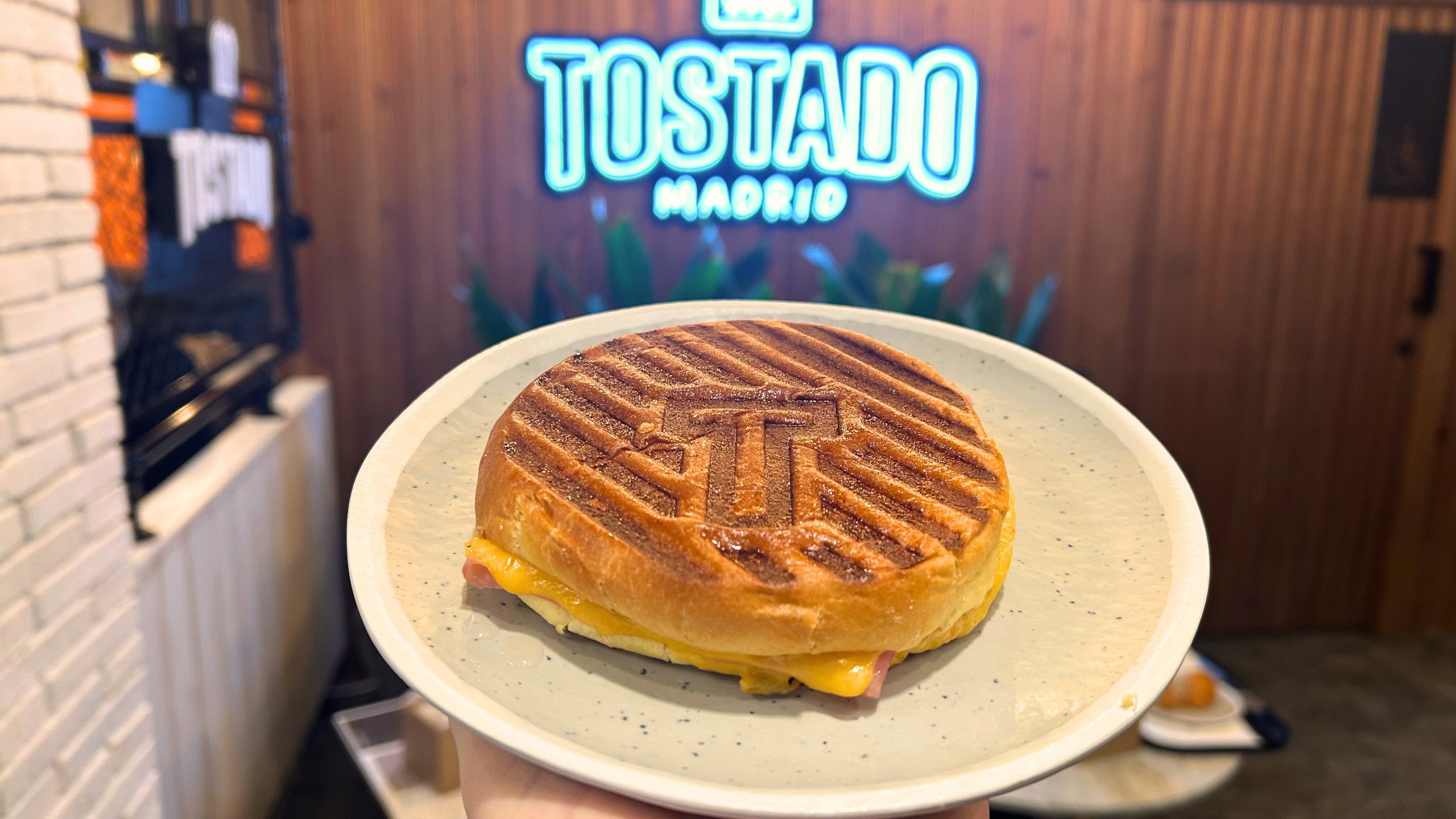
According to Goijman, around 70% of Tostado's menu has undergone some form of adaptation for the Spanish market, ranging from individual products and combinations to portion sizes, pricing and consumption formats. The underlying menu architecture remains similar to Argentina's, while the company has sought to preserve the brand's identity around coffee, toasted sandwiches, bakery products and all-day food.
Today, the ingredients used by Tostado in Spain are 100% sourced in the country. Some products are developed specifically for the chain with local producers, while others are prepared through a small central kitchen operating from one of its Madrid locations and supplying the rest.
The company's commercial material defines Tostado as a modern fast-casual concept combining dine-in, takeaway, delivery and digital sales. It offers formats designed for different locations and investment profiles, from compact units to full flagship stores.
Madrid becomes Tostado’s laboratory for Europe
Rather than replicating a single store format, Tostado deliberately opened three different models in Madrid. Its Casual To Go format covers locations of up to 70 square metres, Fast Casual ranges from 70 to 130 square metres, and Flagship units exceed 130 square metres.
The commercial strategy behind those formats is also reflected in the company's franchise proposition: compact stores are designed for high-footfall locations and simplified operations, while larger units combine dine-in consumption with takeaway, delivery and digital channels.
All three formats are already operating in Madrid, giving Tostado an opportunity to compare customer behaviour and store economics before deciding how aggressively to scale.
The founder puts the opening investment at approximately €1,600 per square metre as a general reference for Madrid, although the final figure varies according to store size, condition and location. He said the capital required per square metre has ultimately been relatively comparable with equivalent formats in Argentina.
The economics of running the business, however, differ.
Average customer spending in Madrid is not dramatically different from Argentina when converted into the same currency. But Spain has a different cost structure: merchandise costs can be relatively lower, while labour represents a greater share of expenses.
Real estate is the bigger challenge.
Madrid's elevated commercial property prices, combined with the common practice of paying a traspaso to take over certain premises, make site selection critical. For Tostado, the equation between rent, upfront investment and a location's revenue potential has therefore become one of the central factors determining whether a new opening makes economic sense.
The Spanish capital has also revealed consumer behaviours that were less obvious from Buenos Aires.
Terraces, for example, have emerged as a particularly important component of store performance.
“The locations where we already have an authorised terrace are performing better than those where the experience takes place mainly indoors,” Goijman said, pointing to a consumption pattern he considers significantly different from Buenos Aires.
Those discoveries explain why Tostado is resisting the temptation to turn its arrival in Spain into an immediate race for store openings.
“Madrid is still in a stage of learning, consolidation and adjustment,” Goijman said. “Today we have much more knowledge of the market than when we arrived, and we are using all that learning to finish refining the model and allow the existing stores to express their true potential.”
Franchises, new investors and Italy
Once that model is consolidated, Tostado's ambitions extend beyond Madrid.
Its preferred European expansion strategy is based primarily on franchises and local operators with deep knowledge of their markets. The company describes its approach as an “spiral” expansion from Madrid: establish the brand, refine the economics and operating model, and then gradually move into additional cities and countries.
Tostado is pursuing several structures for growth, including individual franchisees, operators with multi-unit expansion plans, regional franchisees and master franchise partners capable of developing broader territories. The company says it prioritises partners with management capacity, operational commitment and a long-term expansion mindset rather than passive capital alone.
That is also the model Goijman wants to pursue across Europe.
“We are open to bringing in investors and strategic operators to develop new European markets under a franchise model, but for us it is very important that it is not just a financial investment,” he said.
Under a potential master franchise agreement, a partner could initially launch and adapt Tostado to a new country, validate pricing and consumer behaviour and subsequently commit to a broader rollout. Once established, that operator could eventually grant additional franchises within its territory under Tostado's licence and standards.
Italy is already on the radar.
The company considers the country attractive because of its cultural affinity with Argentina and its large Argentine community, although Tostado is simultaneously assessing other European markets with sufficient scale to justify building a new operation from scratch.
There is no fixed race to plant flags across the continent, he stressed.
“Spain and Europe remain very interesting markets for Tostado and naturally we are thinking about continuing to grow. But we are not in a race to open stores,” Goijman said. “Our priority today is to consolidate the model, complete the necessary adjustments and, from there, enter a new stage of expansion with greater knowledge and precision.”
That cautious approach reflects the central lesson of Tostado's first European experience. The company began in Argentina by operating its own stores and spending its early years refining products, technology and operational processes before accelerating expansion. It is now trying to reproduce that learning curve internationally rather than simply reproducing Argentine stores abroad.
The commercial platform supporting that strategy is already designed for scale. Tostado's franchise material highlights digital kiosks, QR ordering and payment, takeaway, delivery and in-store sales, alongside centralised operational controls, training, supply management and real-time monitoring of business indicators.
For Goijman, however, technology and scale do not remove the fundamental difficulty of internationalising a restaurant brand.
“Even small differences can have an enormous impact in gastronomy: location, the terrace, menu composition, price, communication or simply the way the customer interprets the proposition,” he said.
His advice to Argentine companies considering an international move is therefore to build enough financial capacity to withstand the learning period, choose local partners carefully and avoid assuming that domestic success can simply be replicated.
“Especially in gastronomy, I think it is better to consolidate first and scale later,” Goijman said. “Opening quickly is relatively simple; the difficult part is building a model that is profitable, replicable and sustainable in a new market. That, for us, is the real challenge.”