BusinessEurope Strengthens Ties with Brazil to Advance the EU–Mercosur Partnership
A high-level BusinessEurope delegation has concluded a strategic mission to Brazil aimed at deepening business cooperation, promoting investment and accelerating the implementation of the EU–Mercosur agreement, reinforcing the growing importance of the transatlantic economic partnership.

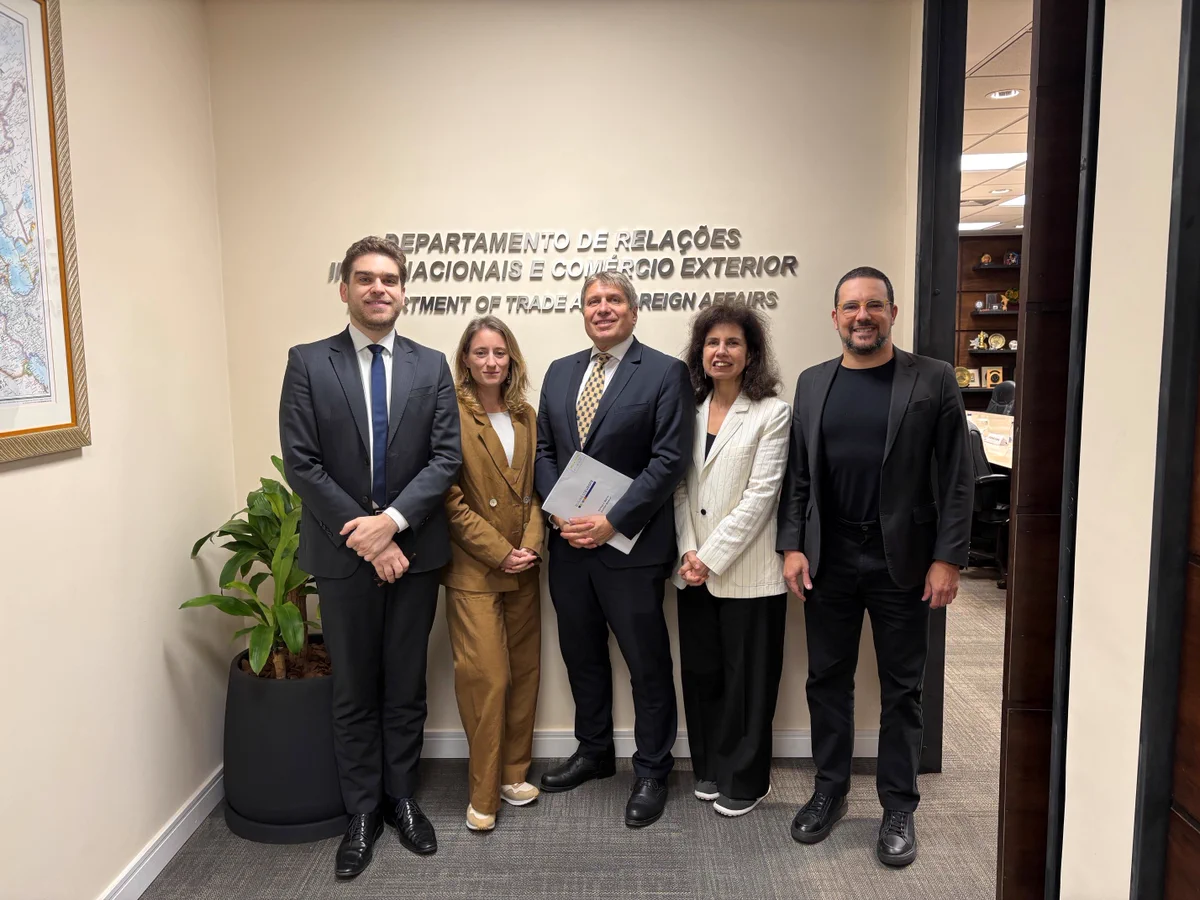
As the EU–Mercosur agreement enters a new phase of implementation, Europe's leading business federation is intensifying its engagement with Brazil to expand investment, strengthen industrial cooperation and unlock new commercial opportunities across South America.
A delegation from BusinessEurope, representing companies and employers' organizations from across the European Union, traveled to Brazil this week for a series of meetings with government officials, business leaders and industry representatives focused on reinforcing economic ties between Europe's largest trading bloc and Latin America's biggest economy.
The visit reflects growing confidence within the European private sector that Brazil will play a central role in the future of the EU–Mercosur partnership.
BusinessEurope described the mission as an opportunity to transform the trade agreement into concrete business projects, encouraging greater investment, industrial collaboration and long-term cooperation in strategic sectors.
The agenda included discussions on manufacturing, digital transformation, clean energy, infrastructure, sustainability and supply chain resilience—areas that are increasingly shaping the economic relationship between Europe and Latin America.
Business representatives also highlighted the importance of creating predictable regulatory frameworks capable of attracting long-term investment and facilitating cross-border business operations.
The mission comes at a moment of renewed momentum for EU–Brazil relations.
In recent weeks, the European Commission has expanded its Global Gateway investment initiatives in Brazil, announcing new projects in digital connectivity, critical raw materials and sustainable infrastructure designed to strengthen industrial cooperation between both partners.
For European companies, Brazil represents one of the continent's most strategic international markets.
With a diversified industrial base, abundant natural resources, growing renewable energy capacity and a market of more than 200 million consumers, the country has become an increasingly attractive destination for European investment.
At the same time, Brazil sees Europe as a key partner for accelerating industrial modernization, attracting technology-intensive investment and supporting its transition toward a more sustainable economy.
BusinessEurope emphasized that the EU–Mercosur agreement offers benefits that extend well beyond tariff reductions.
The framework is expected to improve market access, simplify customs procedures, strengthen legal certainty for investors and encourage cooperation in areas including digitalization, innovation, environmental sustainability and industrial competitiveness.
Business leaders also stressed that closer cooperation is becoming increasingly important as companies seek to diversify supply chains and reduce exposure to geopolitical uncertainty.
The mission reflects a broader trend reshaping international trade.
Rather than focusing solely on exports, governments and businesses are placing greater emphasis on strategic partnerships capable of strengthening economic resilience, supporting technological innovation and securing access to critical resources.
The EU–Mercosur agreement forms part of that strategy.
Signed after more than two decades of negotiations, the partnership creates one of the world's largest integrated economic areas and establishes a long-term framework for political dialogue, investment and trade between Europe and South America.
For BusinessEurope, strengthening relations with Brazil is expected to play a decisive role in translating that agreement into tangible business opportunities.
As investment flows increase and cooperation expands across strategic industries, the organization believes the partnership can become a major driver of competitiveness, sustainable growth and innovation on both sides of the Atlantic.