Deutsche Bank chooses Revolut’s Canary Wharf building for its new London technology hub
The German lender will relocate its technology, operations and other infrastructure teams to YY London in early 2028. The move reinforces Deutsche Bank’s commitment to the British capital and provides a further boost to Canary Wharf’s recovery as a financial and technology district.

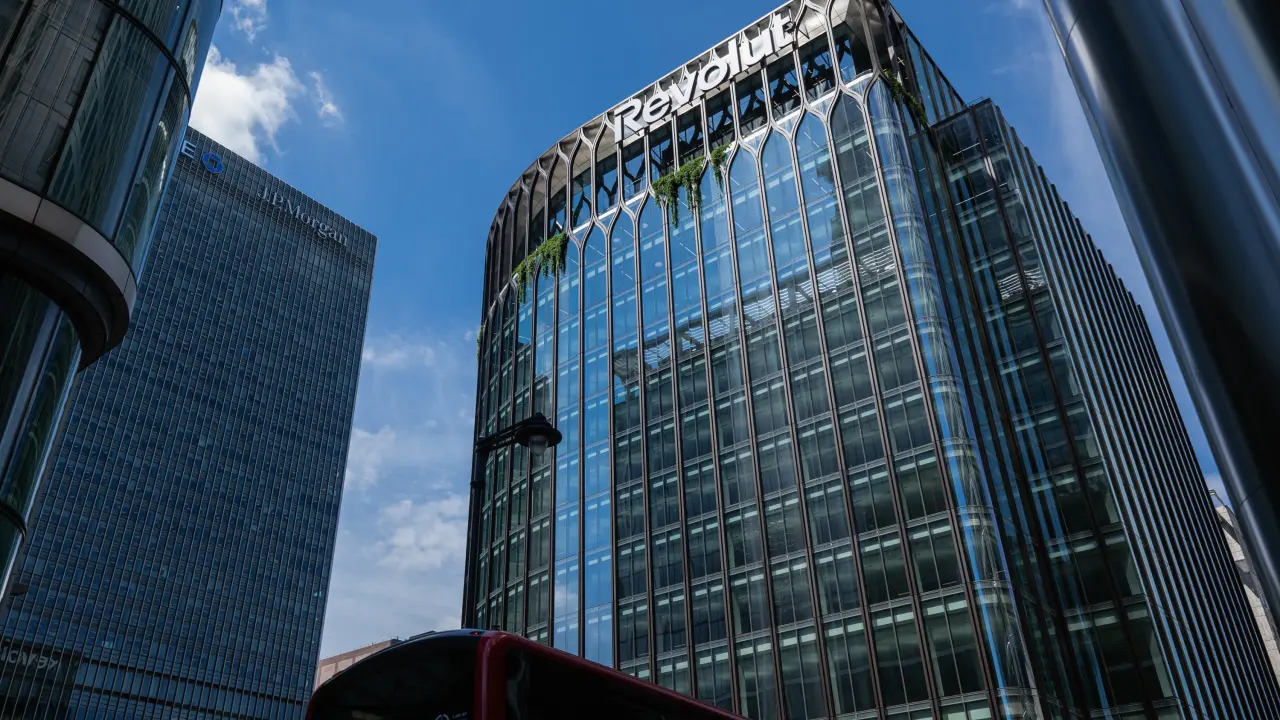
Deutsche Bank has secured office space at YY London, the Canary Wharf building that houses Revolut’s global headquarters, for a major relocation of its London-based technology, operations and infrastructure functions.
The German banking group plans to occupy the new offices from early 2028, ahead of the expiry of its current lease at 10 Upper Bank Street in July of that year. The move will keep the teams in Canary Wharf while transferring them into one of the district’s most recently redeveloped office properties.
The decision does not involve Deutsche Bank’s main British headquarters. Its core businesses will remain at 21 Moorfields in the City of London, where the bank concentrates activities including corporate banking, investment banking, transaction banking and wealth management. DWS, its asset-management subsidiary, is also expected to relocate to Moorfields in late 2027.
Deutsche Bank will therefore maintain a two-location structure in London: its principal commercial operations in the City and a substantial technology and infrastructure presence in Canary Wharf.
The bank said YY London was selected following an extensive review of the available options. It highlighted the property’s sustainability performance, employee experience and capacity to support modern working practices as important factors behind the decision.
“This move underlines our commitment to London,” said Vathany Vijayaratna, Deutsche Bank’s chief executive for the United Kingdom and Ireland.
The company did not disclose the financial terms, duration or precise size of the new lease. Earlier property-market reports placed the space under consideration at approximately 250,000 square feet, or around 23,200 square metres. If confirmed, that would make Deutsche Bank one of the building’s largest occupiers and give it roughly twice the area currently used by Revolut.
YY London, formerly known as 30 South Colonnade, was previously occupied by Thomson Reuters. The property was acquired in 2019 by a joint venture between funds managed by Oaktree Capital Management and real-estate developer Quadrant Estates, which subsequently carried out an extensive refurbishment completed in late 2023.
The redevelopment added a new façade, expanded the property with additional floors, increased natural light and redesigned the ground-level entrance. The building now provides approximately 414,000 square feet — close to 38,500 square metres — of office space.
Its environmental profile has become one of its principal commercial advantages. YY London is fully electric and is targeting net-zero emissions from its operations. It also offers smart-building technology, modern workspaces, commuter facilities, rooftop gardens, terraces and internal food and beverage services.
Those characteristics are becoming increasingly important in London’s office market. Large corporate tenants are concentrating demand on modern buildings capable of meeting stricter environmental requirements while providing the amenities needed to attract employees in an era of hybrid work.
Revolut committed to YY London in 2024, signing a ten-year lease for 113,000 square feet across four floors. The agreement expanded the fintech company’s London office footprint by more than 40% and transformed the building into its global headquarters.
Deutsche Bank’s arrival will place one of Europe’s largest established banks under the same roof as one of the continent’s most prominent digital-finance companies. The two businesses will remain separate tenants, but their proximity illustrates how Canary Wharf is increasingly bringing together traditional financial institutions, payments companies and technology-led challengers.
The agreement also represents another positive signal for Canary Wharf, which faced rising vacancies and questions about its future after the pandemic accelerated hybrid working and prompted several major companies to reduce or relocate their office space.
The district has responded by investing in housing, restaurants, retail, leisure facilities and public spaces, seeking to evolve from a predominantly corporate office centre into a broader mixed-use neighbourhood. At the same time, the limited supply of newly built or extensively refurbished offices elsewhere in London has supported demand for high-quality space in the Docklands.
For Deutsche Bank, the move is not a retreat from Canary Wharf but a long-term renewal of its presence there. By relocating before its current lease expires, the bank gains time to manage the transition while placing its technology and operations teams in a building designed around digital infrastructure, collaboration and lower operational emissions.
The transaction is ultimately a real-estate decision, but it also carries strategic symbolism. As banking becomes increasingly dependent on software, data and digital infrastructure, the distinction between established lenders and fintech companies continues to narrow.
From 2028, that convergence will have a highly visible address in London: Deutsche Bank and Revolut operating from the same Canary Wharf building, representing two different generations of European finance under one roof.