Energy Transition Minerals Expands Spanish Mining Strategy as Europe Seeks Critical Mineral Security
Energy Transition Minerals (ETM) is accelerating its search for new mining opportunities in Spain while awaiting the outcome of a long-running dispute over its flagship rare earth project in Greenland. The move highlights Europe's growing urgency to secure domestic supplies of critical minerals essential for electric vehicles, renewable energy technologies and industrial competitiveness.

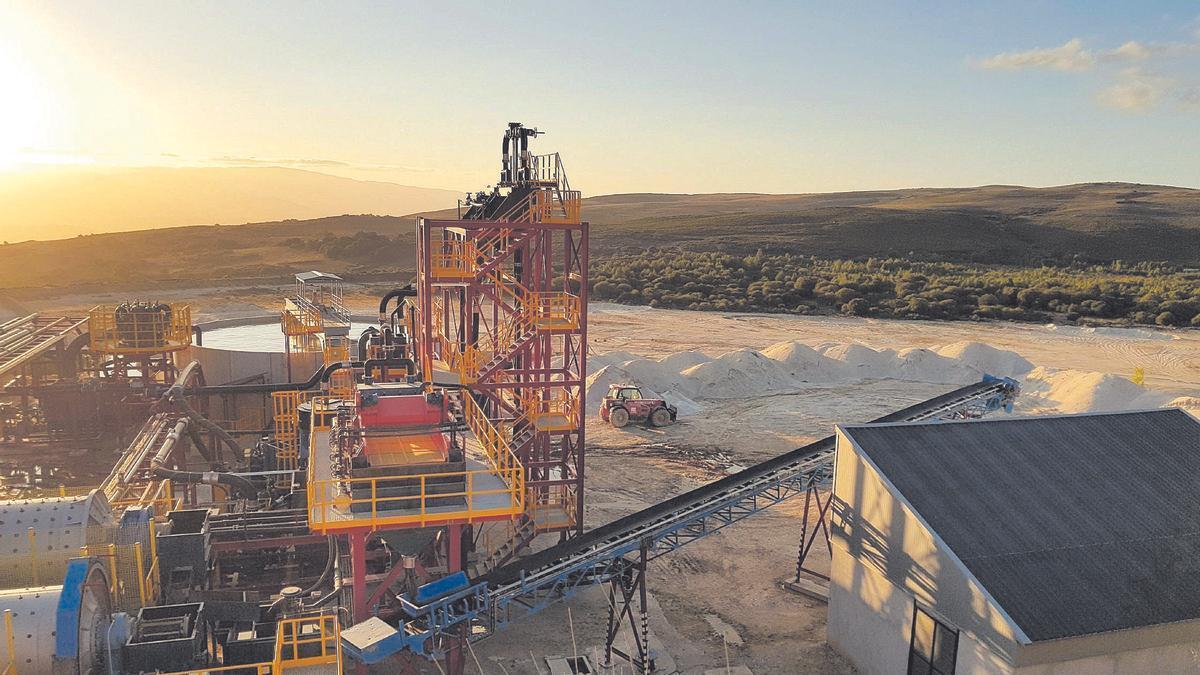
As Europe races to reduce its dependence on foreign suppliers of critical raw materials, Energy Transition Minerals (ETM) is strengthening its presence in Spain, positioning itself to play a larger role in the continent's strategic minerals supply chain.
The Australian-listed company is exploring additional mining opportunities in the Spanish region of Galicia while it waits for legal and regulatory clarity surrounding its Kvanefjeld rare earth project in Greenland, one of the world's largest undeveloped deposits of rare earth elements.
The strategy reflects a broader shift taking place across Europe as governments and companies seek to diversify supply sources for minerals considered essential to the energy transition and advanced manufacturing.
Spain emerges as a critical minerals hub
ETM's immediate focus is Spain, where the company expects to restart operations at the Penouta mine in Galicia within the next 18 to 24 months, pending regulatory approvals and environmental clearances. The site is notable as Europe's only developed tin, tantalum and niobium mine, minerals widely used in electronics, semiconductors and renewable energy technologies.
The company is also evaluating additional mining opportunities in the region, where local authorities are actively seeking to revive historical mining districts and attract investment into strategic resource projects. According to company executives, dozens of former mining sites could become candidates for future development.
For Europe, the expansion of domestic mining capacity has become increasingly important as policymakers seek to reduce dependence on external suppliers and strengthen industrial resilience.
Greenland remains strategically important
While ETM advances its Spanish ambitions, the company continues to pursue a resolution regarding its Kvanefjeld project in Greenland.
The project contains one of the world's largest undeveloped rare earth deposits and has become a focal point in global discussions about critical mineral security. However, regulatory changes in Greenland, including restrictions related to uranium mining, have delayed development and triggered legal disputes between the company and local authorities.
The outcome of the dispute is being closely monitored by governments and investors, particularly as Western economies attempt to diversify away from China's dominant position in rare earth processing and supply chains.
Why critical minerals matter
Rare earth elements, tin, tantalum and niobium are increasingly viewed as strategic resources because of their role in technologies that underpin the modern economy.
These materials are essential for:
Electric vehicle batteries and motors
Wind turbines and renewable energy systems
Semiconductors and advanced electronics
Defense technologies and aerospace applications
Energy storage infrastructure
Demand for these resources is expected to increase significantly over the coming decades as governments accelerate decarbonization strategies and industrial modernization programs.
New opportunities for Latin America
Europe's push to secure critical minerals is also creating opportunities beyond the continent.
Latin America possesses some of the world's most important reserves of lithium, copper, rare earths and strategic metals. Countries including Argentina, Chile, Brazil and Peru are increasingly viewed as key partners in Europe's efforts to diversify supply chains and strengthen resource security.
As European companies seek stable and reliable sources of critical minerals, the region could attract additional investment, technology partnerships and long-term supply agreements.
The trend aligns closely with initiatives such as the European Union's Critical Raw Materials Act and Global Gateway strategy, both of which aim to build stronger resource partnerships with trusted international suppliers.
Europe's race for resource independence
The expansion of ETM's activities in Spain illustrates a broader transformation taking place across Europe.
The continent is no longer focused solely on importing strategic materials. Increasingly, governments and businesses are investing in domestic production, processing capabilities and international partnerships to reduce vulnerabilities in critical supply chains.
As geopolitical competition intensifies and demand for clean technologies grows, access to critical minerals is becoming a central pillar of economic security and industrial policy.
Energy Transition Minerals' expansion plans in Spain underscore Europe's determination to strengthen its access to critical minerals at a time of growing global competition for strategic resources. While uncertainty remains around its Greenland project, the company's focus on Spain reflects a wider European effort to build resilient supply chains—and creates new opportunities for Latin American countries seeking to become essential partners in the global energy transition.