EU digital identity wallet approaches 2026 deadline as uneven rollout tests the single market
Every European Union member state must make at least one government-recognised digital identity wallet available by the end of 2026. Banks, financial services, utilities, telecommunications companies and other regulated providers will subsequently face acceptance obligations, but differences in national readiness, unfinished certification work and privacy concerns point towards a gradual rather than simultaneous European launch.

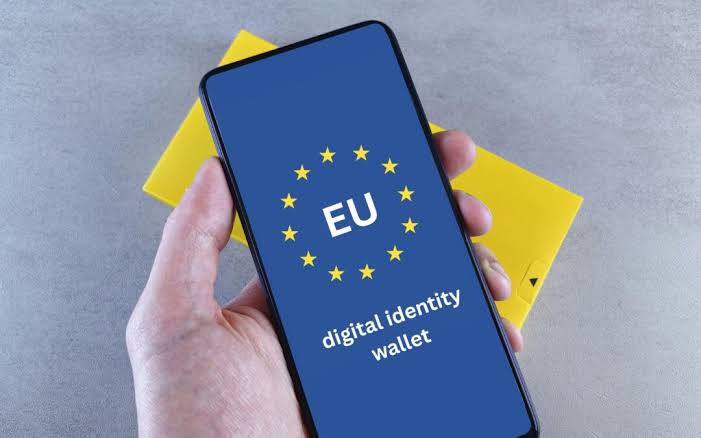
The European Union is approaching a decisive stage in the implementation of its digital identity system, an infrastructure intended to allow citizens to prove who they are, share verified credentials and access public and private services through a mobile application recognised across the bloc.
Under the European Digital Identity Framework, every member state must provide at least one EU Digital Identity Wallet, generally known as the EUDI Wallet, by the end of 2026.
The legal deadline is linked to the implementing regulations that entered into force in December 2024. Member states were given 24 months to deliver their wallets, taking the formal timetable to 24 December 2026.
The project does not involve the creation of one centralised application operated by Brussels. Each country can provide its own wallet directly, mandate another organisation to develop it or recognise a privately supplied solution.
All approved wallets must nevertheless follow common European technical, security and interoperability requirements. This should allow a credential issued in one member state to be recognised by public authorities and participating businesses elsewhere in the EU.
The Architecture and Reference Framework, or ARF, defines how wallet providers, credential issuers and the organisations relying on those credentials should interact. The European Commission has also provided open-source components and a reference application to assist national governments and technology suppliers.
In practical terms, the wallet will allow users to store or access digital versions of official and independently verified information. That could include national identity credentials, driving licences, university qualifications, professional certificates, age attestations and other documents.
A citizen opening a bank account, for example, could use the wallet to transmit verified identity information instead of photographing a document, uploading it and waiting for the institution to check its authenticity.
Someone accessing an age-restricted service could demonstrate that they are over the required age without necessarily disclosing their exact date of birth, address or full legal identity. This principle, known as selective disclosure, is one of the central privacy promises behind the system.
The wallet could also be used to access government platforms, sign electronic documents, register a mobile telephone subscription, prove educational qualifications, collect prescriptions, check into hotels or authenticate certain payments.
It should not be confused with the proposed digital euro. The EUDI Wallet is primarily an identity and credential infrastructure, although payment instruments, account information and payment authentication services can be connected to it.
For governments, the objective is to provide a reusable form of digital identification that works across national borders. For businesses, the European Commission expects it to reduce repeated document collection, automate verification, lower customer-onboarding costs and improve protection against identity fraud.
The effect could be particularly important for banks, payment companies and financial services providers, where customer identification is governed by strict legal and compliance requirements.
Reusable verified credentials could shorten account-opening processes, reduce manual document reviews and limit the use of insecure email attachments or photographs of identity cards. Wallet-based authentication could also support payment initiation, account ownership verification and strong customer authentication.
However, accepting a credential will not eliminate the legal responsibilities of regulated companies. Banks will continue to be responsible for compliance with know-your-customer, anti-money-laundering and sanctions requirements, even when part of the information arrives through an EUDI Wallet.
The regulation creates different obligations for governments, businesses and users.
Member states must make a wallet available, while public bodies that require electronic identification to access an online service must accept compliant EUDI Wallets.
Certain private-sector organisations will face a later deadline. No later than 36 months after the relevant implementing rules entered into force — effectively by late December 2027 — qualifying providers must accept the wallet when strong authentication or legal identification is required and the customer voluntarily chooses to use it.
The sectors listed in the legislation include banking, financial services, transport, energy, telecommunications, healthcare, social security, drinking water, postal services, education and digital infrastructure.
Microenterprises and small companies are excluded from this particular private-sector acceptance obligation. Very large online platforms must also facilitate wallet-based authentication when they require users to identify themselves, provided that the user requests it and only the minimum information necessary is transmitted.
Citizen adoption, however, will remain voluntary.
The regulation explicitly states that people who do not use an EUDI Wallet must not be placed at a disadvantage when accessing public services, private services, employment or business activities. Existing identification and authentication methods must therefore remain available.
Physical identity cards and driving licences will not disappear when the wallets are launched. National electronic identification systems such as France Identité, Italy’s IO application, Germany’s online ID function, Poland’s mObywatel or Spain’s Cl@ve infrastructure may also continue operating or be incorporated into national wallet strategies.
This means Europe is likely to develop a hybrid identity environment in which physical documents, legacy national systems and EUDI-compatible wallets coexist for several years.
The most immediate challenge is that the 27 member states are not progressing at the same speed.
According to an independent EUDI readiness tracker, Denmark, France and Italy are the only EU countries that currently have wallet-related services classified as operational for the public while awaiting completion of the EU notification process.
France Identité and Italy’s IT-Wallet build on national digital identity infrastructures already used by millions of people. Denmark has launched AltID with identity and age-verification functions.
None of those systems had yet completed the full EU notification process at the time of reporting, meaning that no wallet was listed as a fully notified European production solution.
Several countries, including Germany and Ireland, are running public pilots or sandboxes. Others remain in closed testing, procurement, technical development or large-scale European pilot programmes.
Norway is also conducting trials, although as a member of the European Economic Area rather than the EU, it follows a different implementation timetable.
Germany illustrates both the ambition and difficulty of the project.
The country used its SPRIND innovation agency to run a 15-month competition in which several development teams produced and tested potential wallet architectures. The initiative funded six teams during its first stage, four in the second and two finalists in the third.
Germany subsequently opened an official sandbox where government bodies, companies and developers can test identification processes and integrate potential services.
Despite that early experimentation, the German government now expects the first version of its national wallet to become available in early 2027, with additional functions introduced progressively.
The schedule reinforces expectations that Europe will not experience a synchronised launch on one date. Some countries may release limited initial versions concentrating on a small number of credentials, particularly age verification or basic personal identification, before expanding towards banking, education, travel and other services.
Kristian Sørensen, digital identity ambassador at IN Groupe, has described the December 2026 deadline as exceptionally ambitious. He expects a mixture of fully operational applications, limited “mini wallets” and pilot-stage systems at the end of the year.
A phased rollout would not necessarily mean that the European framework had failed. It would, however, create operational complexity for companies that serve customers in several countries and must integrate wallets with different launch dates and initial capabilities.
The Commission has attempted to reduce this fragmentation through common technical specifications and extensive testing.
More than 550 companies and public authorities from 26 member states, Norway, Iceland and Ukraine have participated in large-scale pilot programmes. These initiatives have tested wallet functionality in financial services, travel, education, telecommunications, healthcare, government administration and social security.
The NOBID consortium, formed by Nordic and Baltic countries together with Germany and Italy, completed a payments-focused programme in 2025. Its work included payment authentication and initiation, bank-account onboarding, account verification and the secure exchange of trusted credentials.
Mastercard participated as an advisory partner and has also worked on connecting payment credentials with EUDI-compatible wallets.
According to Michele Centemero, Mastercard’s European regional services leader, the system’s success will depend on whether it can solve real problems while preserving security, privacy and user control.
Technical demonstrations have shown that cross-border transactions and payment authentication are possible when the same standards are implemented correctly. Moving from a controlled pilot to a trusted system used by hundreds of millions of people, however, requires more than functional software.
Certification is one of the most pressing dependencies.
EUDI Wallets must meet a high level of assurance and undergo conformity assessment. Member states must establish or use certification arrangements capable of demonstrating compliance with European security, privacy and operational requirements.
The EU cybersecurity agency ENISA launched a public review of its draft wallet cybersecurity certification scheme in April 2026. Until certification, notification and trusted-list procedures are fully operational, technically completed wallets cannot obtain the legal recognition necessary for seamless cross-border acceptance.
National regulation creates a second difficulty. The wallet architecture may be technically interoperable, but rules governing identity, banking, data, healthcare, telecommunications and public administration still differ between member states.
A financial institution may therefore be able to read the same European credential in several countries while still having to apply different domestic onboarding or record-keeping requirements.
Privacy is another unresolved source of debate.
The regulation requires security by design, explicit user approval and user control over wallet data. It also states that wallet providers should not monitor transactions or combine wallet information with unrelated data unless the user explicitly requests it.
Relying parties must register the purposes for which they use the wallet and should request only the information necessary to provide a particular service.
Nevertheless, a coalition of European digital rights and consumer organisations warned the Commission in March 2026 that draft implementing rules could weaken some of those protections.
The organisations raised concerns about whether registration certificates for service providers would be compulsory across every member state, whether users could be warned effectively when a company requested excessive information and whether pseudonymous interactions would remain possible where full legal identification was unnecessary.
They also criticised proposals involving facial images in minimum identity datasets and argued that stronger safeguards were needed to prevent different wallet transactions from being linked together to track users.
The Commission responded that preventing tracking, protecting personal data and maintaining user control remain central objectives of the framework. The debate nevertheless shows that trust will depend on the detailed rules and technical choices, not only on the broad guarantees written into the regulation.
Businesses must also avoid treating the wallet as permission to collect more information simply because verified credentials become easier to request. A successful implementation depends on data minimisation: proving a specific fact without exposing an entire identity profile.
The EUDI Wallet could become one of Europe’s most consequential digital infrastructures. If it works as intended, citizens could reuse trusted credentials across borders while companies reduce verification costs and governments connect services that remain fragmented today.
If national rollouts diverge too far, certification is delayed or users do not trust the privacy protections, the EU risks creating 27 technically related wallets without an immediately seamless European experience.
The deadline at the end of 2026 will therefore mark the beginning of implementation rather than the completion of the project.
Europe’s central challenge is no longer simply building digital wallets. It is creating enough legal, technical and public trust for citizens and businesses to use them across borders as naturally as they currently present a physical document at home.