
Europe’s gas prices surge 120% as low storage raises fears of a costly winter
Europe is entering the final stretch before the heating season with gas inventories at historically low levels, while heatwaves, supply disruptions and stronger power demand push prices higher. The energy shock could also complicate the ECB’s fight against inflation.

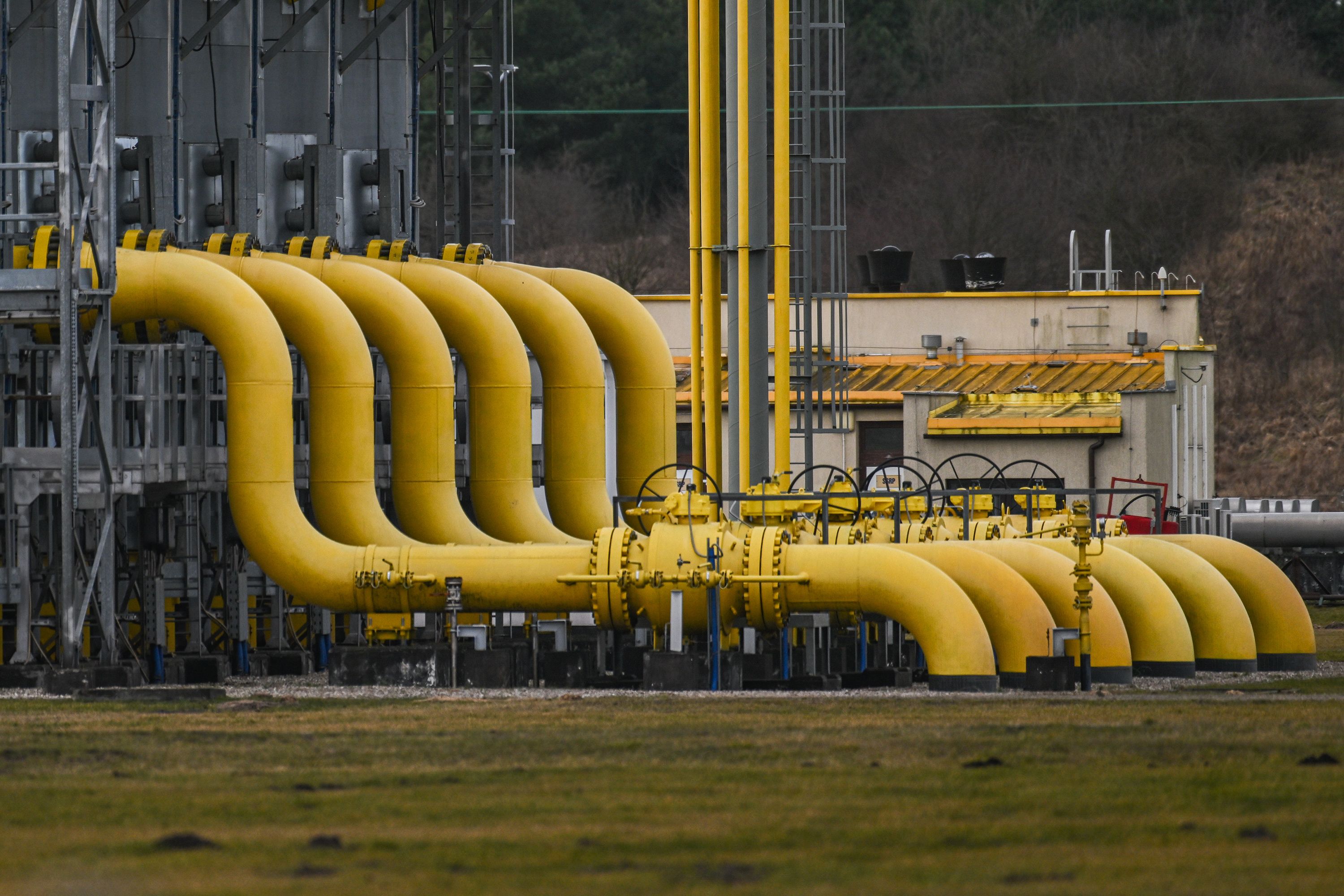
Europe is heading towards another potentially expensive winter after wholesale natural gas prices surged around 120% since the beginning of 2026, exposing a vulnerability that the continent has reduced since the energy crisis but has not eliminated: its dependence on gas when temperatures, electricity demand and global supplies move in the wrong direction at the same time.
Dutch TTF futures, the benchmark for European natural gas, reached approximately €63.7 per megawatt-hour on 18 August. That remains dramatically below the extraordinary peak of roughly €350/MWh recorded during the 2022 energy crisis following Russia’s invasion of Ukraine, but the current increase is occurring at a particularly sensitive moment. Europe should be using the summer to rebuild inventories before the heating season; instead, extreme temperatures are forcing the energy system to consume more gas.
Heatwaves are increasing electricity demand as households and businesses turn to cooling, while drought and high temperatures are limiting hydroelectric and nuclear generation. Gas-fired power plants are being called upon to compensate for part of the shortfall, creating competition for the same fuel that European countries need to inject into storage ahead of winter.
At the same time, external supply risks have intensified. The Strait of Hormuz remains effectively closed, while Norway has extended outages at gas fields. The combination has left the European market with limited spare capacity just as seasonal demand patterns should normally be working in its favour.
The result is an uncomfortable paradox: Europe’s exceptionally hot summer could contribute to making its winter more expensive.
Oxford Economics economist Daniel Kral warned that several adverse supply risks have already materialised while storage remains unusually low ahead of the heating season. The consultancy expects to revise its European gas forecast in September and could raise its projection to an average close to €60/MWh for the fourth quarter of 2026 and first quarter of 2027, compared with its current €45/MWh estimate.
Europe is more resilient than in 2022 — but storage is becoming the critical weakness
Europe enters this period in a stronger structural position than it did during the 2021-2022 energy crisis. Gas consumption has declined by roughly 15% to 20% compared with 2021, industrial users have reduced demand, renewable generation has expanded and heat pumps have displaced part of the gas previously used for heating. Global liquefied natural gas supply has also increased, while Europe has expanded the infrastructure needed to import LNG from international markets.
Those changes significantly reduce the probability of an outright physical shortage. Europe can compete for LNG cargoes when prices rise and is less dependent on the volumes of gas it consumed before Russia’s invasion of Ukraine.
But resilience has limits.
Gas demand remains highly sensitive to temperature. Oxford Economics estimates that during colder periods last winter, Europe’s reduction in gas consumption compared with pre-2021 levels narrowed to only 5% to 10%. In other words, Europe has successfully lowered its normal gas requirement, but unusually cold weather can rapidly restore much of the demand the continent has spent years reducing.
That makes storage the critical variable ahead of the coming winter.
European gas inventories were only 57.1% full on 1 August, according to Gas Infrastructure Europe data cited by Euronews, the lowest level recorded for that date in the historical series. EU rules continue to target storage of 90%, although governments now have greater flexibility and can reach that level between 1 October and 1 December. Brussels has also allowed additional flexibility under difficult market conditions, including consideration of an 80% target in certain circumstances.
The importance of those reserves goes beyond the headline percentage. Storage provides Europe with a buffer against sudden periods of cold weather or disruptions in international supplies. When inventories are high, the market can absorb a temporary increase in demand without aggressively competing for additional LNG. When they are low, every cold spell increases the risk of a bidding contest for available cargoes.
The coming months will therefore depend heavily on a factor governments and energy companies cannot control: the weather.
A mild winter could allow Europe to navigate the current supply environment without severe disruption. A prolonged cold period, however, would increase withdrawals from already depleted inventories and force buyers to compete more aggressively for global gas supplies.
The risk has implications far beyond energy companies and utilities.
Rising gas prices could become another problem for the ECB
The increase in European gas prices is gradually becoming an inflation and monetary policy issue.
Wholesale price movements do not immediately appear in household energy bills because many utilities purchase gas in advance and consumers in several countries operate under fixed-price contracts. Oxford Economics estimates that the average transmission from wholesale gas prices to consumer prices reaches its strongest point around six months after the initial shock.
That protection, however, weakens if high prices persist. As hedges and contracts expire, utilities must purchase energy at newer market prices and part of the increase eventually reaches households and businesses.
The speed of that transmission differs considerably across Europe. Germany and Austria generally have longer fixed-price contracts, delaying the impact. France, Italy and Spain react more quickly, while the Netherlands experiences an almost immediate pass-through. Italy is considered the most exposed among Europe’s large economies because relatively rapid price transmission is combined with substantial dependence on natural gas.
That geographical difference matters because another energy-driven inflation shock would arrive just as the European Central Bank is already navigating renewed price pressures.
Under current wholesale gas prices, Oxford Economics estimates that eurozone headline inflation could approach 3.5% during the second half of 2026, compared with just above 3% in its previous baseline. The ECB’s June forecasts were already projecting inflation of 3.4% during both the third and fourth quarters of the year, largely because of higher energy costs. Markets, meanwhile, widely expect another 25-basis-point interest-rate increase in September.
The economic consequences could therefore extend well beyond household heating bills.
Higher gas costs increase expenses for energy-intensive manufacturers, reduce disposable income for consumers and can ultimately reinforce inflationary pressures. If the ECB responds with tighter monetary policy, businesses and households would simultaneously face more expensive energy and borrowing costs.
That combination illustrates why the current gas rally differs from a conventional commodity-price fluctuation.
Europe has spent the years since the 2022 crisis diversifying supplies, reducing demand and expanding renewables. Those measures have made another catastrophic supply crisis less likely, but they have not fully insulated the continent from international gas prices or cold-weather demand.
The coming winter could put that new energy architecture to its most significant test yet.
Europe is considerably better prepared to avoid running out of gas than it was four years ago. The bigger question now is how much it will have to pay to keep the system supplied — and what those costs will mean for inflation, industry and the European economy.