German companies expect AI to restrain wage growth as adoption accelerates
The findings add a new dimension to Europe's AI debate: the technology may transform the labour market not only through job creation or displacement, but also through slower wage growth in occupations where software can perform a larger share of existing tasks.

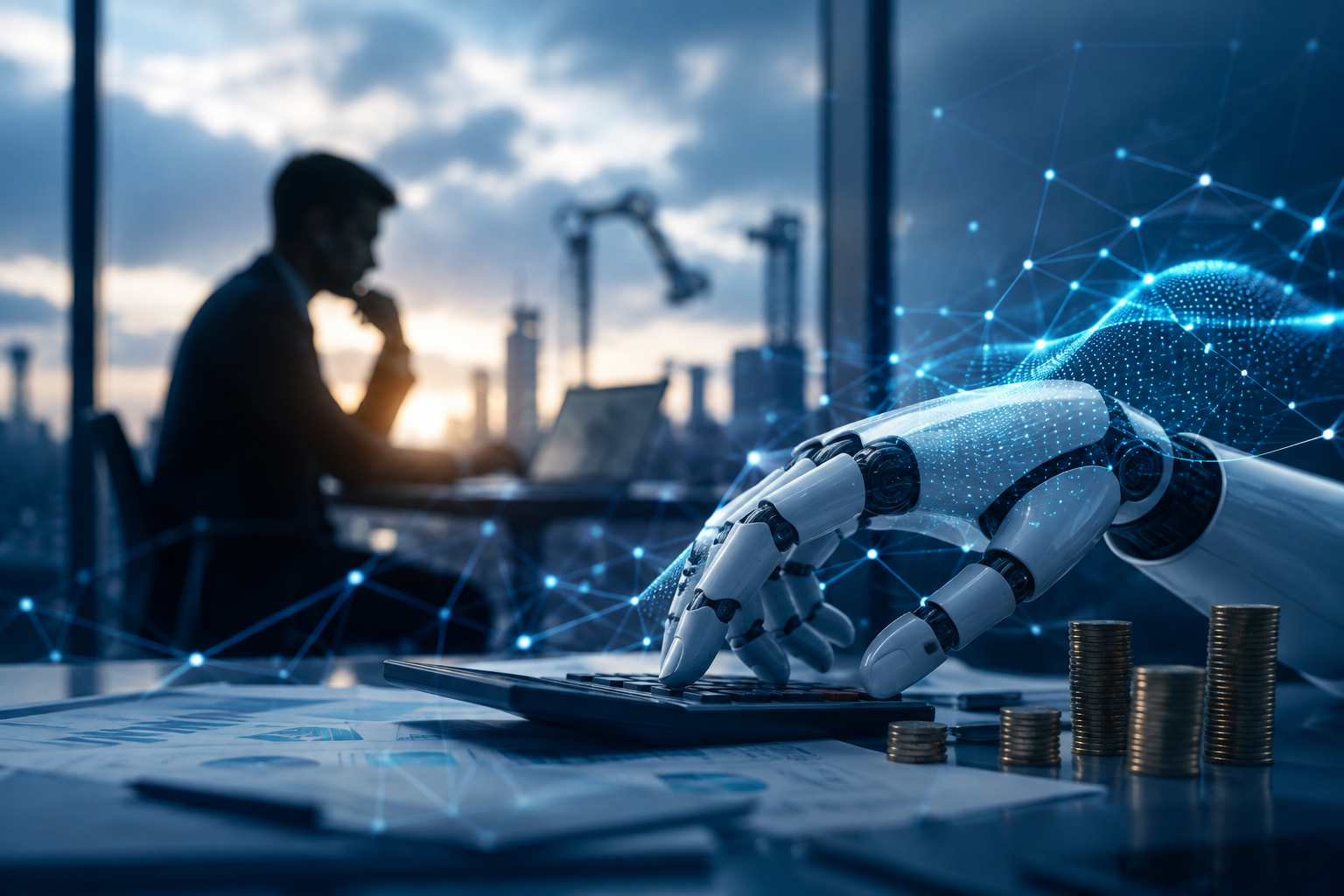
The rapid adoption of artificial intelligence across German companies is beginning to reshape expectations about one of the most sensitive areas of the economy: wages.
German businesses increasingly expect broader use of AI to put downward pressure on salary growth as companies automate tasks, improve productivity and reconsider how much human labour is required for certain activities, according to survey findings reported by Bloomberg.
The development introduces a more nuanced question into the debate surrounding artificial intelligence and employment. Until now, much of the discussion has focused on whether AI will eliminate jobs. Increasingly, however, businesses and economists are examining another potential consequence: employees may keep their positions while experiencing weaker bargaining power and slower wage increases.
That distinction could become particularly important in Germany, Europe's largest economy, where companies are simultaneously confronting weak growth, international competitive pressure, high operating costs and a shortage of skilled workers in certain sectors.
AI moves from experimentation to business operations
Artificial intelligence is rapidly becoming part of everyday corporate activity.
Research covering more than three million company websites in Germany, France, Belgium and Luxembourg found that the proportion of businesses actively using AI increased from just 1% in 2016 to 12% in 2024, with adoption accelerating after 2022. Larger, younger and knowledge-intensive businesses have been among the fastest adopters.
The emergence of generative AI has accelerated that transition further.
Companies can now automate or partially automate activities involving document preparation, customer support, software development, translation, research, marketing, administration and data analysis.
Unlike previous waves of industrial automation, many of these technologies are aimed directly at cognitive and office-based activities.
That means the potential labour-market impact is no longer concentrated primarily in factories and repetitive manual occupations.
The pressure may appear first in wages rather than jobs
The German findings point toward an important economic mechanism.
When AI enables one employee to perform work that previously required several people—or reduces the time required to complete a task—companies do not necessarily need to immediately eliminate existing positions.
Instead, they can reduce future hiring, leave vacancies unfilled, restructure junior positions or moderate salary increases.
The effect on employment can therefore emerge gradually.
Germany's federal government already noted earlier this year that 93% of companies surveyed in 2025 had not yet experienced employment changes attributable to AI. Only 3.9% reported AI-related job reductions and 3.1% reported employment gains.
Expectations for the medium term were markedly different: 27% anticipated job reductions, with manufacturing particularly exposed, while IT and information services expected greater employment opportunities.
The wage effect could consequently become visible before widespread job displacement.
Not every employee will experience the same impact
The consequences are likely to differ substantially depending on occupation and skill level.
German research shows particularly high transformation potential from generative AI in areas such as technology, accounting and marketing.
In some technology occupations, as much as 83.7% of skills and tasks analysed fall into categories where AI could either substantially transform the work or perform it with human supervision. The corresponding proportions reach around 75% in accounting and 73% in marketing.
The picture is very different in childcare, where less than 1% of skills could be fully transformed by generative AI, according to research from the German Institute for Economic Research (DIW).
The dividing line is therefore increasingly between tasks that AI can reproduce digitally and those requiring physical presence, interpersonal interaction, judgement or other distinctly human capabilities.
Junior positions face particular pressure
Entry-level employment could become one of the most sensitive areas.
Junior workers traditionally perform many of the tasks that generative AI handles particularly well: preliminary research, basic analysis, documentation, summaries, presentations, first drafts and routine coding.
If AI performs an increasing proportion of that work, businesses may require fewer junior employees or demand more advanced capabilities from candidates entering the labour market.
PwC's 2026 analysis of Germany found that AI-exposed junior positions are seven times more likely to require skills traditionally associated with senior employees, including leadership and strategic thinking.
At the same time, AI-exposed entry-level jobs that have been redesigned toward higher-value activities have performed considerably better than conventional junior roles.
This suggests AI may not simply eliminate the bottom rung of corporate career ladders, but could substantially redefine what companies expect from workers occupying it.
AI skills can simultaneously command higher salaries
The potential downward pressure on overall wages creates an apparent paradox.
Workers capable of effectively using, implementing or developing AI can receive substantial salary premiums even while automation reduces the value of other tasks.
Research published by the World Bank this year found wage premiums of approximately 7% to 9% for advanced generative-AI capabilities, while GenAI literacy in digitally intensive professional occupations such as marketing and finance was associated with considerably larger premiums of 25% to 36%.
Germany may therefore be moving toward an increasingly segmented labour market.
Employees performing tasks that can easily be substituted by AI could face weaker wage growth, while workers capable of combining industry expertise with advanced digital and AI capabilities could become more valuable.
Productivity gains complicate the picture
There is another side to the transformation.
AI does not automatically translate into lower employment or salaries.
PwC's German analysis found that companies with the greatest AI exposure recorded 40% higher productivity growth than the least exposed businesses.
The most AI-exposed companies also experienced stronger headcount growth and higher wage growth than their less exposed counterparts.
The apparent contradiction is important.
Artificial intelligence can substitute for certain tasks while simultaneously making companies more productive, allowing successful businesses to expand, invest and create new roles.
The ultimate impact therefore depends on what companies do with the productivity gains.
If AI is primarily used to reduce labour costs, wage and employment pressure could intensify. If productivity improvements generate new products, markets and investment, some of those gains could return to workers through higher salaries and additional employment.
Germany faces the transition at a difficult moment
The transformation comes as German companies already operate in a challenging economic environment.
KfW's 2026 business survey found subdued investment and deteriorating financing conditions among German businesses. Although 92% of companies reported having investment needs, there were few signs of a substantial near-term investment recovery.
Manufacturers are simultaneously confronting energy costs, global competition and structural changes in industries ranging from automobiles to machinery.
AI therefore offers companies an attractive route toward greater productivity and lower operating costs.
But precisely because businesses are under pressure to improve competitiveness, some of those efficiencies could translate into stricter control over labour costs.
Europe's AI debate moves beyond job losses
The German experience could have implications well beyond the country.
European policymakers have spent years discussing how AI regulation should protect citizens while allowing businesses to remain competitive against the United States and China.
The labour-market dimension adds another layer.
If AI produces significant productivity gains without immediately eliminating large numbers of jobs, policymakers may initially see relatively limited disruption.
But slower wage growth, fewer entry-level opportunities and changing skill requirements could gradually alter income distribution even without dramatic unemployment increases.
The challenge is therefore broader than preventing technological unemployment.
Europe will need to ensure that workers can acquire the capabilities required to complement AI rather than compete directly against it.
The real AI labour-market test may be who captures the productivity gains
Germany's emerging experience suggests that the economic impact of artificial intelligence cannot be measured simply by counting jobs created and destroyed.
The more consequential question may be how AI changes the value of human work.
Companies can use the technology to produce more with the same workforce, perform the same activity with fewer employees or create entirely new products and services.
Each scenario produces very different consequences for wages.
For German workers, the transition could therefore create a labour market in which AI expertise commands a growing premium while automatable skills lose bargaining power.
And for companies, the strategic question will increasingly be what happens to the economic value generated by higher productivity.
If those gains primarily become lower labour costs, AI could restrain wages even without producing mass unemployment. If they translate into investment, expansion and higher-value jobs, the technology could ultimately support stronger salaries.
Germany is beginning to show that the defining labour-market question of the AI era may not simply be whether machines replace workers, but how much workers are paid when machines can perform an increasing share of their tasks.