HyLight secures €13 million to scale autonomous airship inspections, challenging helicopter dominance in Europe
French startup HyLight has raised €13 million to expand its hydrogen-powered autonomous airships, accelerating the shift from helicopter-based to greener, more efficient infrastructure inspections across Europe.

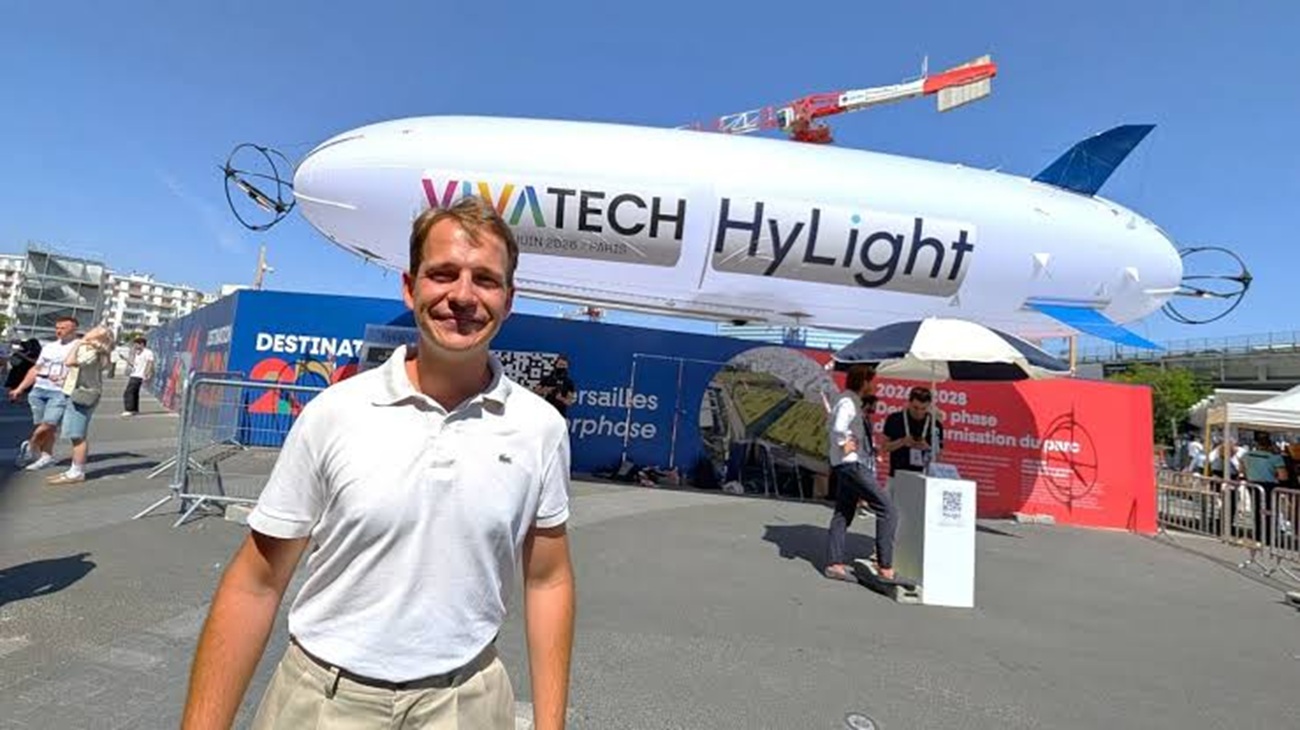
HyLight, a French startup specialising in aerial inspection technology, has raised €13 million in funding to accelerate the rollout of its autonomous, hydrogen-powered airships for monitoring critical infrastructure across Europe.
The funding round, announced on October 12, was led by Rubio Impact Ventures with participation from DRW, Teampact Ventures, and existing investors Y Combinator and Ring Capital. HyLight plans to use the capital to industrialise its airship fleet and enhance automated data analysis, targeting the vast inspection needs of power lines, gas pipelines and railways.
Founded in 2022, HyLight’s airship—dubbed the HyLighter—can fly for up to ten hours, covering up to 350 kilometres per mission and carrying up to 10 kilograms of sensors. The aircraft delivers 1 mm/pixel imaging resolution at 25 meters altitude and a LiDAR density of 1,000 points per square meter. According to the company, these capabilities allow it to generate a continuously enriched digital twin of infrastructure assets.
HyLight’s airships have already begun to replace helicopter inspection missions for major operators, including Enedis, NaTran, Téréga, VINCI, and SNCF Réseau, inspecting thousands of kilometres of infrastructure in France and other European countries. Traditional helicopter inspections generate approximately 1 metric ton of CO₂e per flight hour, whereas HyLight’s hydrogen-powered aircraft offer a lower-emission alternative.
Globally, over 80 million kilometers of linear infrastructure require regular inspection, a market historically dominated by helicopters and, more recently, drones. HyLight’s technology aims to reduce costs and improve reliability for asset owners, while also addressing climate concerns linked to conventional aerial surveys.
The new investment will enable HyLight to expand operations further into European markets such as Germany and the Netherlands, where regulatory frameworks and infrastructure density create opportunities for rapid commercial adoption. However, the company’s growth will depend on navigating regulatory approvals in each country and differentiating itself from competitors using traditional and drone-based inspection methods.
For European infrastructure operators and investors, the entrance of autonomous airships signals a potential shift in inspection standards, with implications for operational costs, safety, and environmental performance. Latin American stakeholders watching Europe’s transition may see opportunities to adopt similar technologies as they modernise infrastructure monitoring and seek to reduce emissions.