
Jonathan Sellers: ‘Latin America Is Not One Business Opportunity’
After visiting 10 countries and conducting around 50 interviews, The Borderless Founder creator tells EUBizNews why Panama, Uruguay, Paraguay and Brazil require different expansion strategies—and why attractive tax incentives and low operating costs can be misleading.


International expansion is not about identifying the world's most attractive country for business. It is about finding the market that best fits a company's objectives. That is one of the central conclusions Jonathan Sellers has reached after travelling across 10 countries and conducting approximately 50 interviews with entrepreneurs, executives and local experts.
The American entrepreneur, founder and host of The Borderless Founder, an independent documentary series exploring international business opportunities, spoke with EUBizNews about the realities of entering foreign markets, the differences between Latin American economies and the operational risks companies frequently underestimate.
His experience has challenged one of his own assumptions: that international opportunities are concentrated in the world's largest or most established business destinations.
“There are many more markets with compelling opportunities than most businesses realize,” Sellers told EUBizNews.
For businesses considering international expansion, he believes traditional rankings and headline economic indicators provide only part of the picture.
“The important question isn't necessarily which country is the most attractive overall, but which country is best suited to what you're specifically trying to accomplish,” he explained.
Industry requirements, customer profiles, available resources and access to regional markets can make a smaller, less internationally recognized economy a more suitable destination than a major global business hub.
Four Latin American markets, four different strategies
Sellers' travels through Panama, Uruguay, Paraguay and Brazil provided a particularly revealing perspective on the differences within Latin America.
For European and American companies, he argues, approaching the region as a homogeneous business environment can lead to strategic mistakes.
Panama stands out for its international connectivity. The Panama Canal, its logistics infrastructure, the widespread use of the US dollar and its commercial ties with the United States make it particularly relevant for companies seeking a regional operating base.
Uruguay, by contrast, emphasizes institutional stability and predictability. During his conversations with representatives of Uruguay XXI, the country's investment and export promotion agency, Sellers found that these characteristics were central to its proposition for international investors.
The country also offers opportunities through Mercosur and its port infrastructure.
Paraguay follows a different strategy, combining competitive operating costs with investment incentives. Its Maquila regime can be attractive to qualifying export-oriented companies, while Mercosur membership creates opportunities to serve larger regional markets, particularly Brazil.
However, Sellers cautions that infrastructure limitations, resource availability and the characteristics of its developing business ecosystem must also be considered.
Brazil presents an entirely different challenge.
Its enormous domestic market, sophisticated business environment and established competitors create significant opportunities, but entering successfully requires understanding complex regulatory and employment systems, Portuguese-language requirements and local consumer preferences.
A product that succeeds in Europe or the United States will not necessarily achieve the same results in Brazil.
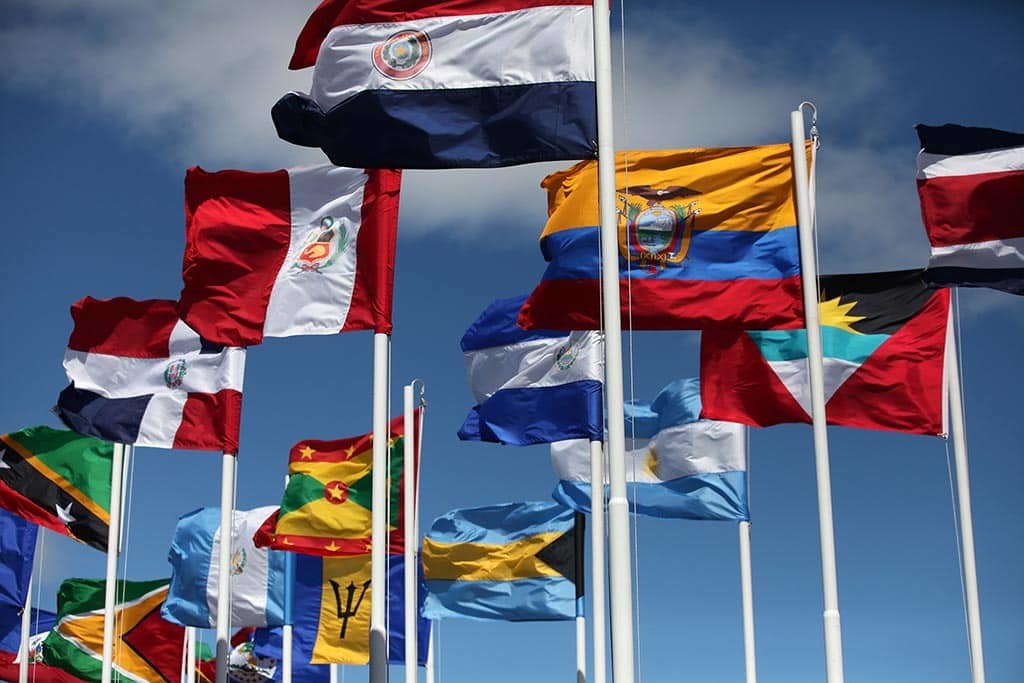
“Latin America isn't one business opportunity. It's a collection of very different opportunities. Companies need to understand what each country offers and which environment actually supports their objectives,” Sellers said.
This distinction is particularly relevant for foreign investors seeking to establish regional operations. The ability to access neighboring markets through trade agreements or logistics networks does not eliminate the need for a country-specific strategy.
Sellers also highlights Paraguay as one of the destinations that most surprised him.
In Asunción, he met with entrepreneurs and representatives of REDIEX, the country's investment and export promotion network. Beyond incentives designed to attract foreign companies, he found local businesses developing their own international ambitions.
One example is Hydrate, a consumer-products company founded by Paraguayan entrepreneurs with expansion plans involving markets such as Brazil and Mexico.
For Sellers, this illustrates that international growth opportunities are not limited to foreign corporations entering emerging economies. Local entrepreneurs can also build businesses with international reach from markets that global investors often overlook.

The hidden costs of international expansion
Beyond identifying promising destinations, Sellers believes one of the most common mistakes in international business is underestimating the actual cost and complexity of operating in a foreign country.
Corporate tax incentives and relatively low salaries can make a market appear highly competitive. But the figures may change considerably once employers account for local legislation, mandatory benefits, social contributions and administrative requirements.
Sellers estimates that, depending on the country and employment arrangement, the total cost of employing a professional can be 25% to 40% or more above the base salary.
Tax incentives also require careful assessment. A temporary benefit can improve a project's initial profitability without necessarily guaranteeing that its economics will remain attractive over the longer term.
“A low-cost market isn't necessarily an inexpensive market to operate in,” he warned.
Administrative procedures can create additional challenges. In Panama, for example, certain processes still require physical signatures or formal documentation, while companies must understand recurring obligations at both municipal and national levels.
The challenges extend beyond taxation and compliance.
Payment systems, consumer expectations and business relationships can determine whether an otherwise competitive product succeeds.
Sellers pointed to Brazil's widely adopted PIX instant-payment system, which he discussed in São Paulo with Bruno Balduccini, a partner at the law firm Pinheiro Neto.
He also cited M-Pesa in Kenya as an example of how local financial infrastructure can shape everyday commercial transactions.
For an international company, assuming that payment methods familiar in its home market will work equally well elsewhere can create unnecessary friction for customers.
The same principle applies to recruitment, partnerships and commercial relationships.
“You have to invest in understanding how a market actually works before you can expect to succeed in it,” Sellers told.
That understanding may require spending time in the destination country, hiring professionals with local experience or establishing relationships with reliable partners.
Why opening a subsidiary should not be the first step
Sellers' conclusions also reflect his own entrepreneurial experience.
He has built and operated businesses across borders, including entities in the United States, the United Kingdom, South Africa and Panama.
His international expansion accelerated during the COVID-19 pandemic, when his marketing agency began working with professionals in South Africa while rebuilding its operations.
The experience eventually led to a broader international presence.
Looking back, however, Sellers says he would approach the process differently.
Rather than moving directly to the establishment of a legal entity, he would first test the market and validate the business opportunity.
For a company expanding primarily to recruit international talent, an employer-of-record arrangement could provide an initial way to build a legally employed team without immediately incorporating a local subsidiary.
Where the objective involves customers, distribution or commercial partnerships, an agreement with a local business—or potentially a joint venture—may offer a more gradual entry strategy.
“Today I would view entity formation as a later stage of a validated expansion strategy, rather than the automatic first step,” he explained.
His approach reflects a broader principle: companies should increase their financial and operational commitments as they develop a clearer understanding of the market.
More accessible markets, but greater responsibilities
Technology and remote work have made international expansion possible for businesses that previously lacked the resources to establish overseas operations.
Smaller companies can now recruit international talent, provide digital services and build commercial relationships across borders with considerably fewer initial barriers.
But Sellers does not believe that greater accessibility has made international business simpler in every respect.
Employment regulations, tax obligations, geopolitical tensions and local commercial practices continue to create challenges.
He also expects governments to become increasingly effective at identifying foreign businesses that conduct activities or hire workers within their jurisdictions without meeting local obligations.
For companies entering Latin America or expanding from the region into Europe and other markets, the implication is clear: digital connectivity cannot replace regulatory compliance or local market knowledge.
Sellers' journey has also reinforced his interest in less internationally recognized business ecosystems.
Alongside Paraguay, he identifies Uzbekistan as one of his most surprising discoveries. His visit to IT Park Uzbekistan in Tashkent revealed initiatives aimed at supporting technology businesses and attracting foreign companies.
The experience strengthened his conviction that international investors should examine opportunities beyond the destinations that dominate conventional business rankings.
Ultimately, his message to companies considering international growth is as much about discipline as opportunity.
“Globalization is making opportunity more accessible, but it isn't making every market the same. The companies that succeed will be those that embrace that accessibility while respecting the differences between countries and doing business the right way.”