
Nvidia lawsuit raises new questions over tech governance and investor trust
A shareholder lawsuit and an independent board investigation at Nvidia have renewed scrutiny of transparency and corporate oversight. The case comes amid volatile technology markets and Europe's efforts to mobilise billions for its next generation of tech champions.

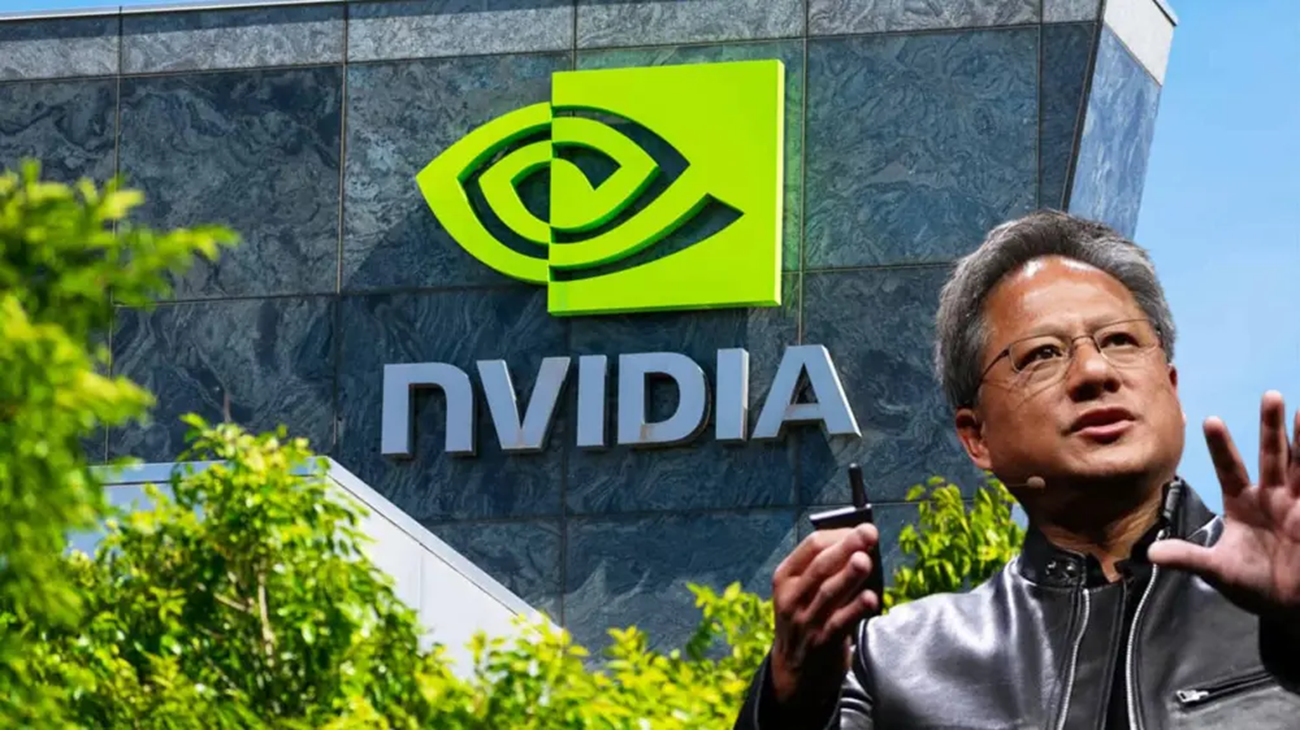
The recent shareholder lawsuit against Nvidia and its CEO, Jensen Huang, has brought renewed attention to corporate governance practices at some of the world's largest technology companies, raising questions about transparency, accountability, disclosure obligations and investor confidence.
The complaint, filed on November 9 in a federal court in California, alleges that Nvidia and Huang misled shareholders by failing to adequately disclose information concerning the CEO's reported personal relationship with a former executive of a Singapore-based company linked in media reports to suspected Chinese intelligence activity.
The plaintiffs argue that the circumstances created potential national security, reputational and business risks that should have been communicated to investors. These remain allegations subject to judicial review, not established findings of misconduct.
On November 8, Nvidia's board announced an independent investigation, overseen by a committee of independent directors with external legal counsel. The company said it had no reason to believe that national security or its proprietary information had been compromised, while confirming that Huang would cooperate with the review.
The controversy arrives at a sensitive moment for the technology sector, which is already experiencing heightened volatility amid questions about the sustainability of artificial intelligence investments and the enormous capital commitments required to expand data centre infrastructure.
Investor sentiment has become increasingly fragile. On November 5, the technology-heavy Nasdaq Composite fell approximately 5.5%, its sharpest daily decline since April 2025, while Nvidia shares lost around 9.3% amid broader concerns about the outlook for AI-related infrastructure investment.
That market selloff preceded the shareholder lawsuit and should not be attributed to it. Nevertheless, the episode illustrates how quickly market expectations can shift when technology valuations depend heavily on long-term growth assumptions.
On November 9, following the announcement of Nvidia's internal investigation, the company's shares declined a further 4.3%, reflecting additional market uncertainty. The lawsuit itself was filed after trading had closed.
As one of the world's most influential semiconductor companies and a central supplier to the AI industry, Nvidia occupies a particularly important position within the global technology ecosystem.
Its governance challenges therefore raise broader questions about how companies manage executive conduct, disclosure risks, regulatory exposure and internal oversight in an industry characterised by rapid innovation and substantial capital flows.
Corporate governance under closer scrutiny
The lawsuit places particular attention on the responsibilities of corporate boards and executive management when potentially material information could affect shareholder interests.
The central issue is not simply the existence of allegations involving a senior executive, but whether the company's disclosure practices and internal controls were adequate in the circumstances described by the plaintiffs.
The outcome remains uncertain. The case will require legal assessment of the alleged omissions, their materiality and any connection with investor losses.
However, the broader governance questions are relevant to other technology companies, particularly those operating in strategically sensitive sectors such as semiconductors, artificial intelligence, cloud infrastructure and cybersecurity.
These businesses increasingly operate at the intersection of commercial competition, technological innovation and national security.
As a result, corporate governance can no longer be understood exclusively through traditional financial reporting and shareholder relations. It also involves the capacity to identify and manage reputational, geopolitical, compliance and information-security risks.
The concentration of strategic decision-making among founders and long-serving executives can provide continuity and accelerate innovation, but it also increases the importance of independent oversight and effective internal controls.
The Nvidia case highlights why investors need confidence not only in a company's technological capabilities but also in the mechanisms through which its leadership is held accountable.
These considerations are especially relevant as European policymakers and financial institutions seek to strengthen the continent's technological competitiveness.
On November 9, the European Investment Bank (EIB) Group announced a new public-private alliance involving institutional investors and seven EU Member States, designed to channel more than €10 billion in investment commitments and intentions towards European scale-ups.
The initiative, building on the European Tech Champions Initiative, aims to mobilise up to €80 billion in total investment, with indicative average tickets of approximately €200 million for large-scale growth financing.
The programme is intended to address one of Europe's most persistent weaknesses: the difficulty of financing promising technology companies as they move from successful startups to internationally competitive businesses.
Although the EIB initiative is not a direct response to Nvidia's legal difficulties, the two developments raise a connected question.
Can Europe build globally competitive technology companies while ensuring that rapid expansion is accompanied by strong corporate governance and effective risk management?
Larger investment rounds and greater participation from institutional investors inevitably increase the importance of transparent reporting, credible governance structures and disciplined capital allocation.
Investor confidence and the European technology challenge
The relationship between governance and investor confidence becomes particularly important during periods of market volatility.
In technology markets, valuations frequently depend on expectations of future growth, technological leadership and sustained demand. When those assumptions are questioned, market reactions can be severe.
Recent declines in semiconductor and AI-related stocks have demonstrated the sensitivity of investors to potential changes in regulation, infrastructure spending and the pace of technological adoption.
The Nvidia lawsuit introduces a different category of uncertainty: the potential financial and reputational consequences of disputed corporate disclosures.
It would be premature to conclude that the litigation will lead to regulatory sanctions or major changes in industry governance. Those outcomes will depend on the evidence, the judicial process and any subsequent findings.
Nevertheless, the case illustrates how governance risks can become relevant to investment decisions, particularly when they involve companies with substantial influence over strategic technology markets.
For European companies, the evolving environment presents both opportunities and challenges.
The EIB's expanded investment initiative could help promising businesses access financing on a scale that has historically been more readily available in the United States.
However, the availability of larger funding rounds should also reinforce the importance of board independence, risk oversight, transparent disclosure and responsible executive decision-making.
The participation of institutional investors can contribute to more demanding governance expectations, although access to public-private capital does not automatically guarantee better corporate oversight.
The real challenge is establishing governance mechanisms capable of supporting innovation without weakening accountability.
This is particularly important for European technology companies seeking to expand internationally, attract long-term institutional capital and operate across different regulatory environments.
In the coming months, two separate developments will deserve attention.
The first is the progress of Nvidia's independent investigation and the shareholder lawsuit, including whether the allegations lead to any legally established findings or changes in the company's internal procedures.
The second is the implementation of the European Tech Champions investment programme, whose initial financing decisions are expected in the coming weeks.
Together, they illustrate two dimensions of the same challenge facing the global technology industry: attracting sufficient capital to innovate and maintaining the institutional credibility needed to sustain investor confidence.
For Europe, the lesson extends beyond Nvidia.
The continent's ambition to develop its own technological leaders will depend not only on the availability of investment, but also on the ability of growing companies to demonstrate financial discipline, transparency, effective oversight and resilience against legal and reputational risks.
Ultimately, strong governance should not be regarded merely as a compliance obligation. In an increasingly complex technological and geopolitical environment, it is becoming a strategic component of long-term competitiveness and sustainable corporate growth.