Spain’s inflation climbs to 3.6% as energy costs reignite price pressures
Consumer prices accelerated again in July, reaching their highest annual rate in more than two years. Electricity and fuel are driving the rebound amid renewed tensions in global energy markets, while food inflation continues to ease. The divergence highlights an increasingly uncomfortable challenge for Spain: maintaining strong economic activity while external energy shocks return to household and business costs.


Inflation in Spain accelerated to 3.6% in July, four-tenths of a percentage point higher than in June and its highest level in more than two years, confirming that energy has once again become one of the principal threats to price stability in the eurozone’s fourth-largest economy.
Final figures published on Thursday by Spain’s National Statistics Institute (INE) show that consumer prices increased 0.3% month-on-month, while underlying inflation — which excludes unprocessed food and energy — edged up one tenth to 3.0% annually.
The headline rate has now remained above 3% for five consecutive months. The acceleration is being driven primarily by electricity and fuel, whose prices have been affected by renewed instability in international energy markets.
The picture is particularly significant because inflationary pressure is increasingly concentrated in energy rather than spreading uniformly throughout the Spanish consumer basket.
Inflation returns to 3.6%
July’s 3.6% annual CPI rate represents a clear deterioration from the 3.2% recorded in June.
The final figure also came one tenth below an earlier estimate, but still confirmed the strongest inflation reading since May 2024.
For households, the increase means that the cost-of-living shock that dominated the European economy after the pandemic and Russia’s invasion of Ukraine has not completely disappeared.
Its composition, however, is different.
Food — one of the principal drivers of previous inflationary episodes — is currently providing some relief, while energy has returned to the centre of the problem.
That distinction will be important in determining whether the latest acceleration becomes persistent or moderates if international fuel and electricity markets stabilise.
Electricity becomes the main source of pressure
Electricity prices have risen sharply during the summer.
According to the figures cited by Euronews, Spanish electricity prices averaged approximately €105 per megawatt-hour in July, producing the strongest year-on-year increase since the same month in 2022.
The comparison with 2022 is particularly symbolic.
That year, Russia’s invasion of Ukraine and the subsequent disruption of European gas supplies triggered an unprecedented energy crisis across the continent.
In 2026, the geopolitical origin is different, but the transmission mechanism is familiar.
Disruptions affecting shipping through the Red Sea and, particularly, the partial closure of the Strait of Hormuz are increasing uncertainty surrounding global energy supplies and putting upward pressure on prices.
Spain is therefore once again being reminded that even with an increasingly diversified electricity system, its economy remains exposed to international energy shocks.
Extreme heat adds pressure to electricity demand
The energy shock is coinciding with another factor: an exceptionally hot European summer.
Successive heatwaves have increased the need for air conditioning across Spanish households, offices, hotels, retail establishments and industrial facilities.
That raises electricity consumption precisely when wholesale power prices are already under pressure.
The result is a double effect for consumers and businesses: energy becomes more expensive at the same time as more of it is required.
For companies operating in sectors such as hospitality, retail, logistics or temperature-controlled manufacturing, prolonged periods of extreme heat can therefore translate directly into higher operating costs.
Spain’s inflation rebound consequently illustrates how geopolitical and climate risks can increasingly interact.
Fuel costs trigger government intervention
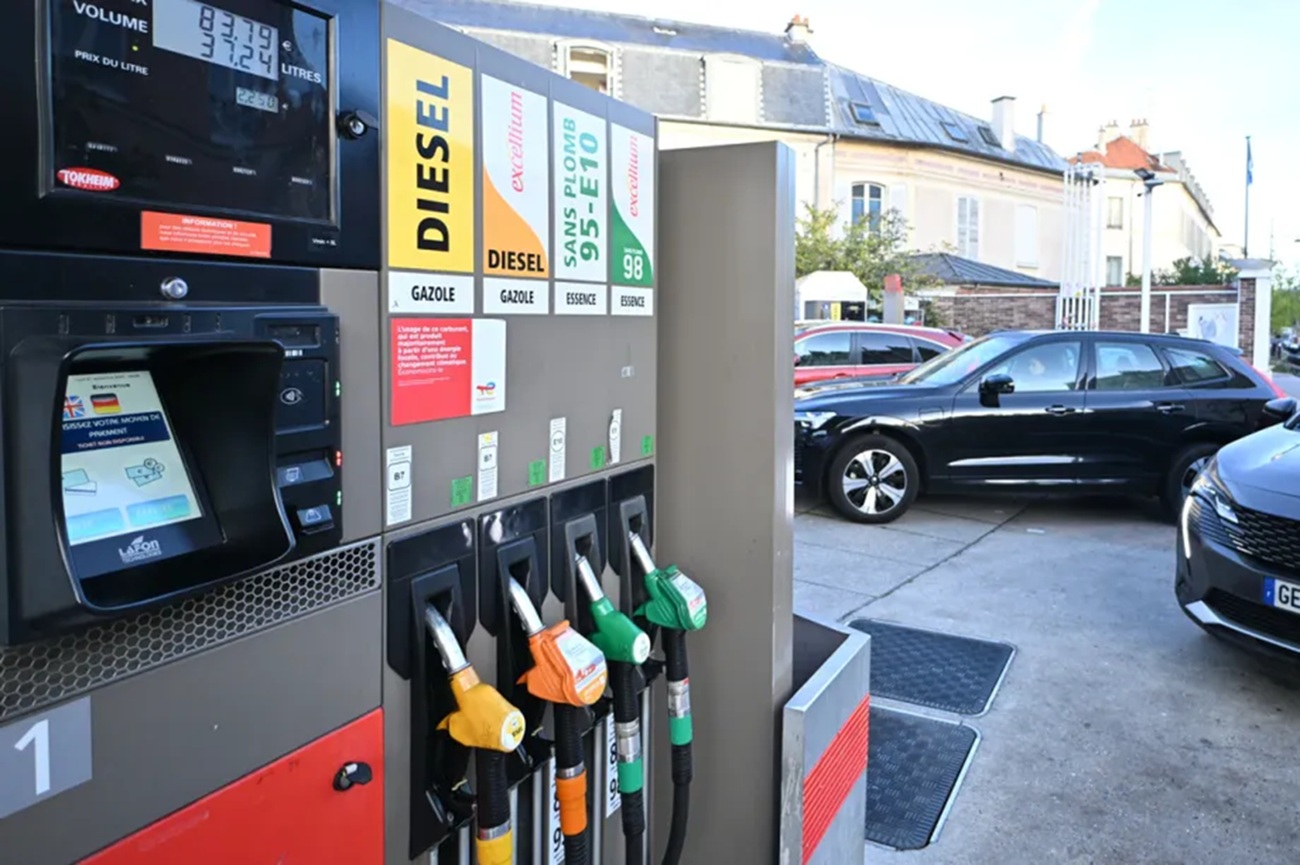
Transport energy is also contributing to the inflationary pressure.
The year-on-year increase in diesel prices exceeded 15% in July, crossing a threshold established in the Spanish government’s emergency response mechanism.
That automatically triggered a larger reduction in hydrocarbon taxation.
According to Euronews, the applicable deduction increases from €0.05 to €0.20 per litre consumed, as part of measures adopted in response to the energy crisis associated with the conflict involving Iran and disruptions to international oil flows.
The measure is designed to soften the transmission of international fuel prices to households and businesses.
However, it has also generated political controversy, with parties to the left of the governing PSOE questioning whether distributors are fully passing the benefit through to consumers.
Food prices provide a counterweight
The inflation figures contain an important positive signal.
Food inflation declined to 1.6% year-on-year in July, three-tenths below its June rate and its lowest level since 2021, according to Spain’s Economy Ministry.
Fruit, vegetables and pulses were among the products providing price relief.
This matters because food inflation has an especially visible impact on household perceptions of the economy. Unlike many occasional purchases, groceries represent frequent and unavoidable expenditure.
A slowdown in supermarket prices can therefore partially offset the deterioration caused by electricity and fuel.
The contrasting movements also indicate that Spain is not currently experiencing a uniform inflationary surge across every category of consumption.
Core inflation reaches 3%
The less encouraging signal is the movement in underlying inflation.
Core inflation increased from 2.9% to 3.0% in July, according to the INE.
Although the rise was limited to one tenth of a percentage point, the indicator is important because it removes the most volatile components of the consumer basket — unprocessed food and energy — and can therefore provide a clearer indication of persistent domestic price pressures.
Headline inflation can decline quickly if oil or electricity prices fall.
Core inflation tends to be more resistant because it reflects prices across services, manufactured products and other areas of the economy.
Spain therefore faces two simultaneous sources of concern: a renewed external energy shock and underlying inflation that remains elevated.
The energy shock reaches companies through multiple channels
For Spanish businesses, higher energy prices do not remain confined to electricity bills or petrol stations.
They propagate through the economy.
Manufacturers face higher production costs. Logistics companies pay more for fuel. Retailers and supermarkets absorb higher refrigeration and transport expenses. Hotels and restaurants require more electricity during heatwaves. Suppliers can eventually attempt to pass those additional costs to customers.
The crucial question for the coming months is therefore whether the energy shock remains concentrated in fuel and electricity or begins feeding into the prices of other goods and services.
If businesses absorb the increases through lower margins, the inflationary impact may remain limited.
If they pass them on, inflation could become more persistent.
A new test for Spanish household purchasing power
Spain’s recent economic performance has been stronger than that of several other large eurozone economies, but inflation can gradually erode the benefits of growth.
A 3.6% inflation rate means that nominal wage increases must exceed that level for workers to experience an improvement in real purchasing power, although the precise impact varies significantly between households depending on spending patterns.
Lower-income families can be particularly exposed to energy and food because these essential categories account for a larger proportion of their budgets.
The decline in food inflation is consequently welcome, but higher electricity and fuel prices can quickly absorb part of that relief.
Spain remains vulnerable to developments far beyond its borders
The July figures also demonstrate how strongly domestic inflation can be influenced by events thousands of kilometres away.
The Strait of Hormuz is one of the world’s most strategically important energy corridors. Disruption to oil and gas movements through the region can affect international prices and eventually reach European consumers through fuel, transport and electricity costs.
The Red Sea represents another critical maritime route for trade between Europe and Asia.
Persistent instability around these corridors increases shipping costs, insurance premiums and delivery times, creating additional inflationary risks for European economies.
Spain can influence taxes, subsidies and domestic energy policy, but it cannot completely insulate itself from these international pressures.
Energy once again complicates Europe’s inflation battle
Spain’s latest CPI figures arrive at a difficult moment for the wider eurozone.
European policymakers have spent several years trying to return inflation sustainably toward the European Central Bank’s 2% medium-term target after the extraordinary price shock of the early 2020s.
Renewed energy inflation complicates that process.
Energy shocks create a particularly difficult policy problem because higher interest rates cannot produce more oil, reopen shipping routes or immediately reduce wholesale electricity prices.
Monetary policy can instead attempt to prevent the initial shock from spreading into wages and other prices.
Spain’s rise in core inflation to 3% will therefore be watched alongside the headline energy-driven acceleration.
The coming months will determine whether July is a spike or a trend
The key question is now whether Spain’s inflation rate has entered another sustained upward phase.
There are reasons for caution.
Five consecutive months above 3%, rising core inflation and renewed geopolitical pressure on energy markets indicate that inflation risks have not disappeared.
But there are also mitigating factors.
Food inflation is falling, some categories are becoming cheaper and a significant proportion of the latest headline acceleration comes from volatile energy components.
If energy markets stabilise, headline inflation could moderate relatively quickly.
If disruptions in the Strait of Hormuz and Red Sea persist — or intensify — households and businesses may instead face another prolonged period of elevated energy costs.
Spain’s July inflation data therefore delivers a broader warning for Europe: after years of trying to leave the energy crisis behind, geopolitical instability is once again demonstrating how quickly external shocks can return to electricity bills, petrol stations and ultimately consumer prices.