
YPF and Tesla Open Talks on Energy Infrastructure as Argentina Targets the Electric Mobility Boom
Argentina’s energy champion YPF and Tesla are exploring a strategic collaboration that could reshape the country's energy landscape. The discussions focus on electric vehicle charging networks and battery storage systems, two sectors expected to become central pillars of Argentina’s energy transition and its integration into global clean-technology value chains.

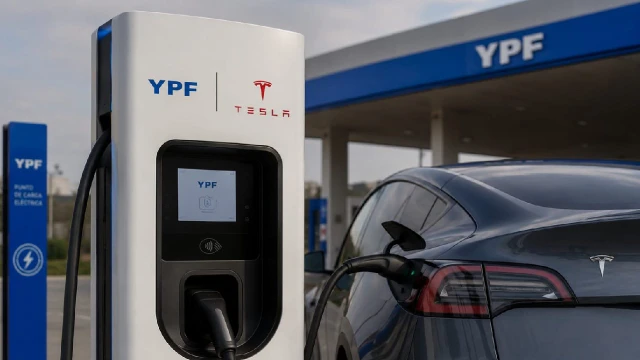
Argentina's ambitions to become a key player in the global energy transition received a boost this week as YPF and Tesla confirmed they are evaluating potential areas of cooperation in energy infrastructure.
The discussions emerged following meetings between executives from both companies and center on two rapidly expanding industries: electric mobility and energy storage.
While no binding agreement has been announced, the initiative signals growing interest from global technology leaders in Argentina’s energy future and highlights the country's increasing relevance within the international clean-energy ecosystem.
Charging infrastructure moves into focus
One of the main areas under consideration is the deployment of electric vehicle charging infrastructure across Argentina.
Although electric vehicle adoption remains relatively low compared with Europe, China and the United States, industry forecasts point to sustained growth as governments and businesses accelerate decarbonization efforts.
For Argentina, expanding charging capacity will be essential to supporting the transition toward cleaner transportation.
YPF’s nationwide network of service stations gives the company a unique platform from which to develop large-scale charging infrastructure, while Tesla brings global expertise in EV ecosystems and charging technologies.
Industry experts view charging networks as one of the most critical components required to unlock broader electric vehicle adoption.
Battery storage becomes a strategic asset
The potential collaboration also extends to battery energy storage systems, an area attracting growing investment worldwide.
As renewable energy production increases, electricity networks require greater flexibility to manage fluctuations in generation and demand.
Large-scale batteries provide that flexibility by storing energy during periods of excess production and releasing it when consumption rises.
Tesla has become one of the global leaders in this segment through its utility-scale storage solutions, which are already operating in energy projects across North America, Europe and Asia.
For Argentina, incorporating advanced storage technologies could support grid modernization, improve energy security and facilitate further expansion of renewable energy generation.
Argentina positions itself in the battery economy
The discussions carry additional significance because of Argentina’s growing role within global battery supply chains.
The country is home to some of the world’s largest lithium resources and continues to attract investment from mining, automotive and technology companies seeking secure access to critical minerals.
As demand for batteries accelerates, Argentina is increasingly viewed not only as a supplier of raw materials but also as a potential destination for industrial development linked to energy storage and electric mobility.
A partnership involving Tesla could strengthen that positioning and help attract further international investment.
YPF's transformation accelerates
The initiative also reflects YPF’s ongoing transformation from a traditional oil and gas producer into a diversified energy company.
Alongside its conventional operations, YPF has expanded into renewable energy, LNG projects, technology development and lithium-related initiatives.
The company’s strategy mirrors a broader trend affecting major energy firms worldwide as they seek to participate in emerging sectors linked to electrification and decarbonization.
Collaborating with Tesla would represent another step in that evolution and reinforce YPF’s ambitions to play a central role in Argentina’s long-term energy strategy.
Why Europe is watching
The development is also relevant for Europe.
The European Union continues to strengthen partnerships with countries capable of supplying critical minerals, renewable energy and strategic infrastructure linked to the energy transition.
Argentina’s lithium reserves, renewable energy potential and growing technology ecosystem make it an increasingly attractive partner for European investors and industrial groups.
Projects involving globally recognized companies such as Tesla can further increase international confidence in the country's energy and technology sectors.
A broader signal for Latin America
Beyond Argentina, the discussions highlight a wider trend across Latin America.
Countries rich in natural resources are increasingly seeking to move up the value chain by combining mining, energy production, infrastructure and technology development.
As global demand for batteries, electric vehicles and clean-energy solutions continues to rise, the region has an opportunity to play a more sophisticated role within future industrial ecosystems.
The exploratory discussions between YPF and Tesla go beyond a potential corporate partnership. They reflect the growing convergence of energy, technology and infrastructure that is reshaping global markets. For Argentina, the initiative could accelerate electrification, attract investment and strengthen its position as a strategic player in the energy transition. For Europe, it represents another example of Latin America’s growing importance within the clean-energy economy.