German carmakers lift industrial output 0.7% in September, offsetting declines in other sectors
German industrial output rose 0.7% in September, driven by a 17.1% surge in car production, even as construction and machinery output fell.

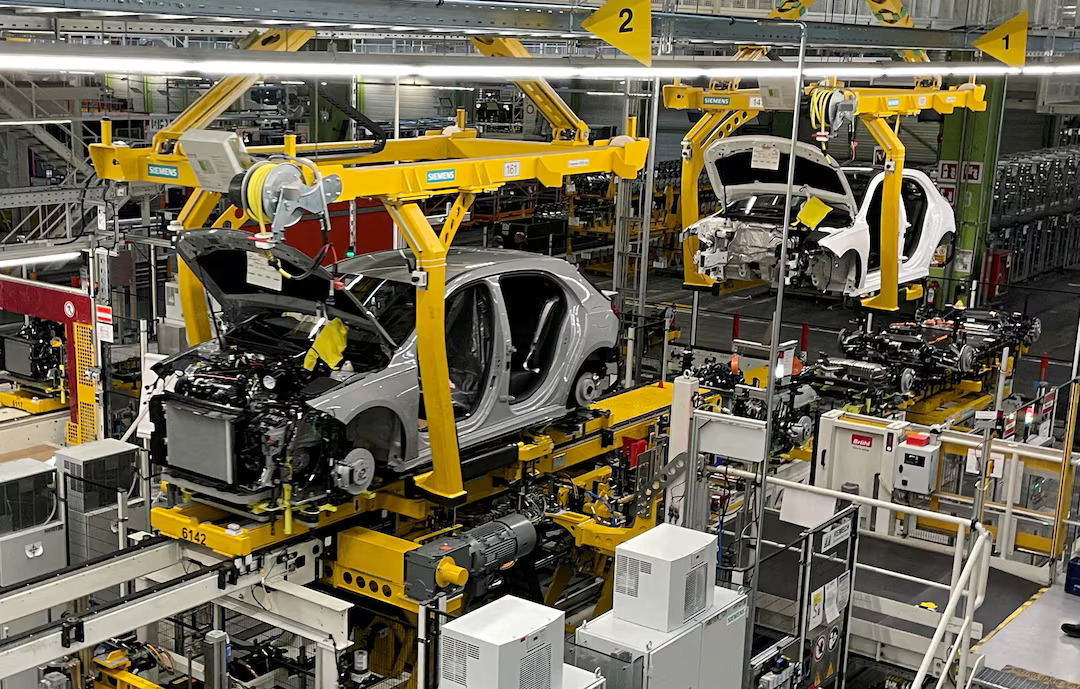
German industrial output rose by 0.7% in September 2023, exceeding expectations as a sharp rebound in car production offset declines in other key sectors, according to data from Destatis. The result provides a tentative sign of stabilisation for the eurozone’s largest economy, which has faced mounting challenges from weak global demand and rising costs.
The strongest driver was a 17.1% increase in car production from August, marking a significant turnaround after months of sluggish output. Pharmaceutical output also contributed, rising by 8%. However, these gains were partially offset by continued weakness in other sectors: construction output fell by 2.6% while the production of machinery and equipment dropped by 6.5%.
Despite the September rebound, the broader outlook remains mixed. Across the third quarter, industrial output fell 0.4% compared to the previous quarter, underlining the uneven nature of the recovery. High energy prices and tighter financial conditions continue to weigh on manufacturers’ margins, while export demand has yet to fully recover.
For the European Union, Germany’s industrial uptick offers a modest boost to regional manufacturing sentiment. However, ongoing competition, particularly from China, and persistent structural challenges leave the outlook fragile. Analysts warn that without a sustained pick-up in global demand or further government support, German industry may struggle to maintain momentum.
The performance of German carmakers remains central to the country’s economic prospects, given the sector’s role as a major employer and export earner. Recent data suggests that automakers have adapted to supply chain disruptions and shifting demand, but face ongoing pressure from high input costs and new competitors in electric vehicles. The pharmaceutical sector’s resilience is also seen as a positive signal amid broader industrial volatility.
Destatis figures underscore that while selective rebounds are possible, a full recovery will likely depend on stabilising energy prices, stronger export markets and supportive policy measures. For investors and policymakers across Europe and Latin America, Germany’s industrial fortunes remain a barometer for the broader manufacturing outlook.