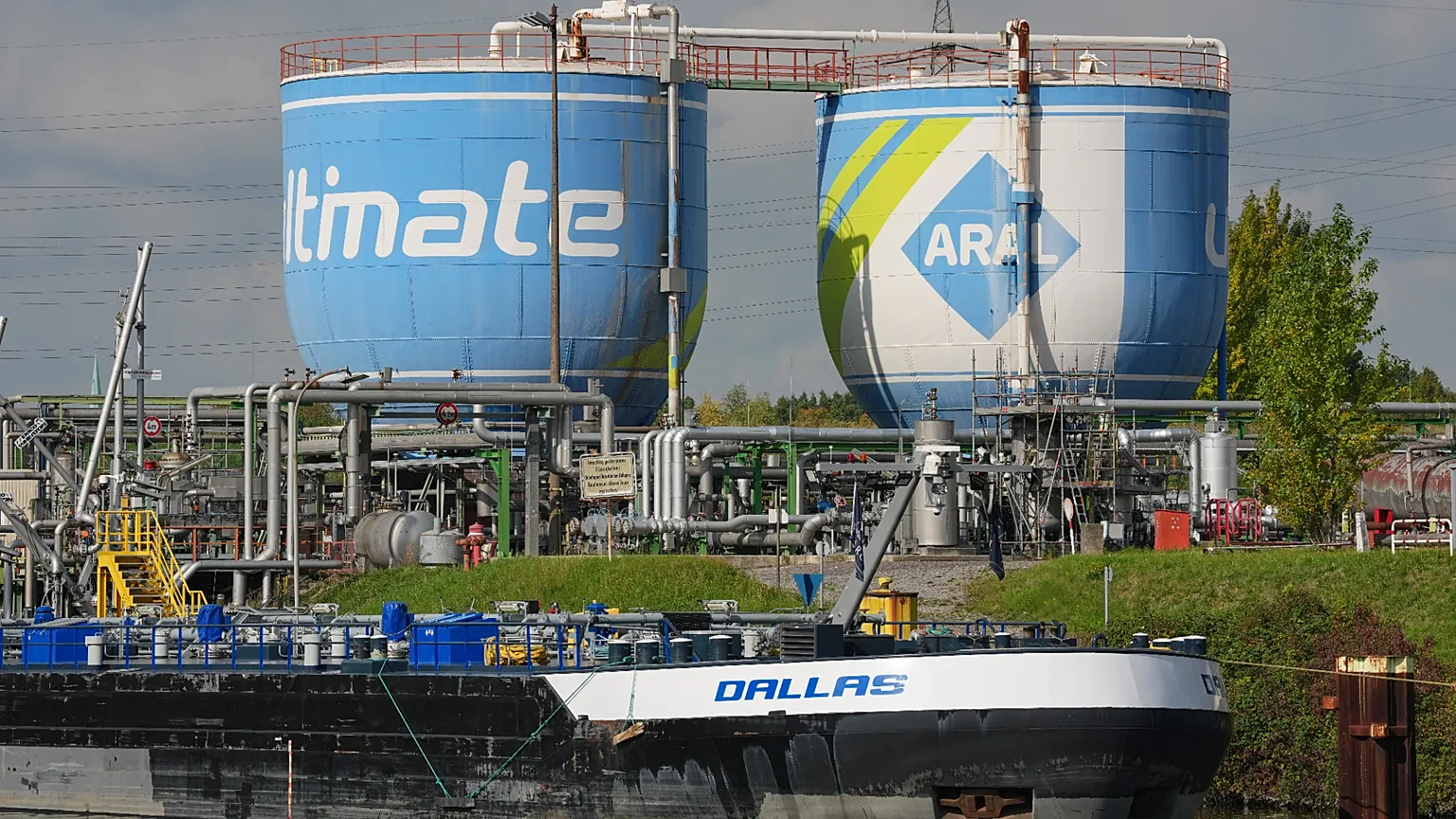
Germany enters winter with record-low gas stocks, testing Europe’s energy resilience
Germany has entered the heating season with gas storage at just 61%, well below its national target and the EU average. The gap does not imply an imminent shortage, but it increases Europe’s exposure to high prices, LNG competition and further geopolitical disruption.

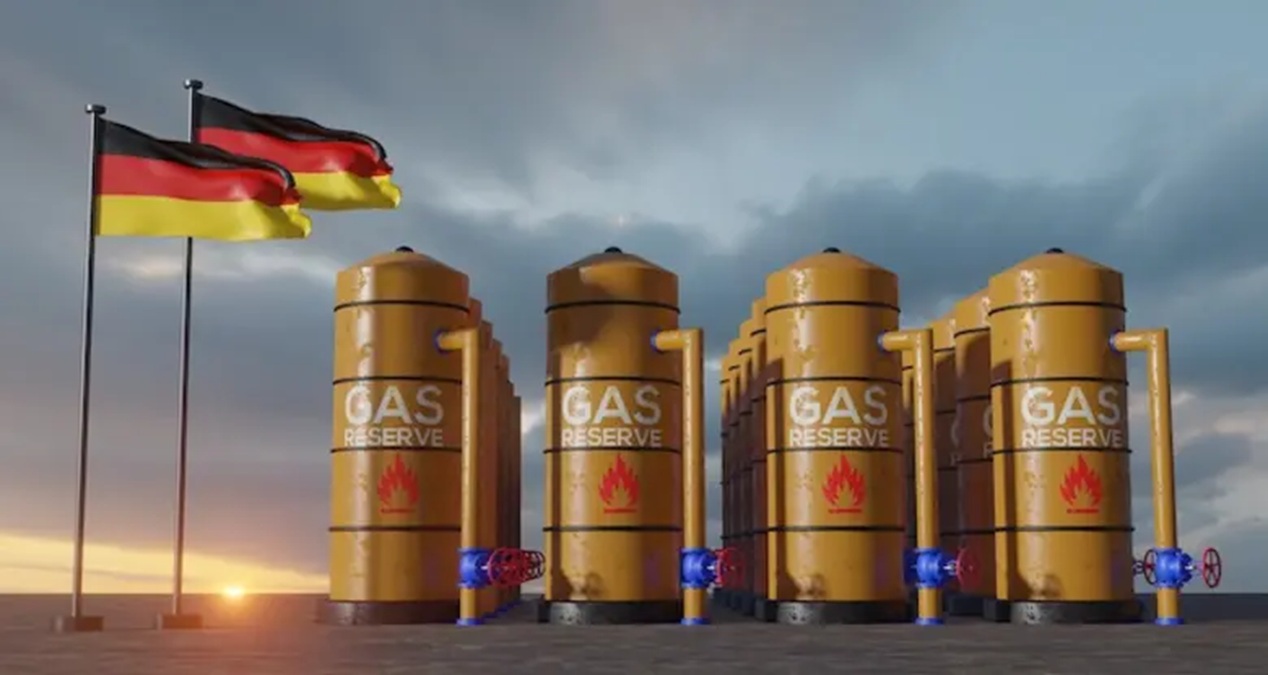
As winter begins, Germany has moved to the centre of Europe’s energy-security debate.
The country, which holds more than one-fifth of the European Union’s gas storage capacity, entered November with its facilities only 61.05% full, the lowest level recorded for this stage of the year and well below the 74.56% EU average.
Germany has also fallen short of its national storage objective. While most German facilities are subject to an 80% filling requirement, six major sites have a lower 45% threshold, producing an aggregate national target of roughly 70%.
The shortfall does not mean that Germany is facing an immediate supply crisis. The country’s energy regulator has stressed that security depends on a combination of pipeline imports, LNG terminals, storage, infrastructure and demand, rather than storage levels alone.
But lower inventories leave Germany — and by extension the wider European gas market — with a thinner buffer if the winter turns unusually cold or global supply disruptions intensify.
The market is already reflecting that risk.
Europe’s benchmark Dutch TTF gas contract closed above €100 per megawatt-hour on October 28, its highest level since the 2022 energy crisis. Prices subsequently eased but were still trading near €99/MWh on November 3, highlighting the extent to which geopolitical developments are shaping the European energy outlook.
The Middle East conflict and reduced LNG availability have complicated Europe’s summer refill season. Traders traditionally inject gas when summer prices are sufficiently below winter prices to make storage profitable. This year, that commercial incentive weakened substantially.
The result is a familiar European dilemma: who should pay to insure the energy system against a low-probability but high-impact winter shock?
Storage becomes a policy debate
The German storage industry argues that the current framework has not provided sufficient incentives to guarantee adequate reserves.
The Initiative Energien Speichern (INES) has called for stronger mechanisms to ensure that storage capacity is filled ahead of future winters and has urged Berlin to consider binding obligations for suppliers.
The underlying argument is straightforward.
If the market does not provide a sufficient price incentive to store gas during the summer, companies cannot be expected to accumulate inventories purely for strategic reasons. Yet leaving the entire decision to commercial signals can result in systemically low reserves just as geopolitical risks increase.
The German government and regulator take a less interventionist view.
The Bundesnetzagentur has stressed that missed storage targets do not automatically translate into supply shortages, particularly because Germany now has greater LNG import capacity and access to an increasingly interconnected European gas system.
That distinction is important.
Germany in 2026 is not Germany in 2022. Europe has diversified suppliers, expanded LNG infrastructure and reduced gas consumption since the Russian supply shock.
Nevertheless, greater physical flexibility does not eliminate price exposure.
If storage is low, Europe may need to purchase more LNG during winter precisely when global demand — including competition from Asia — is highest.
The cost of security therefore shifts from summer storage to winter procurement.
A German problem with European consequences
Germany’s position matters because of its scale.
Its storage capacity represents roughly 22% of the EU total, making it by far the bloc’s largest storage market. Its industrial economy also remains heavily exposed to natural gas through sectors including chemicals, fertilisers, metals, glass and manufacturing.
Low German reserves can therefore affect the broader European market even if actual shortages never materialise.
If Germany needs to purchase additional gas aggressively during winter, it will compete with other European countries and international buyers for available LNG cargoes.
This can lift prices throughout the interconnected European market.
The comparison with other member states is revealing.
At the beginning of November, Italy’s storage was around 91% full, France stood above 86% and Poland was close to 100%, while Germany remained near 61%.
Those differences reflect not only different market conditions but also different approaches to storage policy, LNG contracting and government intervention.
They have already triggered political tensions over how the cost of European energy security should be distributed.
The question is whether national decisions on storage can continue to be treated as purely domestic when the resulting price effects are transmitted across an integrated European gas market.
The EU’s storage model faces a test
The European Union created its gas-storage framework after the 2022 energy crisis precisely to avoid entering winter with inadequate reserves.
The current rules retain a 90% storage target, but provide greater flexibility than the original framework. Member states can meet the target between October 1 and December 1 and can use flexibility mechanisms when market or technical conditions make filling more difficult.
That flexibility was intended to prevent mandatory purchases from artificially driving up gas prices during the summer.
This year demonstrates the trade-off.
More flexibility can prevent governments from forcing companies to buy gas at uneconomic prices. But if commercial incentives remain weak for too long, storage levels can end up substantially below historic norms.
The policy question is therefore no longer whether Europe needs storage.
It is how to guarantee sufficient strategic reserves without creating an artificial rush to buy gas that itself raises prices.
This debate is likely to extend beyond the current winter.
Germany is already considering a more structural approach to strategic gas reserves, while industry representatives are pushing for mechanisms that make responsibility for winter preparedness clearer.
High prices may be the bigger risk
Supply security and affordability should also be separated.
Current data does not point to an inevitable gas shortage.
The European Commission has said the EU system remains sufficiently flexible to cover winter demand because of greater supply diversification, expanded LNG import capacity and lower consumption compared with the period before the energy crisis.
That does not mean the economic consequences are small.
Europe is entering the heating season with benchmark gas prices around three times their levels before the latest Middle East escalation.
Energy-intensive businesses are therefore again exposed to higher production costs, while electricity prices can also be affected because gas-fired power plants remain important in setting marginal electricity prices in several European markets.
For European industry, the problem may ultimately be less about whether gas is physically available than how much companies must pay to secure it.
That distinction matters for competitiveness.
Europe has spent years trying to recover from the industrial consequences of the 2022 energy shock. Another prolonged period of elevated gas prices would place renewed pressure on sectors competing with producers in the United States, Asia and other regions with structurally cheaper energy.
Europe’s winter resilience is being tested again
Germany’s low storage levels should therefore be viewed neither as evidence of an inevitable energy crisis nor as an irrelevant technical detail.
They represent a stress test for Europe’s post-2022 energy-security model.
The continent now has more LNG capacity, more diversified supply routes and lower gas demand. But it remains exposed to a global LNG market in which geopolitical disruption can quickly translate into higher prices.
Germany’s experience also highlights the limits of relying exclusively on market incentives to build strategic buffers.
If Europe wants energy security without paying emergency prices every time international supply tightens, policymakers will need to find a more durable balance between market discipline, strategic storage and public intervention.
The coming winter will provide an important test.
For Germany, the challenge is to maintain secure supply despite historically low inventories. For the European Union, the broader question is whether its increasingly interconnected energy system can translate physical resilience into stable and internationally competitive energy costs.