Italy’s Kiko Milano enters Uruguay with €8.55 million expansion plan and eyes Argentina
The Italian cosmetics brand will open its first Uruguayan store in Montevideo in October and plans to build a network of eight locations over five years. The expansion, led locally by Grupo Antelo, could eventually extend into Argentina if the Uruguayan operation performs as expected.

Italian cosmetics brand Kiko Milano is expanding its Latin American footprint with its entry into Uruguay, where it plans to invest approximately €8.55 million over the next five years and develop a network of eight stores, adding another market to an international business that already operates more than 1,300 locations across 72 countries.
The expansion will be carried out in partnership with Grupo Antelo, the Uruguayan business group led by Manuel Antelo, which is already behind the local operations of international retail brands including Decathlon, Kiabi and Jysk, as well as the Car One commercial complex. The first Kiko Milano store is scheduled to open at Montevideo Shopping in late October, marking the beginning of an ambitious rollout in a relatively small but high-income South American consumer market.
The company intends to move quickly. Four stores and an e-commerce operation are planned during the first year, according to the expansion strategy disclosed by the local management team. After Montevideo Shopping, Kiko Milano expects to open at Car One Punta del Este before the summer season, followed by Car One Canelones and a fourth location in Punta Carretas.
Over a five-year horizon, the plan calls for approximately eight stores across Uruguay and the creation of more than 100 jobs. Between 25 and 30 people are expected to be employed during the initial phase.
The operation will be headed by Sofía Torrendell, general manager of Kiko Milano Uruguay, who joins the project after 17 years at L’Oréal Uruguay. Her task involves building the local business from the ground up, from defining the product catalogue and assembling the stores to recruiting the teams that will operate each location.
The scale of the investment is significant relative to the size of the Uruguayan market and reflects a broader strategy by international retailers to use the country as a platform for testing concepts and positioning brands before considering further expansion in the Southern Cone.
In Kiko Milano’s case, Argentina is already emerging as a possible next destination. The current regional rights held by Grupo Antelo are limited to Uruguay, but the group has not ruled out evaluating an entry into the neighbouring market if the Uruguayan operation delivers the expected results.
Kiko Milano targets a gap in Uruguay’s beauty market
Kiko Milano intends to position itself in a middle price segment of the Uruguayan cosmetics market, seeking to occupy the space between mass-market beauty brands and more expensive specialist alternatives.
According to Torrendell, Uruguay currently lacks a strong specialised cosmetics proposition within that price range. The company believes this creates room for a format combining competitive pricing with a dedicated beauty-store experience, rather than competing solely through pharmacies and multi-brand retailers.
Makeup will form the core of the offer, complemented by skincare and other cosmetics categories. Kiko Milano’s broader international strategy has been built around making Italian-designed beauty products accessible at relatively competitive prices, a positioning the company intends to replicate in Uruguay.
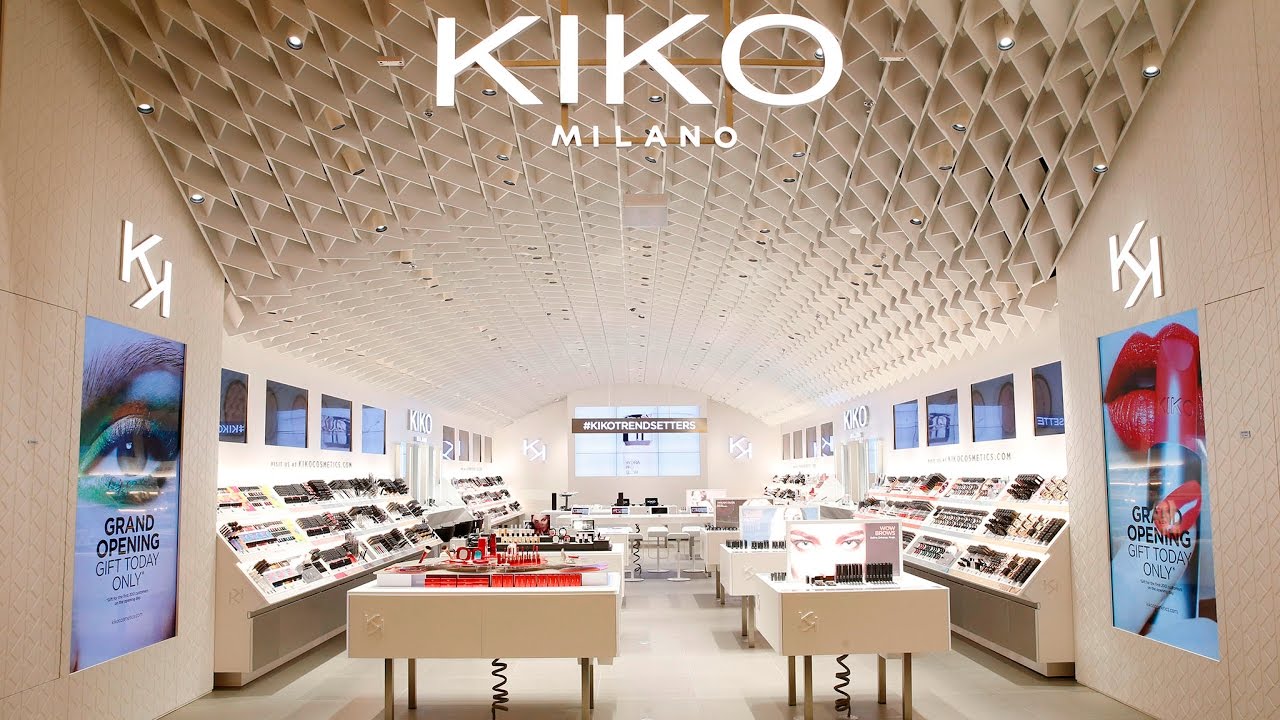
The physical stores will play a central role in that strategy. Locations are expected to average between 60 and 70 square metres, although the Canelones store could be larger to place greater emphasis on the in-store makeup experience.
Uruguay will also become an unusual showcase for the Italian company’s evolving retail concept. Kiko Milano plans to introduce a new store layout that currently exists only at one flagship location in Rome, giving the South American market access to one of the brand’s newest physical retail formats.
The stores will otherwise maintain a strong connection with Kiko Milano’s international identity. Much of the equipment and materials used to build them will come from Italy, while the company intends to reproduce the experience customers encounter in markets such as Italy and Spain.
That consistency is particularly important for a company whose brand identity remains closely associated with its Italian origins.
Founded in Milan in 1997 by Stefano Percassi, Kiko Milano has grown from a domestic cosmetics business into an international beauty retailer. Its production centre is located in Bergamo, Lombardy, at the heart of Italy’s cosmetics manufacturing cluster, a region responsible for a large share of the country’s beauty exports.
The company now operates in 72 countries with more than 1,300 stores, having added around 170 locations during 2025 alone. Before entering Uruguay, its Latin American presence already included Brazil, Chile and Mexico, making the new operation another step in a wider regional expansion.
Uruguay could become a bridge to further Southern Cone expansion
The entry highlights the growing relevance of Latin America for European consumer brands looking for new sources of international growth. While individual South American markets are considerably smaller than the United States, China or the European Union, rising brand awareness, established shopping-centre networks and digitally connected consumers provide opportunities for retailers able to adapt their positioning to local purchasing power.
Uruguay offers particular characteristics for that strategy. Its population limits the absolute scale available to international retailers, but the country has comparatively high purchasing power within Latin America, a mature retail environment and strong consumer exposure to Argentine and Brazilian markets.
Punta del Este adds another dimension. The resort city attracts significant numbers of international visitors, particularly from Argentina and Brazil, giving brands operating there visibility beyond Uruguay’s domestic consumer base.
Kiko Milano’s decision to combine physical stores with e-commerce from the first year also reflects how international retail expansion has changed. Entering a new country is increasingly less about building a large store network before developing digital distribution and more about establishing both channels simultaneously.
For Grupo Antelo, the deal adds another European name to an increasingly diversified retail portfolio. For Kiko Milano, it provides a local partner with experience introducing international brands into Uruguay and operating physical retail infrastructure.
The longer-term question is whether the model can be replicated beyond the country.
Argentina would represent a radically different opportunity: a consumer market many times larger than Uruguay’s, with a strong beauty culture and considerably greater potential scale, but also a historically more volatile business environment. A successful Uruguayan rollout could therefore provide Kiko Milano and Grupo Antelo with operating experience before deciding whether to pursue that larger market.
For now, the Italian company has committed to a five-year Uruguayan expansion that will take it from a single Montevideo store to a planned national network.
But the strategic significance may extend beyond eight stores. If Uruguay delivers the expected results, Kiko Milano’s latest Latin American expansion could become the first step towards a broader push into the Southern Cone.