Russia places Nestlé and Auchan operations under external control
A presidential decree transferred the management of 16 businesses linked to Western groups to a little-known Russian company, escalating the risks facing foreign investors that remain in the country.

Russia has placed the local operations of Nestlé, Auchan and several other Western-linked companies under temporary administration, marking one of Moscow’s most consequential interventions in foreign-owned businesses since the seizures affecting Danone and Carlsberg in 2023.
A decree signed by President Vladimir Putin transferred the management of shares and holdings in 16 Russian companies to L.E.V. Management, a Moscow-based firm with a limited public profile. The affected businesses include Nestlé Russia, Nestlé Kuban, Auchan’s Russian subsidiary, two entities belonging to FM Logistic and Le Monlid, which operates the former Leroy Merlin home-improvement chain under the Lemana Pro name.
The measure does not formally change the ownership of the companies. However, Russia has previously used temporary administration as an initial step towards forced sales or the transfer of foreign-owned assets to domestic investors, frequently at substantial discounts.
The latest intervention therefore deepens uncertainty for European companies that retained operations in Russia after the invasion of Ukraine in 2022, even where those businesses reduced investment, suspended non-essential products or transferred management responsibilities to local teams.
Kremlin links decision to geopolitical tensions
Kremlin spokesperson Dmitry Peskov said the companies’ connections to countries classified by Moscow as “unfriendly” had been considered in the decision. Russia has used the designation for states that imposed sanctions or provided political and military support to Ukraine.
France has supplied weapons to Kyiv, while Switzerland—although maintaining its traditional military neutrality—adopted sanctions against Russia. The Swiss government expressed concern about the decision and said it was supporting Nestlé’s efforts to have the measure reversed.
Moscow introduced the legal framework for temporary control of foreign assets in 2023. Since then, authorities have made corporate exits increasingly difficult by requiring presidential approval, imposing mandatory discounts and collecting exit payments from companies selling their Russian businesses.
These restrictions have left some multinational groups caught between reputational and regulatory pressure in their home markets and the risk of losing assets if they attempt to withdraw from Russia.
Nestlé evaluates its options
Nestlé said it was assessing the situation and the measures available to protect its rights. The Swiss food group also indicated that its immediate priorities were maintaining operational continuity and safeguarding employees.
The company employs approximately 7,000 people and operates six factories in Russia, producing goods including coffee, infant formula and pet food. Since the beginning of the war, Nestlé has suspended advertising, capital investment, non-essential imports and exports, and much of its product portfolio in the country.
It maintained the supply of products it classifies as essential, arguing that food availability should remain protected despite the conflict.
Before the war, Russia generated approximately 2% of Nestlé’s global sales. Analysts now estimate that contribution at closer to 1%, suggesting that the direct financial impact on the group may be limited. Nevertheless, the company could face an impairment or permanent loss of its local assets if the temporary arrangement leads to a forced disposal.
Nestlé shares fell following the announcement as investors assessed the potential consequences of the decree.
Auchan stores continue operating
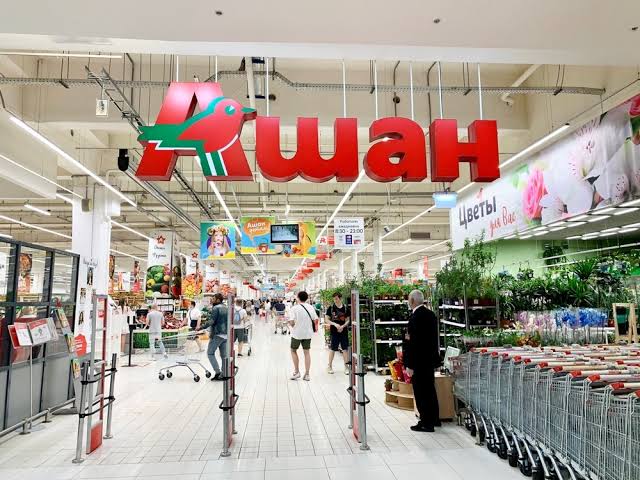
French retailer Auchan said it had requested clarification from the Russian authorities. Its stores, logistics facilities and online operations were continuing normally while the company examined the scope of the order.
Auchan remains one of the largest Western retailers operating in Russia, with around 230 stores and 30,000 employees. Its continued presence has attracted scrutiny since the invasion, although the company has previously defended the decision on the grounds of maintaining food supplies and employment.
Lemana Pro also reported no immediate interruption to its activities. The business operates 112 stores and was previously controlled by French home-improvement group Adeo under the Leroy Merlin brand. Adeo transferred control to local management in 2023, after which the chain was rebranded.
FM Logistic had not publicly detailed the potential impact on its two Russian entities.
Questions over the appointed administrator
The company selected to control the assets, L.E.V. Management, was registered in Moscow in October 2024. Its shareholders have not been publicly identified, and its available 2025 financial statements reportedly showed no active commercial operations.
Its current general director was appointed shortly before Putin issued the decree, adding to questions about why the company was selected to oversee businesses employing tens of thousands of people and operating extensive manufacturing, retail and logistics networks.
The intervention follows the pattern established with Danone’s Russian subsidiary. Moscow initially transferred that business to temporary administrators before the French group sold the operation in 2024 at a significant discount.
For international investors, the latest move reinforces the distinction between temporary administration as defined by Russian law and its practical consequences. Although ownership has not formally changed, the companies have lost control over how their Russian assets are managed.
The decision also sends a broader warning to the Western groups that continue operating in Russia: remaining in the market no longer guarantees protection from state intervention, while leaving can involve substantial financial losses and prolonged regulatory negotiations.