Six EU countries push for bloc-wide windfall tax on oil companies as energy profits surge
Germany, Italy, Spain, Austria, Poland and Portugal want EU finance ministers to debate a new levy on extraordinary oil profits, reviving a controversial policy first deployed during the 2022 energy crisis.

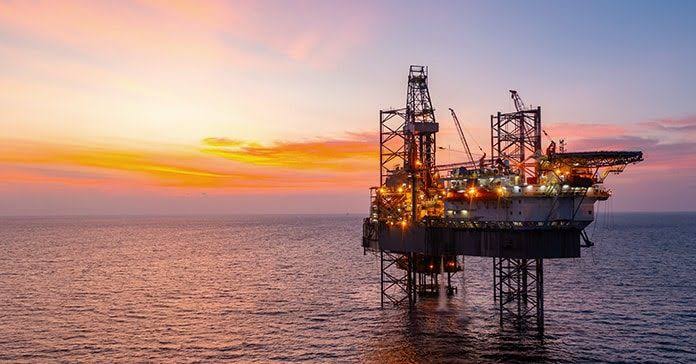
Six European Union (EU) countries are stepping up pressure for a new EU-wide windfall tax on oil companies, arguing that energy groups are benefiting disproportionately from the sharp market disruption caused by the war in the Middle East while European consumers face renewed pressure from higher living costs.
The finance ministers of Germany, Italy, Austria, Poland and Portugal, together with Spain's economy minister, have jointly asked Ireland — which currently holds the rotating presidency of the Council of the EU — to put the proposal on the agenda when European finance ministers meet in Dublin next month.
The initiative could reopen one of Europe's most contentious energy-policy debates: whether governments should capture part of the exceptional profits generated by geopolitical shocks and redirect the proceeds towards households and businesses affected by higher energy costs.
The six countries argue that the current surge in oil-industry profitability goes beyond the increase in crude prices themselves. In their letter, seen by Euronews, they point in particular to strong margins on refined petroleum products and describe the current disruption as one of the largest energy supply shocks in decades.
Their proposal does not yet amount to an agreed EU policy. Instead, the countries are calling for negotiations over a common European framework, using the extraordinary energy levy introduced after Russia's full-scale invasion of Ukraine in 2022 as a possible reference point.
The push comes as the conflict involving the United States, Israel and Iran has severely disrupted shipping through the Strait of Hormuz, one of the world's most strategically important energy transit routes. The disruption has helped lift profitability across parts of the oil industry while intensifying concerns about energy prices and inflation.
Europe revisits the windfall tax debate
The idea of taxing extraordinary energy profits is not new to the European Union. Europe turned to temporary intervention during the energy crisis that followed Russia's invasion of Ukraine, when soaring oil, gas and electricity prices generated exceptional earnings for parts of the energy industry while governments spent heavily to protect consumers.
The six governments now want the EU to examine whether lessons from that experience could provide the basis for another coordinated response.
Germany has emerged as one of the strongest advocates. Finance Minister Lars Klingbeil has argued that energy companies should not use the current crisis to impose an additional burden on consumers. The political rationale behind the proposal is that extraordinary profits generated primarily by an external geopolitical shock should contribute to cushioning the economic consequences of that same crisis.
Several of the governments involved had already supported measures targeting oil-sector profits earlier in 2026, but the latest joint letter gives the initiative a broader European dimension.
For businesses and investors, a bloc-wide framework would also raise important questions over how extraordinary profits would be defined, which companies and activities would fall within its scope, how the tax base would be calculated and whether individual member states would retain room to impose additional national measures.
Those details have yet to be negotiated.
What is already clear is that the proposal is likely to encounter political resistance.
The European Union has not announced plans to introduce a new windfall levy, and disagreement exists even within some of the countries backing discussions. Germany provides the clearest example: Klingbeil's centre-left Social Democratic Party supports the measure, while Chancellor Friedrich Merz's centre-right Christian Democratic Union opposes it.
That domestic divide illustrates the broader economic argument Brussels would face if the proposal advances.
Supporters of windfall taxes contend that companies should not retain the entirety of extraordinary earnings created by wars and supply shocks, particularly when governments and consumers are simultaneously absorbing higher energy costs. They see a temporary levy as a way to distribute part of the economic burden of the crisis.
Opponents, meanwhile, have traditionally warned that additional taxation can weaken investment incentives, create uncertainty for energy companies and complicate efforts to attract the capital required for energy security and the transition towards lower-carbon sources.
The renewed debate therefore arrives at a difficult moment for Europe. Governments are simultaneously trying to contain energy costs, strengthen security of supply, improve industrial competitiveness and mobilise enormous private investment for the energy transition.
A new tax on oil-company profits would have to navigate all four priorities.
Middle East conflict puts European energy policy back under pressure
The renewed push also demonstrates how quickly geopolitical developments can return energy security to the top of Europe's economic agenda.
Following the energy shock triggered by Russia's invasion of Ukraine, the EU spent years reducing its dependence on Russian fossil fuels and diversifying supply. The latest disruption around the Strait of Hormuz exposes a different vulnerability: Europe's energy prices remain highly sensitive to conflicts affecting global oil and gas flows even when the disruption occurs far from EU territory.
For the six governments supporting the initiative, the widening gap between consumer pressure and oil-sector profitability strengthens the case for intervention.
For the EU as a whole, however, agreeing on a common mechanism could prove substantially harder than putting the issue on the agenda.
Any serious proposal would have to balance the political appeal of taxing crisis-driven profits against the potential effects on investment, energy companies and Europe's broader competitiveness agenda. It would also reopen questions left by the extraordinary measures adopted during the previous energy crisis, including how temporary such taxes should be and under what conditions they should expire.
The next meeting of EU finance ministers in Dublin could provide the first indication of whether the initiative has enough political support to move beyond the six countries currently promoting it.
For now, Europe has no new windfall tax. But with energy-market disruption once again feeding extraordinary corporate profits and cost-of-living concerns, the question of who should bear the economic cost of an energy crisis is returning to the centre of the EU debate.