Federal Reserve raises rates for first time since 2023 as inflation pressures persist
The US central bank increased its benchmark rate by 25 basis points to 3.75%-4.00% in a unanimous decision. Policymakers also signalled that another increase may be needed before the end of 2026.

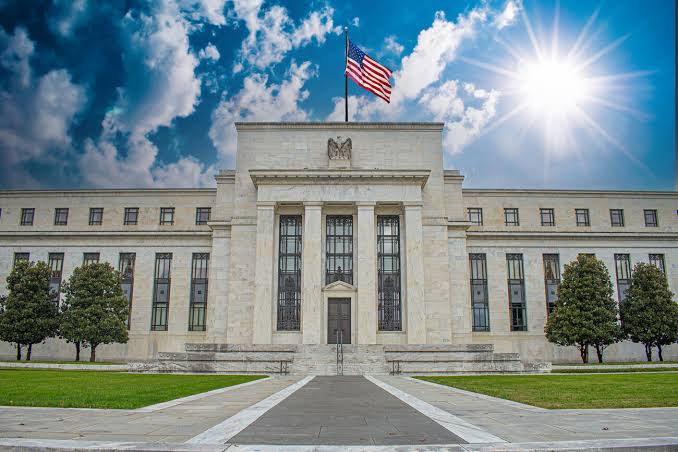
The Federal Reserve raised interest rates for the first time since 2023 as persistent inflation, resilient domestic demand and higher energy costs outweighed political pressure from US President Donald Trump for lower borrowing costs.
The Federal Open Market Committee increased the federal funds rate by 25 basis points, establishing a new target range of 3.75% to 4.00%. All 12 voting members supported the decision.
The unanimous vote marked the first monetary policy decision led by Fed Chair Kevin Warsh, who was appointed by Trump. The president has repeatedly called for lower rates, arguing that borrowing costs are restricting investment and increasing the government’s debt-servicing burden.
The central bank instead emphasised that inflation remains above its 2% target and that further action may be required to restore price stability.
The increase reverses the direction of US monetary policy after a period in which the Fed had gradually lowered rates from the levels reached during its previous campaign against inflation.
Inflation forecast rises to 3.7%
The Fed described economic activity as expanding at a solid pace, supported by resilient household spending, strong productivity and robust capital investment. Employment growth has remained broadly aligned with the expansion of the labour force, while unemployment has changed little.
New projections indicate that US gross domestic product will grow by 2.3% in 2026, slightly above the 2.2% forecast issued in June. Growth is expected to accelerate to 2.4% in 2027 before moderating to 2.2% in 2028.
The unemployment rate is projected to stand at 4.1% at the end of 2026, below the 4.3% estimated three months earlier.
The inflation outlook, however, moved in the opposite direction. The Fed expects the personal consumption expenditures price index to rise by 3.7% in 2026, compared with its previous forecast of 3.6%.
Core PCE inflation, which excludes food and energy, is expected to reach 3.4%, also one-tenth of a percentage point above the June projection.
Policymakers do not expect headline inflation to return to the 2% target until 2029, one year later than previously anticipated.
The outlook reflects pressure from energy markets, import tariffs and sustained investment spending, including expenditure linked to artificial intelligence infrastructure.
Another increase remains possible
The median projection from Fed officials places the federal funds rate at 4.1% at the end of 2026. That level would be consistent with a target range of 4.00% to 4.25%, suggesting that most policymakers expect at least one additional quarter-point increase this year.
The projected rate remains at 4.1% through 2027 before declining to 3.9% in 2028 and 3.6% in 2029. The estimated longer-term level was raised slightly to 3.2%.
Warsh said the increase was intended to support a more timely return to the inflation objective. He also indicated that financial conditions were not excessively restrictive, leaving the central bank room to tighten policy further if price pressures fail to ease.
The Fed avoided committing to a predetermined path. Future decisions will depend on inflation, employment, economic activity and developments in energy and financial markets.
Political pressure tests the Fed’s independence
The decision places the Federal Reserve on a different course from the policy preferred by the White House.
Trump has argued that high interest rates are holding back the economy and has publicly urged the central bank to cut borrowing costs. Warsh’s appointment had initially generated expectations that the Fed could adopt a more accommodative approach.
The unanimous vote instead reinforced the central bank’s commitment to its price-stability mandate. It also avoided the internal divisions that could have increased questions about political influence over monetary policy.
The Fed operates under a dual mandate to maintain stable prices and maximum employment. With the labour market remaining relatively strong, officials have greater room to concentrate on inflation.
Implications for Europe
The increase also carries consequences beyond the United States. Higher US interest rates can support the dollar, attract capital towards dollar-denominated assets and increase financing costs in international markets.
For European companies, a stronger dollar may raise the euro cost of energy, commodities and other imports priced in the US currency. Higher Treasury yields can also place upward pressure on European sovereign bonds and corporate borrowing costs.
The move comes less than a week after the European Central Bank raised its own deposit rate to 2.50% in response to inflation driven partly by higher energy prices.
With both central banks tightening policy, companies on either side of the Atlantic face a renewed period of higher financing costs. The next phase will depend on whether inflation begins to moderate or whether geopolitical and energy-market disruptions force policymakers to maintain restrictive conditions for longer.