First Graphene CEO confirms graphene cement additive is now commercially available in UK
First Graphene CEO Michael Bell confirms its cement additive is now commercially available through Breedon in the UK, with trials advancing across Europe.

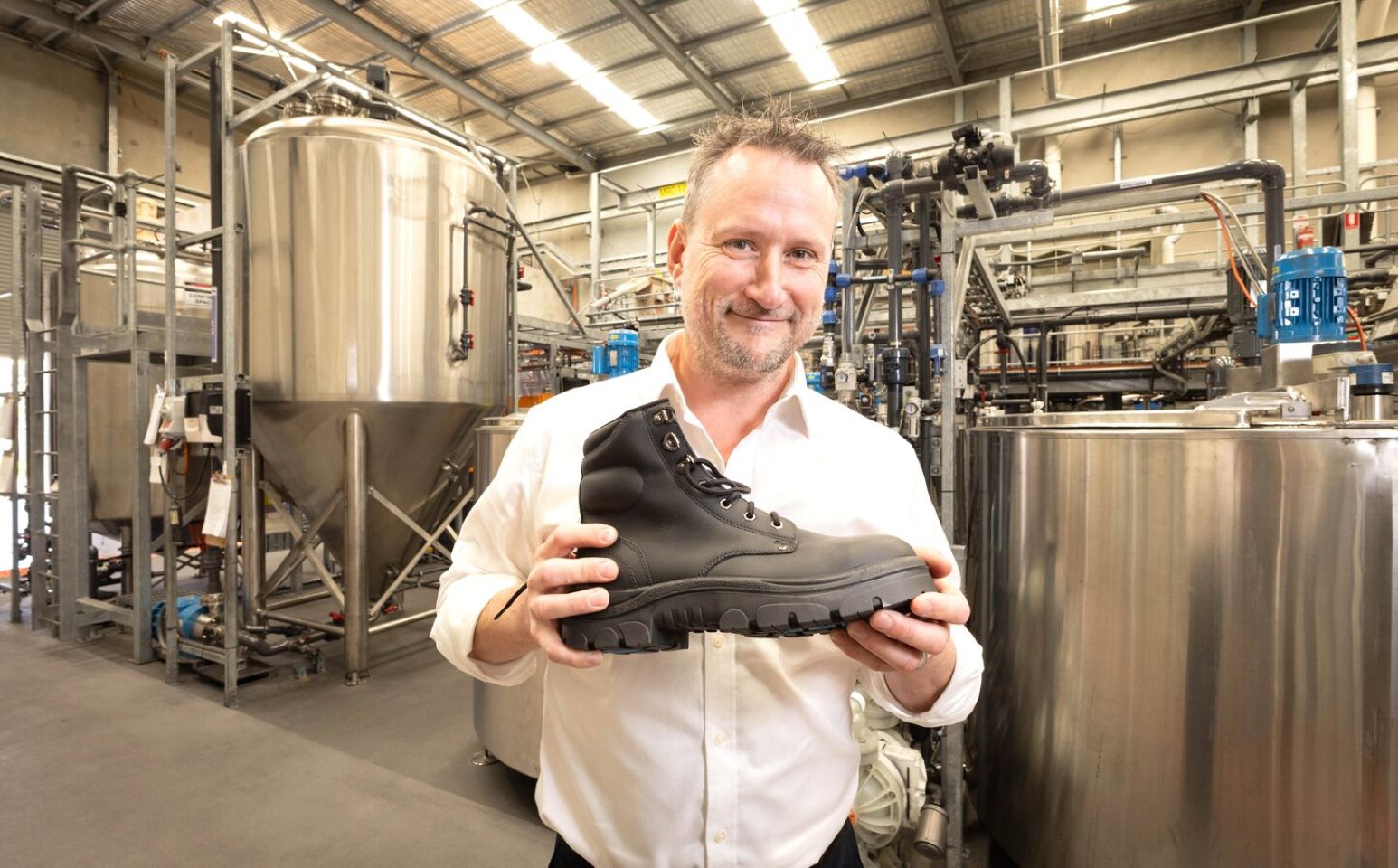
First Graphene's graphene additive for cement is now commercially available in the United Kingdom through Breedon Group, following approximately three to four years of joint development, CEO Michael Bell confirmed in an exclusive interview with EUBizNews. The milestone marks an important step in the company's strategy to expand graphene's industrial adoption, as it advances trials in Denmark, Belgium, Italy, Spain and Turkey.
Bell explained that the company's immediate challenge is not proving that graphene can work in industrial products, but expanding its adoption among manufacturers and converting technical projects into recurring commercial orders.
“From First Graphene's perspective, graphene has already made that transition. We supply graphene for commercial industrial products today. The question now is how quickly we can grow that adoption,” Bell said.
The company — First Graphene | ASX: FGR | FRA: M11 | OTCQB: FGPHF — manufactures and supplies its PureGRAPH range for industrial applications spanning cement and concrete, composites, elastomers and other advanced materials.
According to Bell, graphene adoption has already moved beyond initial experimentation in several markets. Some industrial applications have reached their third, fourth or fifth customer, with manufacturers incorporating the material for similar purposes and obtaining consistent benefits.
“Securing the first customer is difficult, and the second can be equally challenging. When several customers adopt it successfully in the same application and begin placing repeat orders, that demonstrates a commercially viable material with a repeatable market,” he explained.
The executive believes that growing familiarity with graphene is helping accelerate interest. In sectors such as footwear, the adoption of graphene by individual brands is encouraging competitors to explore whether the material could improve their own products.
From industrial capacity to recurring commercial orders
First Graphene's current priority is commercial expansion rather than a major increase in manufacturing capacity.
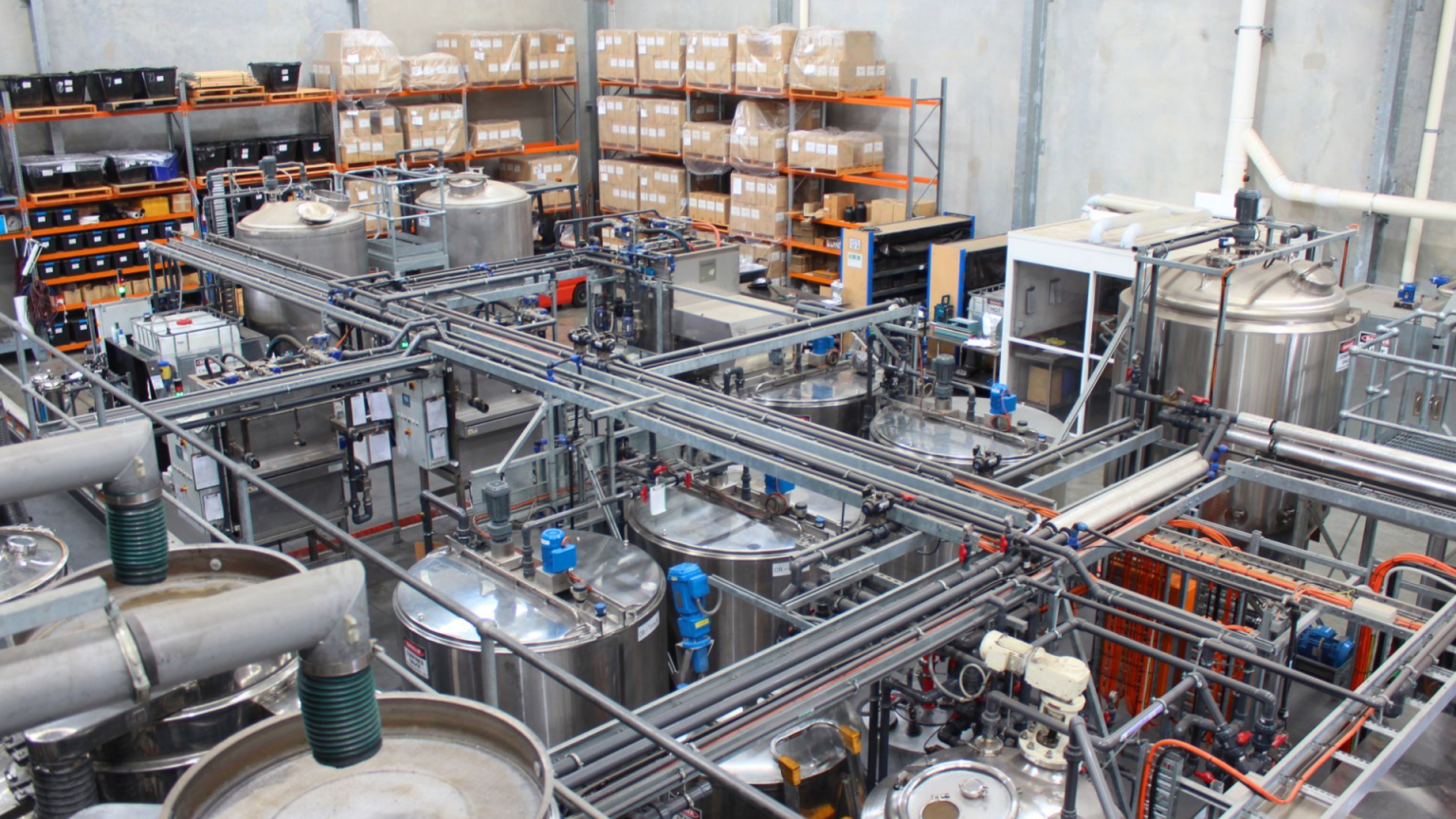
Bell explained that the company's original investment established the infrastructure for a facility capable of producing approximately 100 tonnes of graphene annually. Since then, the production process has been improved to increase capability and efficiency while reducing energy requirements.
“Our priority is growing customer demand and converting projects into recurring orders. We already have industrial-scale manufacturing capacity,” he told EUBizNews.
The company currently has approximately 40–50 customers placing repeat orders, while another 50 are progressing through approval processes, product launches and preparations for commercial rollout.
At the same time, First Graphene is managing approximately 700 active projects across different regions and industries.
These figures illustrate both the breadth of the opportunity and the difficulties associated with managing a large pipeline of potential applications.
Bell acknowledged that supporting so many projects requires careful allocation of resources, particularly for a relatively small team.
The company's technical specialists are increasingly focused on helping manufacturers select the appropriate graphene grade, determine the correct dosage, integrate the additive into existing materials and interpret performance results.
This reflects a shift towards technical sales, customer support and commercial implementation, rather than research-led development alone.
Cement and concrete stand out as the largest potential markets by volume.
“Cement and concrete represent the largest potential market by volume, for graphene, bar none,” Bell said.
The sector offers significant scale, although it is characterised by lower margins than some specialised applications. The opportunity lies in graphene's potential to improve material strength and support formulations with lower carbon intensity.
First Graphene is also seeing commercial progress in composites, including carbon fibre applications, while identifying further opportunities in polyurethanes, fire-retardant materials and mining.
One of graphene's principal advantages is its ability to improve several material characteristics simultaneously, depending on the formulation.
In addition to strength, manufacturers may obtain improvements in water resistance or barrier performance, making the material attractive across different industrial processes.
However, Bell emphasised that the company must remain selective.
The number of potential applications is considerable, but commercial priorities must be determined by the strength of technical evidence, customer demand and the likelihood of generating repeat orders.
Europe, cement and the next phase of graphene adoption
Europe represents an important growth market for First Graphene, supported by the company's research, development and commercial presence in Manchester, United Kingdom.
Bell described European manufacturers as receptive to new material technologies and willing to evaluate how graphene could improve the performance of existing products.
The company's role increasingly extends beyond supplying the additive. As customers progress towards production, First Graphene provides technical assistance to ensure that graphene can be integrated into manufacturing processes and deliver consistent results.
Regulatory requirements also form part of this expansion.
Bell explained that First Graphene's existing REACH registration covers a defined annual volume and that the company currently remains below that threshold.
“We therefore do not see it as a current constraint on our commercial growth,” he said, adding that the company would address the relevant requirements for higher volume bands as its sales increase.
One of First Graphene's most significant European developments is its collaboration with Breedon Group in the United Kingdom.
Over approximately three to four years, the companies worked on developing a graphene additive introduced during cement manufacturing.
According to Bell, the resulting product is now commercially available through Breedon, with the objective of improving strength and enabling lower-carbon cement formulations.
The company is seeking to extend that experience into additional markets.
First Graphene is conducting advanced trials in Denmark, Belgium, Italy, Spain and Turkey, alongside projects in Thailand, Australia and New Zealand.
For cement manufacturers, however, adoption requires evidence tailored to their particular production conditions.
The performance of graphene must be evaluated against each producer's raw materials, manufacturing processes and required technical specifications. Any potential reduction in CO₂ emissions must also be assessed against a clearly defined baseline.
To facilitate that process, First Graphene has introduced a paid laboratory testing service through which cement producers can submit their materials for evaluation.
The programme examines graphene's impact, optimises dosage and dispersion, and measures strength improvements. The results can then help manufacturers assess whether cement content and associated emissions could be reduced while maintaining the required performance.
Independent third-party verification can also be arranged when requested.
Although the service involves laboratory work, Bell stressed that its purpose is commercial: reducing the barriers manufacturers face when deciding whether to adopt graphene in production.
“We should distinguish between commercial availability and widespread adoption. For First Graphene, commercial availability has already been achieved; expanding adoption is the work now underway,” he explained.
Looking ahead over the next three to five years, the executive expects success to be measured by a substantially larger base of recurring customers, higher sales volumes and graphene's presence in a broader range of industrial products.
The company plans to combine the volume potential of cement and concrete with the higher-value opportunities available in specialised performance materials.
Bell believes graphene will increasingly become a familiar option for manufacturers evaluating additives capable of delivering several benefits within a single formulation.
“Success would mean substantially more repeat customers, higher sales volumes and graphene established in a broader range of industrial products,” he said.
For First Graphene, the next stage is therefore not about proving graphene's theoretical potential, but about turning established technical performance into repeatable industrial sales.
With an existing manufacturing base, a growing commercial customer portfolio and projects advancing across Europe and other international markets, the company's strategy is increasingly focused on making graphene a practical, scalable component of modern manufacturing.