Hamburg Seeks to Strengthen Trade Ties with Argentina’s Entre Ríos Province
Germany's largest seaport is positioning itself as a strategic gateway for exports from Argentina's Entre Ríos province to Europe. As trade relations deepen and the EU-Mercosur agreement moves closer to implementation, both regions are exploring new opportunities to expand commercial cooperation, improve logistics and strengthen supply chains.

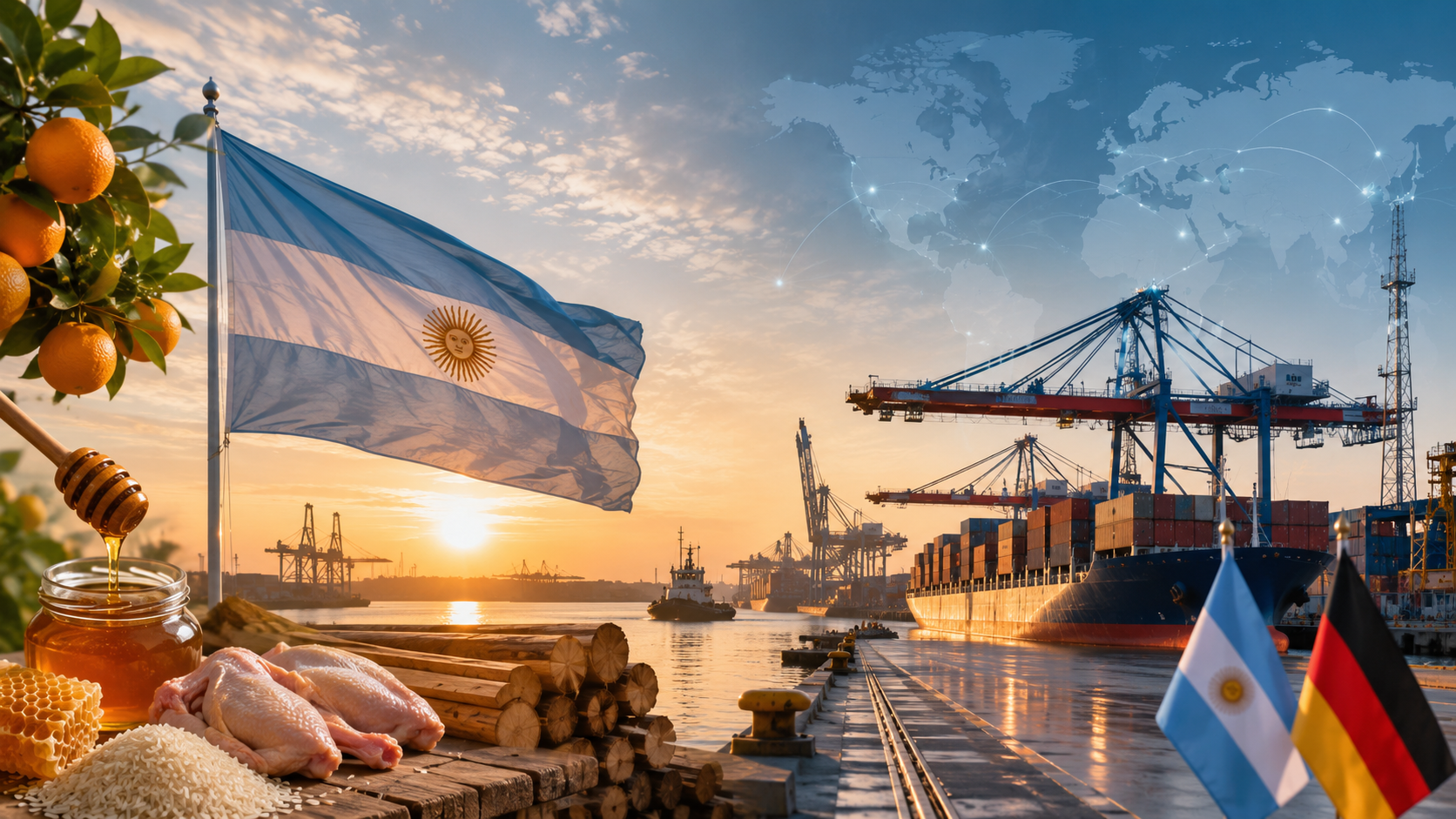
The recent visit of Entre Ríos Governor Rogelio Frigerio to Hamburg has highlighted the growing economic relationship between Germany and one of Argentina's most productive provinces, opening discussions on logistics, international trade and future investment opportunities.
At the centre of the dialogue is the potential role of the Port of Hamburg as a major entry point for Argentine exports into the European market.
Entre Ríos looks to expand exports
Entre Ríos is one of Argentina's leading agricultural and agro-industrial provinces, with a diverse export portfolio that includes poultry, honey, citrus fruits, rice, timber and other value-added products.
As global demand for food and sustainable raw materials continues to grow, provincial authorities are seeking to improve international market access while strengthening logistics infrastructure capable of supporting higher export volumes.
Europe represents one of the province's priority destinations for future trade expansion.
Hamburg offers a strategic logistics platform
As Germany's largest maritime hub and one of Europe's busiest ports, Hamburg provides direct access to extensive transport networks connecting manufacturers, distributors and consumers across the continent.
Its multimodal infrastructure, advanced logistics services and established customs facilities make it an attractive gateway for exporters seeking efficient access to European markets.
For Argentine producers, strengthening links with Hamburg could improve supply chain efficiency and facilitate the distribution of goods throughout the European Union.
EU-Mercosur agreement creates new opportunities
The ongoing process to implement the EU-Mercosur trade agreement has further increased interest in closer commercial cooperation between European and South American regions.
If fully ratified, the agreement is expected to reduce trade barriers, improve market access and create new opportunities for exporters in sectors including agriculture, food production and industrial goods.
For Entre Ríos, improved access to European markets could support export diversification and attract additional foreign investment linked to agribusiness and logistics.
Infrastructure remains a key challenge
While the province possesses significant productive capacity, continued investment in transport infrastructure and logistics will be essential to fully capitalise on future trade opportunities.
Efficient connections between production centres, inland transport networks, ports and international shipping routes are increasingly viewed as critical factors in improving export competitiveness.
Closer cooperation with international logistics partners could help address these challenges while supporting long-term economic growth.
Strengthening regional economic cooperation
Beyond trade, the dialogue between Hamburg and Entre Ríos reflects a broader interest in expanding institutional and business cooperation.
Potential collaboration could extend to innovation, sustainable logistics, port management and investment promotion, creating new opportunities for companies operating on both sides of the Atlantic.
Such partnerships are becoming increasingly important as global supply chains continue to diversify.
A partnership with long-term potential
The discussions between Hamburg and Entre Ríos demonstrate how regional governments are seeking new international partnerships to strengthen trade and investment.
With complementary economic strengths and growing interest in closer EU–Latin America relations, both regions could benefit from deeper cooperation in logistics, agribusiness and international commerce over the coming years.