Costa Rica seeks EU support to connect Juan Santamaría Airport to electric rail network
The Central American country is studying a monorail or light-rail connection between its main international airport and the future TIBI electric train. European cooperation funds could finance the feasibility studies for a project aimed at improving access to San José and strengthening Costa Rica’s transport infrastructure.

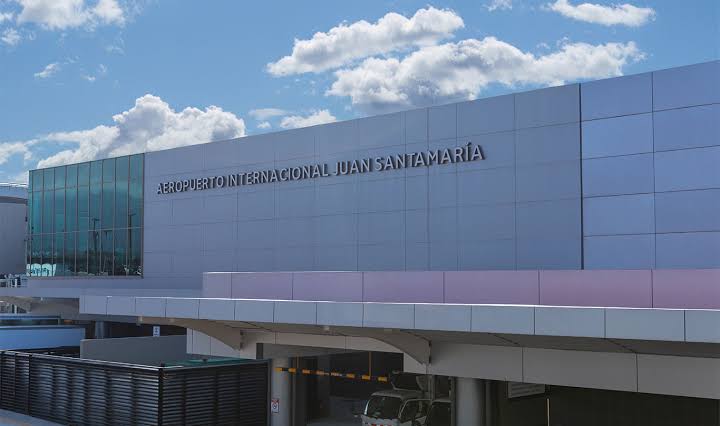
Costa Rica is looking to Europe for support in solving one of the most persistent transport weaknesses surrounding its main gateway to the world. Authorities are preparing studies for a new public transport connection between Juan Santamaría International Airport and the country's planned electric railway network, with a monorail and light rail among the alternatives being considered.
The project would connect the airport terminal in Alajuela with the railway corridor near Río Segundo, allowing passengers to continue towards Alajuela, Heredia, San José and Cartago through the future TIBI electric train system. Costa Rican authorities are seeking non-repayable European Union cooperation funding to finance the technical studies, although that support has not yet been formally confirmed.
No final technology, investment budget or construction timetable has been decided. The current objective is to determine whether a direct airport connection is technically and financially viable and which transport system would provide the best solution for the relatively short distance separating the terminal from the railway.
The Costa Rican Railway Institute (Incofer), the Ministry of Public Works and Transportation (MOPT) and airport operator Aeris are involved in the initiative. Authorities expect to obtain approval to begin the new studies in December 2026, according to information reported by The Tico Times.
A missing link between Costa Rica's airport and San José
Juan Santamaría is located in Alajuela, around 20 kilometres northwest of central San José, and is Costa Rica's principal international airport. Despite the proximity of an existing railway line, passengers currently cannot board a train directly from the terminal.
The Alajuela–Heredia–San José railway passes close to the airport, but the nearest practical rail connection requires passengers to leave the terminal and use another form of transport. As a result, international visitors and Costa Rican travellers continue to depend heavily on buses, taxis, ride-hailing platforms, rental cars and private transfers.
That dependence becomes particularly problematic on the General Cañas highway, one of the country's most important road corridors, where congestion can make travel times between the airport and San José difficult to predict.
A direct connection would therefore address more than passenger convenience. It would integrate Costa Rica's most important airport into the Greater Metropolitan Area's public transport system and reduce dependence on road transport for a portion of the millions of passengers using the terminal every year.
Demand appears to exist. A survey cited as part of the project found that 82% of Costa Rican and international travellers questioned would be willing to use public transport from the airport if an adequate connection were available.
The airport handled more than 6.4 million international passengers in 2025, its highest annual figure on record. It currently offers connections with 37 destinations through 25 international commercial airlines and two domestic carriers, according to airport operator Aeris.
Those figures strengthen the economic case for improving ground connectivity as Costa Rica seeks to consolidate its position as one of Central America's leading tourism and business destinations.
Monorail or light rail among the alternatives
One of the questions yet to be resolved is precisely how passengers would travel between the airport terminal and the railway.
Earlier feasibility work has examined alternatives including an elevated monorail and infrastructure crossing beneath Route 1, while the latest proposal also considers a light-rail solution. The final choice would depend on construction costs, passenger demand, engineering constraints and the ability to integrate the connection with the wider transport network.
The intention is not to create an isolated airport shuttle. The project is being conceived as part of a broader multimodal system involving rail, buses, private vehicles and the planned expansion of the San José–San Ramón highway.
That highway project includes a new interchange opposite the airport that could become an important transport node, bringing different mobility systems together in one location. Such integration would allow an arriving international passenger to move from the airport into Costa Rica's metropolitan transport network without necessarily relying on a private vehicle.
For the tourism industry, the improvement could be significant. Predictable airport transfers are an important component of destination competitiveness, particularly for business travellers and international visitors accustomed to direct rail connections at major European and Asian airports.
For residents of the Greater Metropolitan Area, meanwhile, the infrastructure could provide another alternative for reaching the airport while reducing pressure on one of the country's most congested road corridors.
European funding could deepen EU-Costa Rica infrastructure ties
The potential participation of the European Union gives the project a broader international dimension.
Costa Rican authorities are seeking non-repayable EU cooperation resources for the studies rather than financing the preliminary phase exclusively with domestic funds. No amount has yet been announced and European financing remains subject to approval.
The project nevertheless aligns closely with European priorities in Latin America around sustainable infrastructure, urban mobility and lower-emission transport. Electrified public transportation is increasingly becoming an area where European institutions, governments and companies can expand their participation in the region, particularly as Latin American cities attempt to modernise ageing transport networks.
A successful feasibility phase could also eventually create commercial opportunities beyond financing. Railway systems require rolling stock, signalling, electrification, engineering, construction and digital mobility technologies — areas in which European companies maintain substantial international expertise.
For now, however, Costa Rica is still several steps away from procurement or construction. Authorities have explicitly not selected a technology, approved construction financing or announced an opening date.
That distinction is important: the proposal is advancing, but remains at the feasibility stage.
At the same time, Juan Santamaría itself is undergoing a broader modernisation. A master plan for 2023-2042 is bringing new infrastructure to the airport, while a recently completed international arrivals area forms part of a $62 million terminal expansion. Aeris has also outlined approximately $390 million in planned airport investment as the facility prepares for continued passenger growth.
A direct rail connection would complement that transformation by addressing what happens after passengers leave the terminal.
Costa Rica has spent decades building an international image around tourism, sustainability and environmental leadership. Connecting its busiest airport with an electrified metropolitan railway would allow the country's transport infrastructure to move closer to that same positioning.
The economic logic is equally relevant. An airport capable of handling growing international traffic requires efficient connections with the cities and business centres it serves. For Juan Santamaría, the next major improvement may therefore take place not inside the terminal, but along the short distance separating it from the railway tracks already running nearby.
If European financing is secured and the feasibility studies produce a viable model, Costa Rica could take an important step towards giving its main international airport something common at many major European gateways but still absent in San José: a direct connection to the metropolitan rail network.