EU budget summit tests unity as €204bn cuts and Ukraine aid fuel rift among member states
EU leaders face deep divisions over €204bn in budget cuts and a €45bn Ukraine loan, raising stakes for cohesion funding and bloc unity.


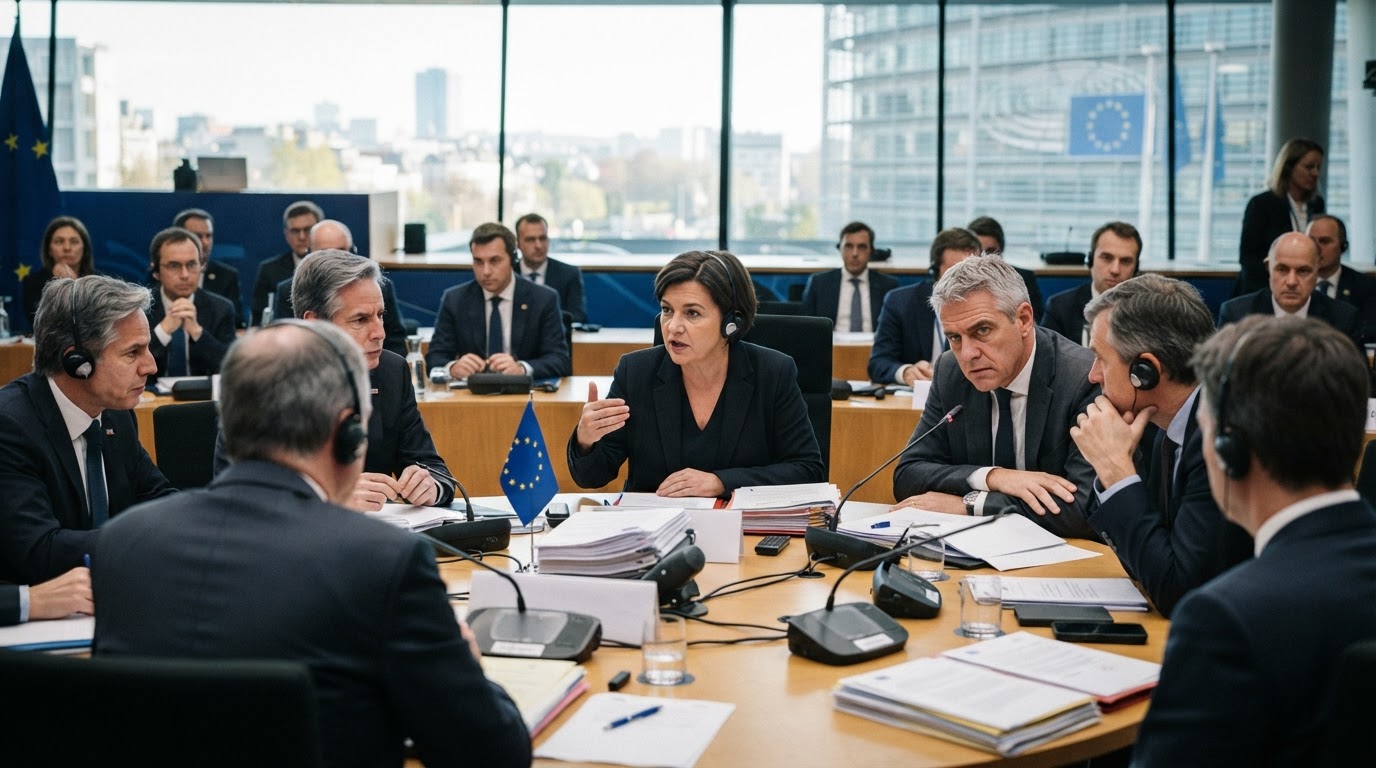
EU leaders opened a pivotal summit in Brussels on Thursday, confronting stark divisions over the bloc’s next long-term budget and the future of financial support for Ukraine amid Russia’s ongoing war.
At the heart of the talks is a €204 billion reduction to the original budget proposal, a compromise advanced by European Council President António Costa. The proposal aims to balance spending priorities between traditional areas such as agriculture and cohesion funding, and modern priorities like defence, climate, and technology.
The summit’s outcome will shape the European Union’s financial framework for the next seven years, influencing key sectors from infrastructure to green energy. Member states remain split, with so-called “frugal” countries demanding deeper cuts to direct more funds toward new priorities, while the “Friends of Cohesion”—mainly Southern and Eastern European members—push to preserve high expenditure in traditional areas.
Adding to the complexity, the European Commission has put forward a €45 billion support loan for Ukraine, backed by joint EU debt, to help fill a €70 billion deficit in Ukraine’s 2027 budget caused by Russia’s war. The loan is designed to support Ukraine’s economy and military, but faces resistance from several member states unwilling to participate in additional lending.
German Chancellor Friedrich Merz has threatened to veto the entire budget if Ukraine support is not agreed by all 27 members, intensifying pressure on negotiators. This ultimatum has drawn criticism from countries like Hungary and Slovakia, who view the linkage as political coercion.
Public opinion is also shaping the debate. Recent polling in Germany indicates that 53% of Germans now oppose continued military aid to Ukraine, complicating the calculus for leaders as they seek consensus.
The negotiations come at a critical moment, as failure to reach a deal by December could entangle the budget process with upcoming national elections, particularly in France, where opposition leader Marine Le Pen has pledged to cap contributions if elected.